


Khalingdunga Ridge Hamlets – An Exploration of an Untouched Himalayan Settlement Belt
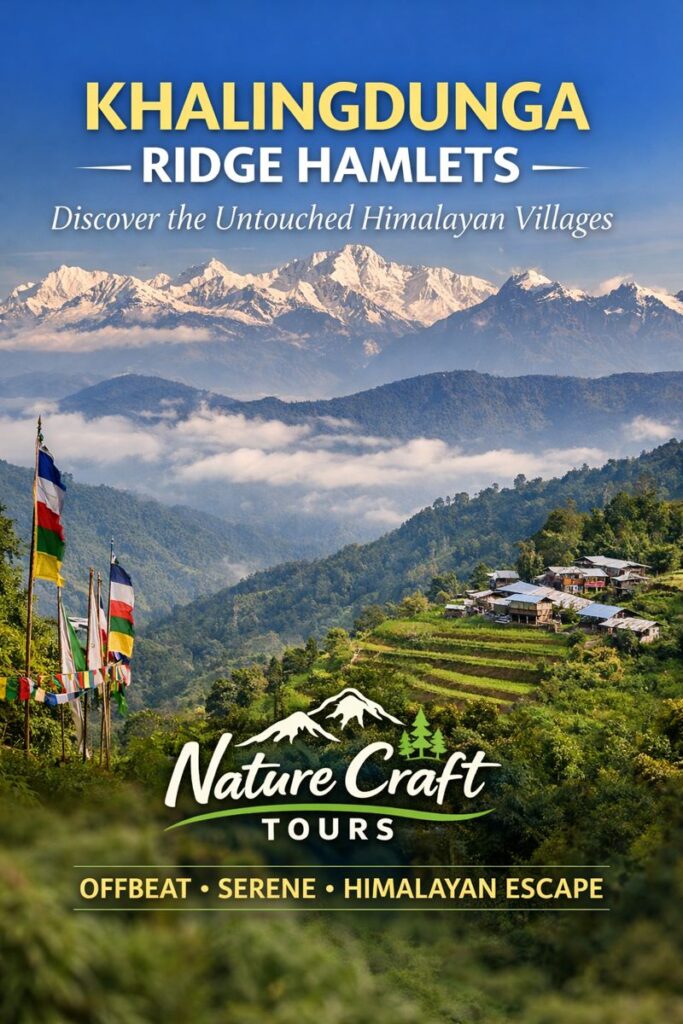
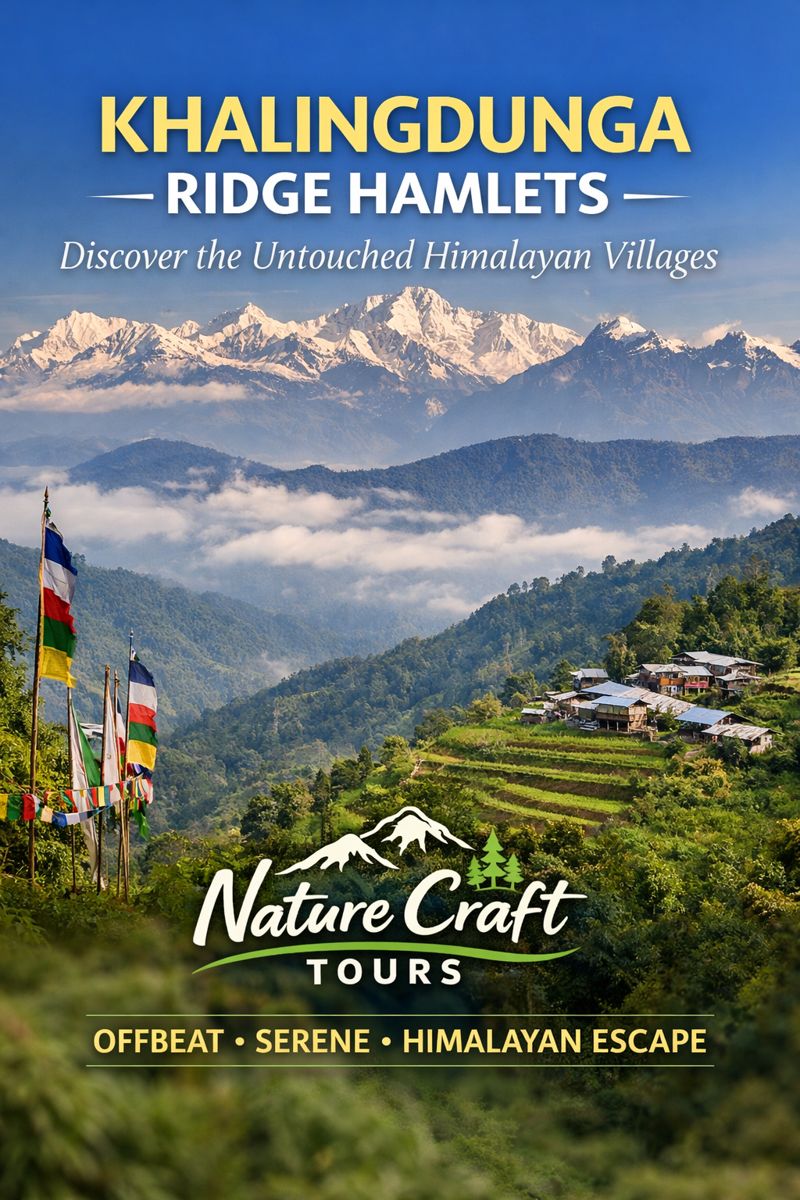
Nestled quietly along a high Himalayan spine in the Eastern Himalayas, the Khalingdunga Ridge Hamlets represent one of the least documented yet culturally and ecologically significant rural belts of North Bengal. Far removed from mainstream tourism corridors, these ridge-top settlements are defined by pristine forests, terraced subsistence farming, oral folklore traditions, and uninterrupted views of the Eastern Himalayan ranges. The region offers a rare opportunity to understand the slow, traditional rhythm of mountain life, where geography, climate, and culture remain closely interwoven.
Khalingdunga Ridge is not a single village but a cluster of small hamlets aligned along an elongated ridge formation. Each settlement is separated by forest paths, cardamom groves, and seasonal streams, creating a mosaic of human habitation and natural ecosystems. The area holds particular value for travellers, researchers, and cultural observers seeking authentic Himalayan landscapes beyond commercial hill stations.
Geographical Setting and Topographical Importance
The Khalingdunga Ridge lies within the lower Eastern Himalayan belt of Kalimpong district, positioned at an average altitude ranging between 5,500 and 6,800 feet above sea level. The ridge acts as a natural watershed, with slopes descending into deep forested valleys on either side. Such ridge-based settlements are historically significant in Himalayan geography, as they provided strategic safety from floods, better sunlight exposure, and natural surveillance of surrounding valleys.
The terrain is characterized by narrow ridgelines, gentle gradients near habitations, and steeper forested slopes descending towards river systems such as the Relli and Teesta tributaries. The soil composition is predominantly loamy with high organic content, making it suitable for terrace agriculture, particularly maize, millet, seasonal vegetables, and cardamom cultivation.
Climate and Microclimatic Zones
Khalingdunga Ridge experiences a temperate mountain climate with distinct seasonal variations. Summers remain mild, with daytime temperatures rarely exceeding 24°C, while nights stay cool due to constant ridge winds. Monsoon months bring dense cloud cover, mist-laden mornings, and heavy rainfall that rejuvenates forest vegetation but can affect road access. Winters are cold but not extreme, with temperatures occasionally dropping to 2–4°C during January nights.
The ridge’s elevation creates multiple microclimatic zones within short distances. Upper hamlets receive stronger winds and colder nights, while lower slopes remain relatively warmer and more humid. This climatic diversity contributes significantly to the region’s rich biodiversity.
Historical Background and Settlement Patterns
The hamlets along Khalingdunga Ridge were gradually settled by Lepcha, Bhutia, and later Nepali-speaking communities during the 18th and 19th centuries. These settlements developed organically, guided by availability of water sources, forest clearings, and cultivable land. Unlike planned colonial hill towns, Khalingdunga evolved through community-based land use and traditional ecological knowledge.
Oral histories passed down through generations speak of seasonal migrations, forest guardianship practices, and ritual observances linked to agricultural cycles. Many houses still follow traditional architectural patterns, using stone foundations, timber frames, and sloping roofs designed to withstand heavy rainfall and mountain winds.
Cultural Landscape and Indigenous Practices
Life in Khalingdunga Ridge Hamlets is deeply connected to land and seasons. Festivals are closely tied to sowing and harvesting periods, while spiritual beliefs often revolve around forest deities, mountain spirits, and ancestral protectors. Prayer flags, small shrines, and sacred trees are common sights across the ridge.
Traditional knowledge systems remain strong, particularly in herbal medicine, forest resource management, and sustainable farming. Elders continue to play an important role in transmitting cultural memory and ecological ethics to younger generations.
Important Points and Attractions Around Khalingdunga Ridge
Panoramic Himalayan Viewpoints
Several natural clearings along the ridge offer expansive views of the Eastern Himalayan ranges. On clear mornings, distant snow peaks become visible, glowing softly in early sunlight. Sunset hours are equally captivating, with layered mountain silhouettes fading into golden and indigo hues.
Forest Trails and Nature Walks
Dense mixed forests surround the hamlets, dominated by oak, chestnut, rhododendron, and bamboo species. These forests support rich birdlife, including Himalayan bulbuls, flycatchers, and seasonal migratory species. Short walking trails connect one hamlet to another, offering immersive experiences for nature enthusiasts and slow travellers.
Traditional Agriculture Terraces
The terraced fields of Khalingdunga Ridge provide insight into mountain agriculture adapted to steep terrain. Depending on the season, visitors may observe sowing, weeding, or harvesting activities, each reflecting centuries-old farming techniques passed through generations.
Major Distances from Key Locations
- Kalimpong town: approximately 32–35 km
- Lava: approximately 28 km
- Loleygaon: approximately 22 km
- Siliguri: approximately 90–95 km
- Bagdogra Airport: approximately 100 km
- New Jalpaiguri Railway Station: approximately 98 km
These distances may vary slightly depending on the exact hamlet accessed along the ridge, as internal roads branch off from the main approach route.
How to Reach Khalingdunga Ridge Hamlets
The nearest major transit hub is Siliguri, which is well-connected by air, rail, and road networks. From Siliguri, travellers proceed towards Kalimpong via the Teesta corridor. At a designated point beyond Kalimpong town, a secondary mountain road branches off towards the Khalingdunga Ridge area.
The final stretch involves narrow hill roads with limited traffic, reinforcing the region’s seclusion. Local drivers familiar with mountain terrain are recommended for safe access. Public transport options are limited, making private vehicles or pre-arranged transport the most practical choice.
Travellers combining multiple offbeat destinations often include Khalingdunga Ridge as part of a wider Kalimpong–Lava–Loleygaon circuit, similar to thematic itineraries offered by experienced operators specializing in nature-centric journeys such as Sundarban Travel.
Staying Options in Khalingdunga Ridge Area
Village Homestays
The primary accommodation option across Khalingdunga Ridge Hamlets is community-run homestays. These properties are modest yet comfortable, offering clean rooms, local cuisine, and warm hospitality. Staying in homestays allows visitors to engage directly with host families and gain first-hand exposure to mountain lifestyles.
Eco-Lodges and Nature Retreats
A few small eco-lodges have emerged on the periphery of the ridge, designed with minimal environmental impact. These properties emphasize sustainable practices such as rainwater harvesting, solar lighting, and local sourcing of food and materials. Accommodation remains limited, preserving the area’s low tourist density.
Visitors planning extended regional travel often combine stays here with broader itineraries across North Bengal and forest regions, sometimes alongside wildlife-focused routes promoted by platforms like Sundarban Tour.
Best Time to Visit Khalingdunga Ridge Hamlets
The most suitable period to visit Khalingdunga Ridge is from October to early June. Post-monsoon months offer clear skies, crisp air, and enhanced mountain visibility. Spring months bring blooming rhododendrons and active birdlife, making it ideal for nature observation.
Monsoon season, extending from late June to September, transforms the landscape into a lush green expanse but also presents challenges such as slippery trails, foggy conditions, and occasional road disruptions. Winter months remain peaceful and scenic, though visitors should be prepared for cold nights and limited daylight hours.
Responsible Travel and Environmental Considerations
Khalingdunga Ridge Hamlets remain ecologically fragile and culturally sensitive. Visitors are encouraged to follow responsible travel practices, including waste minimization, respect for local customs, and avoidance of loud or disruptive activities. Supporting locally owned accommodations and purchasing local produce contributes directly to community sustainability.
The ridge’s future depends largely on balanced tourism development that prioritizes conservation over volume. Thoughtful, research-informed travel can help preserve the region’s character while offering meaningful experiences to visitors.
The Quiet Significance of Khalingdunga Ridge
Khalingdunga Ridge Hamlets stand as a living example of harmony between human settlement and Himalayan ecology. Far from commercial hill stations, the region offers depth rather than spectacle—quiet mornings, ancestral forests, and enduring cultural rhythms. For travellers seeking authenticity, scholars interested in mountain societies, or nature lovers drawn to silence and scale, Khalingdunga Ridge provides a profoundly enriching destination.
In an era where many Himalayan regions face overexposure, Khalingdunga Ridge remains refreshingly understated—an offbeat sanctuary where the mountains speak softly, yet with enduring clarity.