



Rimbick
– The Quiet Frontier of Darjeeling Where Roads Fade into Forested Horizons
Nestled deep within the western folds of the Darjeeling Himalayas, close to the India–Nepal border, Rimbick remains one of the least commercialised yet most culturally and ecologically significant destinations in the region. Often described as the final outpost before the highland wilderness begins, Rimbick is not merely a village—it is a threshold between habitation and vast, breathing silence. Here, rivers cut through ancient valleys, cardamom-scented air drifts through wooden houses, and time appears to move in a gentler, unhurried rhythm.
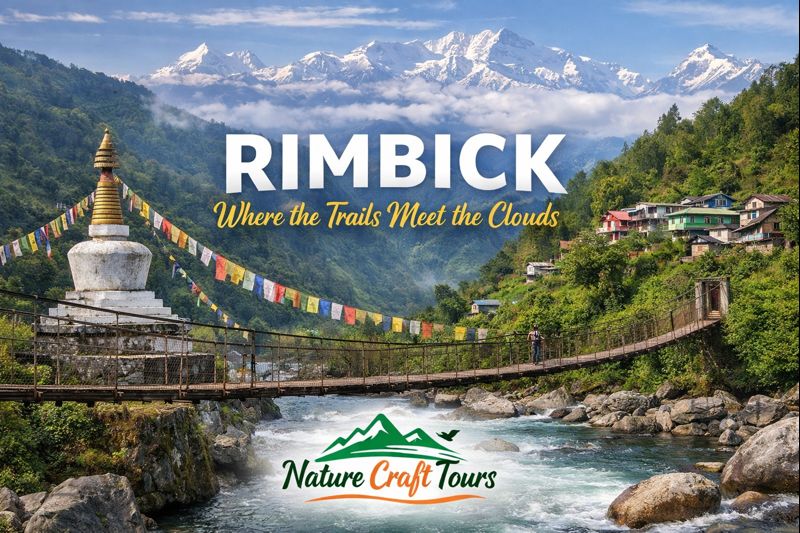
Unlike popular hill stations shaped by tourism infrastructure, Rimbick has preserved its raw identity. The landscape is defined by terraced fields, dense forests, suspension bridges, and distant mountain ridges that glow softly at sunrise and dissolve into mist by afternoon. This remote settlement attracts travellers seeking authenticity—those interested in Himalayan geography, borderland culture, trekking routes, and quiet contemplation rather than sightseeing checklists.
Geographical Setting and Natural Context of Rimbick
Rimbick is located in the Darjeeling district of West Bengal, positioned at an approximate altitude of 2,286 metres (7,500 feet). It lies near the tri-junction of West Bengal, Nepal, and the lower reaches of Sikkim, making it historically significant as a transit point for trade, administration, and seasonal migration.
The region is characterised by steep mountain slopes, deep river gorges, and dense mixed forests dominated by oak, pine, bamboo, and rhododendron. The Rammam River, one of the major tributaries of the Teesta, flows through this belt, shaping both the ecology and livelihoods of the local population. High rainfall, cool temperatures, and fertile soil have supported agriculture for generations, particularly the cultivation of cardamom, maize, millet, and seasonal vegetables.
Historical and Cultural Significance
Rimbick has long served as an administrative and cultural hub for surrounding villages such as Lodhoma, Sirikhola, and parts of Singalila fringe hamlets. During the British colonial period, it functioned as a key outpost for monitoring cross-border movement and forest management. Even today, remnants of its administrative legacy remain visible in old buildings, forest department quarters, and trail networks.
The population is primarily composed of Nepali-speaking communities, including Rai, Limbu, Tamang, and Sherpa groups. Their cultural practices are deeply rooted in agrarian cycles, forest ecology, and mountain spirituality. Festivals such as Dashain, Tihar, and local harvest celebrations are observed with quiet reverence rather than spectacle, offering travellers a rare opportunity to witness living Himalayan traditions in their natural setting.
Important Places and Experiences Around Rimbick
Rammam River Valley
The Rammam River is the lifeline of this region. Walking along its banks reveals dramatic landscapes—boulder-strewn riverbeds, hanging bridges, and forested slopes echoing with birdsong. Early mornings here are particularly striking, as mist rises slowly from the water, creating a layered panorama of light and shadow.
Singalila Forest Fringe
Rimbick serves as a gateway to the lower fringes of the Singalila range. While the Singalila National Park is better known for trekking routes like Sandakphu and Phalut, the forests around Rimbick remain quieter and less explored. These woodlands are rich in biodiversity, hosting rare orchids, medicinal plants, and a wide variety of Himalayan bird species.
Sirikhola and Suspension Bridges
A short journey from Rimbick leads to Sirikhola, a picturesque riverside hamlet known for its iconic suspension bridges. These bridges are not merely functional structures but symbols of mountain resilience, connecting isolated communities across turbulent waters. The gentle rhythm of village life here complements Rimbick’s own understated charm.
Borderland Trails and Old Trade Routes
Several ancient footpaths radiate outward from Rimbick, once used by traders, forest workers, and pilgrims. Walking these trails offers insight into the historical movement patterns of the eastern Himalayas. The routes often pass through cardamom plantations, forest clearings, and ridge-top viewpoints overlooking Nepalese hills.
Major Distances from Rimbick
Understanding distances is essential due to the mountainous terrain, where travel time often matters more than kilometres.
- Darjeeling to Rimbick: approximately 56 km
- Maneybhanjang to Rimbick: approximately 19 km
- Ghoom to Rimbick: approximately 42 km
- Siliguri to Rimbick: approximately 110 km
- Sirikhola to Rimbick: approximately 8 km
These distances may appear short, but winding roads and frequent elevation changes mean journeys are slow and scenic rather than fast.
How to Reach Rimbick
Reaching Rimbick is a journey that gradually transitions from urban bustle to mountain solitude.
By Air
The nearest airport is Bagdogra Airport, located near Siliguri. From Bagdogra, travellers must undertake a long hill drive via Darjeeling or Maneybhanjang. The changing landscape—from plains to tea gardens to dense forests—offers a gradual immersion into Himalayan geography.
By Rail
New Jalpaiguri (NJP) is the closest major railway station. From NJP, road transport is the only option. While the Darjeeling Himalayan Railway provides a heritage experience, it is not a practical route for reaching Rimbick directly.
By Road
Road access is the most common way to reach Rimbick. Shared or reserved vehicles travel from Darjeeling and Maneybhanjang. The final stretch beyond Maneybhanjang is narrower and more rugged, offering sweeping views of valleys and forested slopes.
Staying Options in Rimbick
Accommodation in Rimbick is modest, community-oriented, and closely tied to local life. Travellers should expect simplicity rather than luxury.
Village Homestays
Homestays are the most authentic way to experience Rimbick. These are family-run properties offering basic yet comfortable rooms, home-cooked meals, and warm hospitality. Staying with local families provides insight into daily routines, agricultural practices, and cultural customs.
Small Lodges and Guesthouses
A limited number of small lodges operate in and around Rimbick, primarily catering to trekkers and long-stay visitors. These properties focus on functionality, cleanliness, and scenic surroundings rather than amenities.
It is advisable to confirm availability in advance, especially during trekking seasons, as accommodation options are limited.
Best Time to Visit Rimbick
Rimbick’s climate varies significantly across seasons, each offering a distinct experience.
Spring (March to May)
Spring is one of the most favourable times to visit. Rhododendrons bloom in nearby forests, temperatures remain mild, and skies are generally clear. This period is ideal for walking trails and cultural exploration.
Monsoon (June to September)
The monsoon transforms Rimbick into a lush green landscape, with waterfalls and rivers in full flow. However, landslides and road disruptions are common, making travel unpredictable. This season suits experienced travellers seeking solitude and dramatic scenery.
Autumn (October to November)
Autumn offers crisp air, clear mountain views, and stable weather conditions. It is considered the best season for photography and extended stays.
Winter (December to February)
Winters are cold, with occasional frost and very low temperatures at night. While snowfall is rare in Rimbick itself, the surrounding high ridges may receive snow. This season appeals to those who appreciate stark landscapes and quiet isolation.
Rimbick in the Context of Offbeat Darjeeling Travel
Rimbick fits seamlessly into an offbeat Darjeeling itinerary, complementing destinations such as Tinchuley and other lesser-known hamlets. Unlike commercial hill towns, Rimbick offers a slower, more introspective travel experience rooted in landscape and culture rather than attractions.
Travellers often combine Rimbick with regional circuits that include trekking routes and nature-based tourism. Those interested in broader travel themes across eastern India may also explore diverse ecosystems such as mangrove landscapes through curated journeys like Sundarban Tour, creating a contrast between Himalayan highlands and deltaic lowlands.
For travellers planning structured itineraries, platforms offering experiential journeys—such as Sundarban Travel—often inspire a more responsible and immersive approach to lesser-known destinations like Rimbick.
Those who have experienced serene villages like Tinchuley often find Rimbick to be a deeper, more remote extension of the same philosophy—where silence, landscape, and community take precedence over convenience.
Rimbick
Where roads surrender to forests old and wide,
Rimbick waits where mountains quietly reside.
Rivers speak softly to stones worn thin by years,
Mist gathers stories no hurried ear hears.
Wooden homes breathe smoke into alpine air,
Prayer flags fade where winds move without care.
Footsteps echo slowly on forgotten trails,
Time loosens grip where ambition fails.
Here silence is language, and stillness is truth,
Rimbick remembers the earth’s patient youth.
Rimbick is not a destination designed for mass tourism. It is a place for thoughtful travellers—those willing to trade convenience for connection, speed for depth, and spectacle for sincerity. Its landscapes do not demand attention; they reward patience. Its culture does not perform; it continues quietly, as it has for generations.
In an era where many hill destinations struggle with overexposure, Rimbick stands as a reminder that the Himalayas still hold spaces where authenticity survives. Visiting Rimbick is less about arrival and more about transition—into slower rhythms, deeper awareness, and a renewed respect for places that remain beautifully, deliberately understated.