




Himalayan Mountaineering Institute & Padmaja Naidu Himalayan Zoological Park
Himalayan Mountaineering Institute & Padmaja Naidu Himalayan Zoological Park
– Where Exploration, Education, and Conservation Meet in Darjeeling
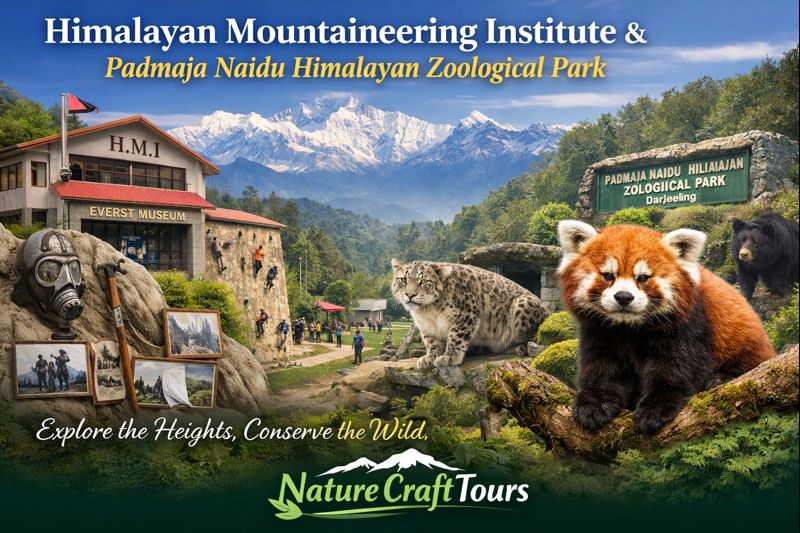
Perched on the forested slopes below Observatory Hill and facing the eternal snows of Kanchenjunga, together form one of the most intellectually stimulating and emotionally enriching travel experiences in Darjeeling. This is not merely a sightseeing stop; it is a living classroom of Himalayan history, human endurance, wildlife conservation, and the philosophy of coexistence with fragile mountain ecosystems.
As an explorer walking through these grounds, one senses a quiet gravity—stories of daring ascents etched into stone and steel, and the silent resilience of high-altitude fauna preserved with scientific care. Visiting these institutions is essential to understanding why Darjeeling occupies a unique position in the cultural and environmental narrative of the Eastern Himalayas.
Geographical Context and Setting
The Himalayan Mountaineering Institute and Padmaja Naidu Himalayan Zoological Park are located adjacent to one another on Jawahar Parbat, approximately 2 kilometers from Darjeeling Mall (Chowrasta). Set at an average elevation of around 7,000 feet above sea level, the complex enjoys cool alpine air, dense mixed forests of oak, magnolia, and conifer, and uninterrupted views toward the Kanchenjunga massif on clear days.
The proximity of these institutions is deliberate. Together, they create a cohesive zone where human exploration of the Himalaya is studied alongside the preservation of its native wildlife—an approach that reflects modern Himalayan research ethics.
Historical Origins of the Himalayan Mountaineering Institute
The Himalayan Mountaineering Institute was established in 1954, shortly after the historic first ascent of Mount Everest. The vision was to create a permanent center where mountaineering skills could be formally taught, Himalayan exploration documented, and the spirit of adventure nurtured responsibly. Darjeeling was chosen due to its strategic location, legacy as a gateway to the Himalaya, and its long association with mountaineers, surveyors, and explorers.
Over the decades, HMI has trained thousands of mountaineers—both Indian and international—many of whom have gone on to attempt and conquer major Himalayan peaks. Yet beyond technical instruction, the institute has also become a repository of Himalayan history and a source of inspiration for travelers who may never climb a mountain but wish to understand those who do.
Everest Museum – A Chronicle of Human Determination
One of the most compelling sections within HMI is the Everest Museum. Carefully curated exhibits document the evolution of Himalayan exploration, early expeditions, equipment used in different eras, and personal memorabilia associated with pioneering climbers. Original photographs, maps, and handwritten notes provide a rare insight into the logistical and emotional challenges of high-altitude exploration.
The museum also contextualizes mountaineering within broader Himalayan geography, helping visitors understand why peaks such as Everest, Kanchenjunga, and Makalu have shaped global perceptions of the region.
Training Grounds and Demonstration Areas
The institute’s outdoor training zones, including artificial rock faces and rope-work areas, are often active with trainees practicing climbing techniques. Observing these sessions offers visitors a practical glimpse into the discipline, precision, and teamwork required in mountaineering—an experience far removed from the romanticized notion of adventure.
Padmaja Naidu Himalayan Zoological Park – Conservation at Altitude
Established in 1958, the Padmaja Naidu Himalayan Zoological Park is globally recognized as one of the highest-altitude zoological parks in the world. Unlike conventional zoos, this institution focuses almost exclusively on species native to the Himalayan and sub-Himalayan regions, many of which are endangered or threatened.
The zoo operates as a conservation and breeding center, supporting scientific research, education, and species recovery programs. Its layout follows the natural contours of the hillside, allowing animals to live in environments that closely resemble their native habitats.
Key Species to Observe
Red Panda: The flagship species of the zoo, the red panda symbolizes Himalayan conservation efforts. Observing this elusive creature in a climate suited to its needs offers a far more ethical and educational experience than low-altitude enclosures.
Snow Leopard: Rare and majestic, the snow leopard represents the extreme adaptability of Himalayan wildlife. Interpretive panels explain its ecological role and the challenges of conserving a species that inhabits some of the world’s harshest terrain.
Himalayan Black Bear, Tibetan Wolf, and Himalayan Monal: Each species highlights a different ecological niche within the mountain ecosystem, helping visitors appreciate the region’s biodiversity beyond its scenic beauty.
Educational Signage and Research Orientation
Throughout the zoo, informative displays provide scientific details about animal behavior, diet, altitude adaptation, and conservation status. This emphasis on education transforms a casual walk into an immersive learning experience—particularly valuable for families, students, and environmentally conscious travelers.
Important Points to See Within the Complex
- Everest Museum galleries at HMI
- Outdoor mountaineering training zones
- Memorial areas dedicated to Himalayan explorers
- Red Panda conservation enclosures
- Snow Leopard habitat zones
- Interpretive conservation signage and viewpoints
Major Distances from Key Locations
Understanding distances helps travelers plan efficiently while exploring Darjeeling:
- Darjeeling Mall (Chowrasta): approximately 2 km
- Ghoom Monastery: approximately 5 km
- Tiger Hill: approximately 11 km
- New Jalpaiguri Railway Station: approximately 70 km
- Bagdogra Airport: approximately 75 km
How to Reach Himalayan Mountaineering Institute & Zoo
By Rail
The nearest major railhead is New Jalpaiguri (NJP). From NJP, travelers can reach Darjeeling by hill road via Siliguri, using reserved or shared vehicles. The journey typically takes 3.5 to 4 hours depending on traffic and weather conditions.
By Air
Bagdogra Airport serves as the nearest airport with regular connections to major Indian cities. From the airport, Darjeeling is accessible by road through scenic mountain highways.
Local Access Within Darjeeling
From the town center, the institute and zoo are easily reachable by short taxi rides or even a brisk uphill walk for those who enjoy exploring on foot.
Staying Options Near the Site
The area around Jawahar Parbat and nearby Darjeeling town offers a wide range of accommodation choices. Travelers may select from heritage hotels, boutique hillside stays, eco-conscious lodges, and comfortable mid-range properties. Staying closer to the institute allows early morning visits, when animal activity is higher and the surroundings are quieter.
Many travelers combine this visit with nearby attractions such as Observatory Hill, Darjeeling tea estates, and the town’s colonial-era walking trails, making the location particularly convenient.
Best Time to Visit
Spring (March to May)
Spring offers mild temperatures, blooming rhododendrons, and excellent visibility. Wildlife activity within the zoo is higher, and the surrounding forest appears vibrant and alive.
Autumn (October to November)
Autumn is widely considered the best season for clear mountain views. Crisp air, stable weather, and fewer monsoon-related disruptions make this period ideal for thoughtful exploration.
Winter and Monsoon Considerations
Winters can be cold, with occasional snowfall, creating a dramatic atmosphere but limiting movement. Monsoon months bring lush greenery but reduced visibility and slippery paths.
Why This Visit Matters to the Conscious Traveler
In an era of hurried itineraries and superficial sightseeing, the Himalayan Mountaineering Institute and Padmaja Naidu Himalayan Zoological Park invite visitors to slow down and reflect. They represent two complementary narratives: humanity’s quest to understand and traverse the world’s highest mountains, and the responsibility to protect the life forms that call these mountains home.
For travelers exploring Darjeeling in depth—perhaps alongside heritage walks, tea garden visits, or journeys into offbeat Himalayan hamlets—this complex offers essential context. It enriches the journey with knowledge, humility, and a renewed respect for the fragile balance that sustains the Himalaya.
When woven naturally into a broader Darjeeling itinerary, alongside experiences such as heritage hill walks or Kanchenjunga viewpoint explorations, this destination transforms from a simple attraction into a meaningful chapter of Himalayan understanding.