





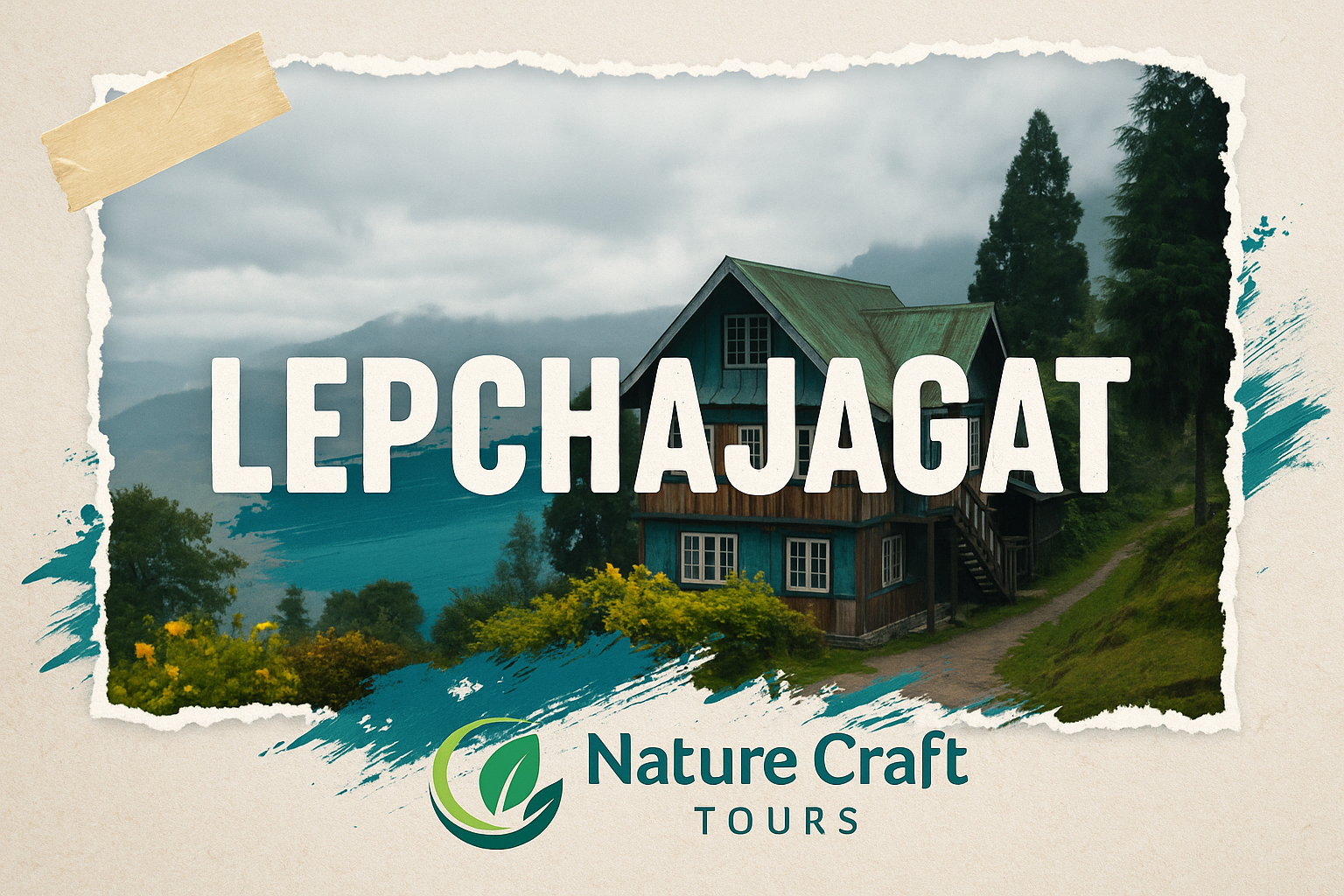
Lepchajagat
– A Silent Himalayan Retreat Wrapped in Forests, Clouds, and Ancient Lepcha Heritage
Lepchajagat is one of the most serene, enchanting, and culturally rich destinations in the Darjeeling Himalayas. Located at an elevation of nearly 6,956 feet and wrapped in thick forests of pine, fir, and oak, this quiet hamlet offers panoramic views of the Kanchenjunga range, pristine nature trails, birdwatching opportunities, and a deep sense of tranquillity far from the crowded tourist circuits.
Once a dense forest settlement belonging to the indigenous Lepcha community, Lepchajagat retains its name as a tribute—“Lepcha” referring to the tribe, and “Jagat” meaning world. Thus, Lepchajagat literally translates to “The World of the Lepchas,” capturing its cultural and ethnic depth. This region today forms part of the Senchal Wildlife Sanctuary, a protected biodiversity zone of enormous ecological value.
To understand its environmental importance, visitors may refer to official conservation details through the state forest administration:
West Bengal Forest Department (.gov) – Senchal Forest & Protected Areas
Lepchajagat is ideal for travellers seeking peace, meditation, eco-tourism, forest walks, Kanchenjunga viewing, romantic getaways, and slow travel. This comprehensive guide explores its attractions, accessibility, major distances, accommodation styles, local culture, and the best time to visit—crafted with deep research and formal, descriptive narration.
Overview of Lepchajagat
Located about 8 km from Ghoom and 14 km from Darjeeling, Lepchajagat lies on the western slope overlooking the magnificent Kanchenjunga range. The area is sparsely populated, with dense forests dominating the landscape. Mist drifts through the trees almost throughout the year, adding to its mystical charm.
The hamlet sits inside a forest zone that shelters:
- Himalayan black bears
- Barking deer
- Leopards (rarely sighted)
- Pheasants and thrushes
- Numerous species of Himalayan birds
For historical references and ecological background, travellers may explore:
Senchal Wildlife Sanctuary – Wikipedia
The forests surrounding Lepchajagat are quiet, lush, and often wrapped in curtains of clouds. The atmosphere offers a sense of meditative stillness, making it perfect for writers, nature lovers, photographers, and travellers seeking solitude.
Important Places to See in and Around Lepchajagat
1. Viewing Points of Kanchenjunga
Lepchajagat is renowned for its uninterrupted view of the Kanchenjunga range. Several points within the forested areas open up to breathtaking panoramas of:
- Mt. Kanchenjunga glowing in morning light
- Snowy peaks of the Eastern Himalayas
- The layered valleys of Sikkim and Darjeeling
During winter, the skies remain clear, offering spectacular sunrise and sunset views.
2. Hawa Ghar Viewpoint
Hawa Ghar (The House of Winds) is one of the most iconic viewpoints in Lepchajagat. This vantage point is frequently surrounded by drifting clouds, and on clear days, the entire Himalayan range reveals itself with astonishing clarity. It is a favourite among landscape photographers.
3. Ghoom Rock
A short trek from Lepchajagat leads to the famous Ghoom Rock, offering a thrilling cliffside viewing platform. The trek passes through mossy trails, whispering pine forests, and scenic ridges.
4. Forest Trails of Lepchajagat
The natural trails around Lepchajagat are among the finest in Darjeeling district. These paths offer:
- Dense oak and pine forests
- Moss-covered tree trunks
- Chirping Himalayan birds
- Wild orchids and seasonal flowers
- Sacred trees worshipped by the Lepcha tribes
The trails are ideal for forest bathing, quiet reflection, and nature study.
5. Lepcha Cultural Pockets (Nearby)
Some nearby settlements preserve Lepcha heritage. Visitors can observe:
- Traditional bamboo and wooden homes
- Folklore centered on nature spirits
- Indigenous agricultural practices
- Handwoven clothing and bamboo crafts
Though Lepchajagat does not have a large resident Lepcha population today, the region’s cultural memory remains deeply tied to the tribe’s traditions.
6. Darjeeling Town (14 km)
Being close to Darjeeling, travellers can explore major attractions like:
- Tiger Hill
- Batasia Loop
- Darjeeling Himalayan Railway (UNESCO site)
- HMI & Zoo
- Tea gardens such as Happy Valley
7. Ghoom Monastery
One of the oldest and most significant monasteries in the region, the Yiga Choeling Monastery at Ghoom houses a large statue of Maitreya Buddha and ancient Tibetan manuscripts.
Major Distances from Lepchajagat
- Darjeeling to Lepchajagat: approx. 14 km (40 minutes)
- Ghoom to Lepchajagat: approx. 8 km (25 minutes)
- NJP Railway Station to Lepchajagat: approx. 65–70 km (2.5–3 hours)
- Bagdogra Airport to Lepchajagat: approx. 70 km (3 hours)
- Kurseong to Lepchajagat: approx. 35 km
- Mirik to Lepchajagat: approx. 40–45 km
Travel time may increase slightly during monsoon due to rainfall and fog.
How to Reach Lepchajagat
By Air
The nearest airport is Bagdogra. Upon arrival, travellers can hire a private car. The most common route is:
Bagdogra → Siliguri → Sonada → Ghoom → Lepchajagat
The final stretch ascends through forested slopes, offering spectacular scenery.
By Rail
New Jalpaiguri (NJP) is the closest major railway station. From NJP, travellers may:
- Hire a reserved car
- Take shared vehicles to Ghoom or Darjeeling and hire a local car
Many travellers combine hill destinations with wetland ecosystems in larger itineraries. For a contrasting experience, some also explore a Sundarban Private Tour as part of extended nature travel plans.
By Road
Lepchajagat is well connected by scenic routes:
- Ghoom → 3rd Mile → Lepchajagat
- Darjeeling → Jorebungalow → Ghoom → Lepchajagat
- Kurseong → Sonada → Ghoom → Lepchajagat
Roads are smooth for most of the year except during peak monsoon when fog and rain may slow the journey.
Staying Options in Lepchajagat
Lepchajagat retains its eco-friendly atmosphere by limiting construction. As a result, accommodation options include:
- Government forest bungalows
- Eco-stays
- Homestays run by local families
Forest Bungalows
These government-run lodges offer:
- Traditional wooden construction
- Warm interiors
- Large windows overlooking forests
- A peaceful, isolated ambience
Eco-Stays
Eco-stays blend modern comfort with sustainability. They often offer:
- Wood-panelled rooms
- Nature decks
- Organic meals
- Birdwatching viewpoints
Local Homestays
Homestays in Lepchajagat allow travellers to experience Himalayan village life firsthand. Expect:
- Warm hospitality
- Simple, clean rooms
- Freshly cooked homemade meals
- Quiet surroundings close to nature
Food, Culture, and Local Lifestyle
Lepchajagat retains elements of its heritage through food, customs, and forest-centric lifestyles. Local meals typically include:
- Rice and lentil dishes
- Fresh leafy vegetables
- Momos and thukpa
- Traditional fermented items
- Herbal teas and homemade pickles
Cultural life is influenced by Nepali-speaking Himalayan communities, with traces of traditional Lepcha customs still visible in folklore and seasonal rituals.
Best Time to Visit Lepchajagat
Winter (November to February)
Clear skies and chilling air make this the best season for Kanchenjunga views. Snow may appear during peak winter on nearby slopes.
Spring (March to April)
Flowers bloom, forests brighten, and temperatures remain moderate—excellent for trekking and photography.
Summer (May to June)
A cool climate and gentle breezes offer a refreshing retreat from the plains.
Monsoon (July to September)
Forests turn lush green, but fog and rain dominate. Ideal for those who enjoy misty, monsoon aesthetics.
Autumn (October)
Autumn brings clear skies, soft sunlight, and comfortable temperatures—excellent for sightseeing.
Nearby Attractions Around Lepchajagat
- Ghoom: Monastery, Batasia Loop, war memorial
- Darjeeling: Tea gardens, museums, toy train
- Tiger Hill: Sunrise viewpoint
- Jorebungalow: Hill junction with great views
- Sonada: Market town with monasteries
Travel Tips for Lepchajagat
- Carry warm clothing throughout the year.
- Respect quiet hours—this is a protected forest zone.
- Do not trek alone deep into the forest without guidance.
- Carry binoculars for birdwatching.
- Pre-book stays during winter and spring.
- Drive cautiously during foggy conditions.
Conclusion
Lepchajagat is a rare Himalayan gem—silent, pristine, and deeply spiritual. With its dense forests, breathtaking Kanchenjunga views, sustainable tourism practices, and cultural richness, it offers a healing retreat far from the noise of cities. Whether you are a photographer capturing the mountains, a traveller seeking solitude, or a nature lover exploring wild Himalayan trails, Lepchajagat welcomes you with open skies, deep forests, and timeless serenity.
In its quiet pathways, drifting clouds, and whispering pines, Lepchajagat reveals a simple truth—nature speaks most clearly when everything else is silent.