




Bunkulung
– A Quiet Himalayan Hamlet Where Silence Becomes a Luxury
Article Title: Bunkulung: An Untouched Offbeat Village of Darjeeling Where Nature Lives Uninterrupted
Nestled gently on the lesser-explored folds of the Eastern Himalayas, Bunkulung stands as a rare reminder of what the Darjeeling hills once were—unhurried, deeply rooted in nature, and untouched by hurried tourism. This small rural settlement, located away from the bustling hill stations, offers an experience that is not built on attractions alone but on atmosphere, silence, and authenticity.
Bunkulung is not a destination for hurried sightseeing. It is a place for those who seek meaning in mist-laden mornings, value the rhythm of village life, and prefer conversations with nature over crowded viewpoints. The village is surrounded by forests, terraced cultivation, and distant Himalayan ridgelines that slowly change colour with the movement of the sun.
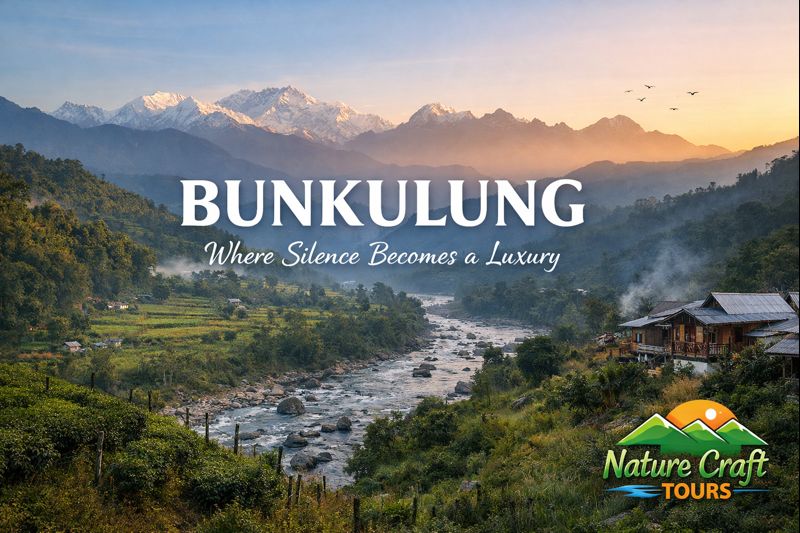
Geographical Setting and Regional Context
Bunkulung is situated in the Darjeeling hill region of West Bengal, forming part of a larger network of offbeat hamlets that lie between established towns and deep forest belts. The village enjoys a moderate altitude, ensuring a comfortable climate throughout the year while offering expansive views of surrounding valleys.
Unlike commercial hill destinations, Bunkulung has retained its agrarian character. Houses are scattered rather than clustered, and footpaths often serve as connectors between homesteads. The natural vegetation includes bamboo groves, wild ferns, seasonal flowers, and patches of forest that support birds and small wildlife.
Why Bunkulung Remains Truly Offbeat
The defining characteristic of Bunkulung is its absence of commercial tourism. There are no large hotels, no noisy markets, and no artificial entertainment zones. What exists instead is space—space to breathe, walk, observe, and reconnect.
The village attracts travellers who have already experienced popular Darjeeling circuits and now wish to explore quieter landscapes such as Tinchuley, which shares a similar philosophy of slow travel and community-based tourism. Those who appreciate such destinations will naturally resonate with Bunkulung’s understated charm.
Atmosphere and Daily Village Life
Life in Bunkulung begins early. Mornings are marked by soft sunlight filtering through mist, the sound of roosters, and distant temple bells. Villagers engage in farming, livestock care, and household chores with a rhythm that remains unchanged by tourist seasons.
Visitors often find themselves becoming silent observers—watching elders converse on verandas, children walking to nearby schools, and women tending vegetable patches that supply fresh produce for daily meals.
Important Places and Experiences Around Bunkulung
Rather than fixed tourist spots, Bunkulung offers experiences shaped by nature and interaction. The surrounding area provides several gentle walks, forest edges, and vantage points that reveal panoramic valley views.
Village Walks and Nature Trails
Walking through Bunkulung is an experience in itself. Narrow trails wind through homes, fields, and wooded patches. These walks allow visitors to observe traditional architecture, organic farming methods, and native plant species.
Sunrise and Mountain Views
On clear mornings, higher points around the village offer glimpses of Himalayan peaks glowing under early sunlight. These moments are subtle and fleeting, best appreciated in silence with a warm cup of tea.
Cultural Interaction
Bunkulung’s strength lies in its people. Conversations with villagers reveal stories of land, seasons, festivals, and resilience. Such interactions often become the most memorable aspect of a visit.
Major Distances from Bunkulung
- Darjeeling town – approximately 35–40 km (depending on route)
- Kurseong – approximately 30 km
- Siliguri – approximately 65–70 km
- Bagdogra Airport – approximately 70 km
- New Jalpaiguri Railway Station – approximately 72 km
The journey itself is scenic, passing through tea gardens, forest stretches, and quiet hill roads that gradually introduce travellers to the serenity awaiting them.
How to Reach Bunkulung
By Air
The nearest airport is Bagdogra. From there, travellers can hire a private vehicle toward the Darjeeling hill region. The final approach to Bunkulung involves narrow hill roads, making experienced local drivers preferable.
By Train
New Jalpaiguri is the nearest major railway station. From NJP, road transport is the most practical option to reach the village.
By Road
Bunkulung is accessible via Darjeeling or Kurseong routes. While public transport reaches nearby areas, the last stretch is best covered by private vehicle or pre-arranged local transport.
Travellers often combine such offbeat destinations with broader regional explorations, sometimes pairing hill journeys with nature-based experiences such as a Sundarban Tour for a diverse Eastern India itinerary.
Staying Options in Bunkulung
Accommodation in Bunkulung is primarily community-based. Visitors stay in village homestays that emphasize simplicity, cleanliness, and local hospitality.
Homestays
Homestays provide basic yet comfortable rooms, home-cooked meals prepared with local ingredients, and opportunities to experience daily village life. These stays foster cultural exchange and directly support local families.
Eco-Friendly Lodges (Nearby)
In nearby offbeat areas, small eco-lodges may be available, designed to blend with the landscape and maintain low environmental impact.
Food and Local Cuisine
Meals in Bunkulung are seasonal and organic. Rice, lentils, fresh vegetables, fermented preparations, and simple meat dishes form the core of the cuisine. Food is prepared with minimal spices, allowing natural flavours to dominate.
Best Time to Visit Bunkulung
The ideal period to visit Bunkulung is from October to April. During these months, the weather remains pleasant, skies are clearer, and village paths are easily accessible.
- October to November: Clear views, festive atmosphere, mild temperatures.
- December to February: Cold nights, misty mornings, ideal for solitude seekers.
- March to April: Blooming vegetation and comfortable walking weather.
The monsoon months bring lush greenery but may limit movement due to rain and road conditions.
Responsible Travel and Sustainability
Bunkulung thrives because it has not been overexposed. Visitors are encouraged to practice responsible tourism—respecting local customs, minimizing waste, and supporting community-run accommodations.
Travellers who value ethical and nature-based tourism often complement such hill experiences with environmentally conscious journeys like a Sundarban Travel plan, reinforcing a sustainable travel philosophy.
Bunkulung
Bunkulung wakes before the world begins to rush,
Mist wraps the hills in a promise of calm.
Footsteps soften where silence speaks,
And time forgets the language of clocks.
Smoke rises gently from kitchen fires,
Mountains listen, valleys reply.
No crowds arrive, no noise intrudes,
Only the breath of forests remains.
Here, journeys slow into memories,
And the soul learns how to be still.
Bunkulung is not designed to impress—it is designed to endure. Its appeal lies in what it refuses to become. For travellers seeking authenticity, stillness, and a meaningful connection with the Himalayas, this village offers an experience that lingers long after the journey ends.
In a world increasingly defined by speed and spectacle, Bunkulung stands quietly, reminding us that sometimes the most profound destinations whisper rather than shout.