




Dhotrey
– A Quiet Himalayan Hamlet Where Forests, Footpaths, and Faith Converge
Nestled gently along the historic Manebhanjan–Sandakphu trail, Dhotrey is a secluded Himalayan hamlet that feels untouched by urgency and excess. Resting at an altitude of approximately 8,500 feet in the Darjeeling district of West Bengal, this small village unfolds slowly—through drifting mist, whispering pine forests, and timeworn footpaths once used by traders, monks, and mountain walkers. Dhotrey is not designed for hurried sightseeing; it is meant to be experienced patiently, step by step.
Unlike crowded hill towns, Dhotrey retains an atmosphere of restraint and quiet dignity. Here, mornings begin with cloud movement rather than traffic, and evenings settle gently over wooden houses warmed by hearth fires. For travelers seeking an offbeat destination defined by nature, history, and silence, Dhotrey offers a deeply rewarding escape.
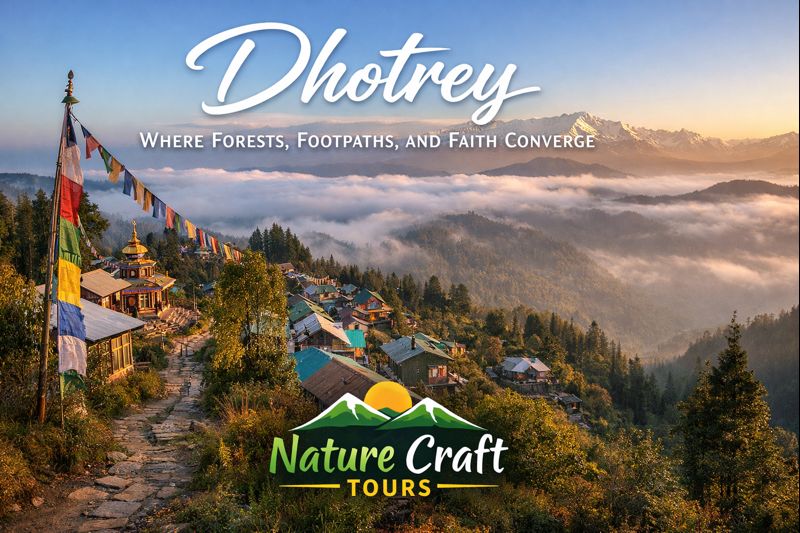
Geographical Setting and Natural Landscape
Dhotrey lies about 11 kilometers from Manebhanjan, the traditional gateway to Sandakphu and Phalut. The village is positioned within a dense forest belt that forms part of the Singalila ridge ecosystem. Oak, pine, magnolia, and seasonal rhododendron trees dominate the terrain, creating layered shades of green throughout the year.
The altitude ensures cool temperatures even during summer months, while frequent cloud cover lends the village a dreamlike quality. The surrounding forests are ecologically significant, supporting diverse birdlife and acting as natural corridors for Himalayan flora and fauna. This close relationship between settlement and forest defines Dhotrey’s character.
Climate and Seasonal Character
Dhotrey experiences a temperate mountain climate. Summers remain mild and refreshing, winters are cold and quiet, and monsoon months transform the landscape into a lush, emerald expanse. Fog and cloud movement are common, particularly during early mornings and late afternoons, enhancing the village’s ethereal atmosphere.
Historical Significance of Dhotrey
Dhotrey holds an understated yet important place in Himalayan travel history. During the British era, it served as a resting halt for trekkers and forest officials moving along the Manebhanjan–Tonglu–Sandakphu route. Long before modern tourism emerged, this trail connected mountain communities and trade routes across the Singalila range.
Stone paths, old forest clearings, and local oral traditions still echo this past. Dhotrey never evolved into a commercial hub, allowing it to preserve the quiet dignity of a traditional waypoint rather than a tourist spectacle.
Important Places and Experiences in Dhotrey
Dhotrey Monastery
The village monastery stands as a spiritual anchor for the local community. Modest in scale yet profound in presence, it is surrounded by prayer flags and forested slopes. The sound of chanting during early hours and the gentle movement of prayer flags create a deeply calming environment for visitors.
Forest Trails and Walking Routes
Walking is the essence of experiencing Dhotrey. Trails leading toward Tonglu and Meghma pass through dense forests, offering encounters with birdsong, filtered sunlight, and moss-covered stones. These paths are ideal for slow exploration, photography, and mindful observation of the Himalayan ecosystem.
Mist, Light, and Quiet Sunrises
Rather than dramatic viewpoints, Dhotrey offers subtle visual poetry. Sunrise reveals itself gradually through thinning mist, pale light touching treetops, and fleeting glimpses of distant ridges. The experience is intimate and reflective rather than grand.
Major Distances from Dhotrey
- Dhotrey to Manebhanjan – approximately 11 km
- Dhotrey to Darjeeling – approximately 32 km
- Dhotrey to Siliguri – approximately 85 km
- Dhotrey to Tonglu – approximately 6 km (trekking route)
- Dhotrey to Sandakphu – approximately 21 km (trekking trail)
How to Reach Dhotrey
By Air
Bagdogra Airport is the nearest airport, located around 90 kilometers from Dhotrey. From the airport, travelers proceed by road toward Darjeeling or Manebhanjan before ascending to the village.
By Train
New Jalpaiguri (NJP) Railway Station is the closest major railhead. Well connected with major Indian cities, NJP serves as the primary arrival point for travelers heading to the Singalila region.
By Road
From Manebhanjan, a narrow forest road leads to Dhotrey. The journey itself is scenic, passing through wooded stretches and mountain bends. Smaller vehicles are preferred due to road conditions.
Staying Options in Dhotrey
Accommodation in Dhotrey is limited to small homestays and modest mountain lodges. These properties emphasize simplicity, warmth, and personal hospitality rather than luxury. Wooden interiors, cozy bedding, and home-style meals define the experience.
Stays here provide an authentic glimpse into mountain life. Travelers looking to combine their visit with nearby offbeat destinations may also explore accommodations around Tinchuley, which complements Dhotrey with wider valley views and tea garden landscapes.
Best Time to Visit Dhotrey
Spring (March to May)
Spring brings blooming rhododendrons, clear walking trails, and comfortable temperatures. This is one of the most visually appealing seasons to visit.
Summer (June)
Early summer remains cool and misty, offering relief from plains heat and creating atmospheric forest scenes.
Monsoon (July to September)
Monsoon enhances greenery but also brings fog and occasional travel disruptions. Ideal for travelers who appreciate solitude and dramatic landscapes.
Autumn (October to November)
Autumn offers crisp air, stable weather, and clearer views. It is among the best seasons for relaxed exploration.
Winter (December to February)
Winters are cold and quiet, with a strong sense of isolation. Ideal for travelers seeking silence and introspection.
Cultural Rhythm and Local Life
Life in Dhotrey unfolds slowly, guided by seasonal cycles and community traditions. Agriculture, forest dependence, and spiritual observances shape daily routines. Visitors are welcomed with warmth, often sharing meals and conversations that reveal the village’s understated hospitality.
Why Dhotrey Appeals to Thoughtful Travelers
Dhotrey is not about attractions; it is about atmosphere. It rewards those who value quiet walks, unhurried mornings, and meaningful connections with place. For travelers familiar with offbeat Darjeeling locations such as Tinchuley, Dhotrey feels like a deeper step into Himalayan stillness.
Nature Journeys Beyond the Mountains
Travelers interested in contrasting ecosystems may complement their Himalayan journey with experiences such as a thoughtfully curated Sundarban Tour or a detailed Sundarban Tour Package, where mangrove forests and riverine wildlife present a strikingly different natural rhythm.
For Dhotrey
In Dhotrey, silence learns to speak,
Through pine needles and drifting cloud,
Footpaths remember every traveler,
Even those who walked a century ago,
Mist arrives without explanation,
And leaves without farewell,
Evenings gather around warm windows,
Stars lean closer to the rooftops,
Here, time loosens its grip gently,
And the mountains breathe in peace.
Dhotrey is a reminder that the Himalayas are not only about peaks and panoramas, but also about pauses. In its forests, histories, and human warmth, the village offers a form of travel that feels restorative rather than consuming. Those who arrive with patience leave with something rarer than photographs—a sense of quiet belonging.