
Kaffer Gaon – A Remote Himalayan Hamlet Where Silence, Forest, and Mountain Air Define Life
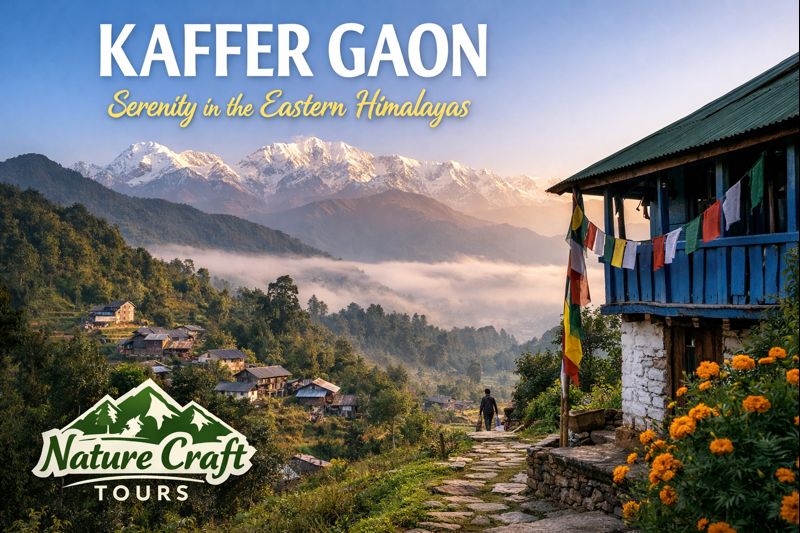
Hidden quietly within the lesser-known folds of the Eastern Himalayas, Kaffer Gaon is an untouched village that represents the rare continuity of traditional mountain life. Unlike popular hill destinations shaped by commercial tourism, Kaffer Gaon remains profoundly rural, self-sustained, and deeply connected to its surrounding forests, streams, and terraced slopes. This small settlement is not merely a destination; it is an experiential landscape where time slows down, human presence feels modest, and nature dominates every visual and sensory detail.
Kaffer Gaon is gradually attracting travelers who deliberately seek destinations away from mainstream hill stations. Its appeal lies not in constructed attractions, but in authentic village rhythm, indigenous culture, organic farming practices, and uninterrupted views of forested ridges and distant Himalayan silhouettes. The village offers a rare opportunity to observe mountain ecology and human coexistence without intrusion.
Geographical Setting and Natural Character of Kaffer Gaon
Kaffer Gaon is located in a high-altitude rural belt of the Eastern Himalayan region, surrounded by dense mixed forests comprising pine, oak, and rhododendron species. The terrain is undulating, with narrow village paths, terraced agricultural fields, and natural water channels flowing down the slopes. The settlement is relatively isolated, which has helped preserve its ecological balance and cultural integrity.
The village enjoys a cool temperate climate throughout the year. Morning mist drapes the hills, while afternoons open into crisp mountain light. Nights are calm and cold, illuminated by stars rather than artificial light. This environmental purity is one of Kaffer Gaon’s most valuable assets.
Forest Cover and Biodiversity
The forests surrounding Kaffer Gaon act as a natural sanctuary for birds, small mammals, and endemic plant species. Seasonal flowers bloom across forest clearings, while medicinal herbs are still identified and used by local residents. Birdsong is a constant presence, making the village particularly appealing to nature observers and slow travelers.
Village Life and Cultural Identity
Life in Kaffer Gaon follows agricultural cycles rather than tourism seasons. Most households depend on terrace farming, cultivating seasonal vegetables, maize, millet, and pulses. Livestock rearing is modest and sustainable, integrated carefully with farmland and forest access.
Village homes are traditionally constructed using stone, wood, and corrugated roofs, designed to withstand cold winters and monsoon rains. Interiors are simple but warm, often centered around a hearth that remains the heart of domestic life.
Local Traditions and Community Practices
Festivals in Kaffer Gaon are intimate community affairs rather than public spectacles. Rituals are deeply rooted in agrarian belief systems and seasonal transitions. Music, folk storytelling, and shared meals reinforce community bonds and preserve generational knowledge.
Important Places and Experiences Around Kaffer Gaon
While Kaffer Gaon does not offer conventional sightseeing points, its true value lies in experiential exploration. Every trail, forest bend, and agricultural terrace presents an opportunity to engage with the landscape organically.
Village Walks and Forest Trails
Guided or self-guided village walks reveal traditional farming methods, water management systems, and age-old footpaths connecting neighboring hamlets. Forest trails leading away from the village provide quiet spaces for reflection and nature immersion.
Sunrise and Sunset Observation Points
Elevated ridges near Kaffer Gaon offer expansive views of distant Himalayan ranges on clear days. Sunrise hours bring dramatic color transitions across the sky, while sunsets paint forested slopes in deep amber and violet hues.
Major Distances to Kaffer Gaon
Understanding travel distances is essential due to the village’s remote location and limited transport frequency.
- Kaffer Gaon to Siliguri: approximately 95–110 km depending on route
- Kaffer Gaon to Kalimpong town: approximately 35–40 km
- Kaffer Gaon to Lava: approximately 20–25 km
- Kaffer Gaon to New Jalpaiguri Railway Station: approximately 100 km
- Kaffer Gaon to Bagdogra Airport: approximately 105 km
Road conditions vary seasonally, particularly during monsoon months when landslides may affect travel time.
How to Reach Kaffer Gaon
By Air
Bagdogra Airport is the nearest operational airport. From the airport, travelers must continue by road through hill terrain. The drive gradually transitions from plains to forested slopes, offering scenic transitions along the way.
By Rail
New Jalpaiguri Railway Station serves as the main railhead. From here, private vehicles or shared hill taxis can be arranged toward Kalimpong and onward to Kaffer Gaon.
By Road
Road travel is the final and most critical leg. Vehicles must navigate narrow mountain roads, making experienced drivers essential. The remoteness of Kaffer Gaon ensures low traffic density but demands careful planning.
Staying Options in Kaffer Gaon
Accommodation in Kaffer Gaon is intentionally limited and aligned with sustainable tourism principles. Rather than hotels, travelers will find small homestays and village-run lodges that reflect local architectural styles and daily life.
Village Homestays
Homestays offer clean, comfortable rooms with home-cooked meals prepared from locally sourced ingredients. Staying with host families allows visitors to observe daily routines, traditional cooking methods, and seasonal agricultural work.
Eco-Oriented Lodges
A few eco-lodges operate near Kaffer Gaon, designed with minimal environmental impact. These properties emphasize quiet living, waste reduction, and natural materials rather than luxury.
Best Time to Visit Kaffer Gaon
Spring (March to May)
Spring brings blooming rhododendrons, moderate temperatures, and clear skies. This season is ideal for village walks and forest exploration.
Summer (June to Early July)
Summers remain pleasant, with cool mornings and mild afternoons. Light rainfall enhances greenery, although travel requires weather awareness.
Travelers planning broader eco-tourism experiences across eastern India often combine mountain retreats with riverine wilderness journeys such as a well-planned Sundarban Tour, creating a balanced itinerary between hills and mangroves.
Autumn (September to November)
Autumn offers the clearest mountain views and stable weather conditions. This is widely considered the best season for photographers and nature enthusiasts.
Winter (December to February)
Winters are cold but serene. While temperatures drop significantly at night, clear skies and minimal tourist presence make this season appealing to solitude seekers.
Responsible Travel Guidelines for Kaffer Gaon
Visitors are encouraged to respect local customs, minimize waste, and avoid plastic usage. Kaffer Gaon’s fragile ecology depends on conscious travel behavior.
Those who appreciate meaningful, slow travel experiences often complement Himalayan village stays with carefully curated wildlife journeys like a guided Sundarban Travel experience, ensuring economic support reaches local communities across diverse ecosystems.
Why Kaffer Gaon Represents the Future of Offbeat Himalayan Tourism
Kaffer Gaon stands as a model for low-impact, community-centered tourism. Its strength lies in restraint rather than expansion. Travelers do not come here for entertainment but for reconnection—with land, people, and self.
As mainstream hill stations face ecological stress and cultural dilution, villages like Kaffer Gaon offer an alternative narrative. They remind us that the Himalayas are not products to be consumed, but living landscapes deserving patience, respect, and preservation.
For those seeking authenticity over amenities and silence over spectacle, Kaffer Gaon remains one of the Eastern Himalayas’ most quietly profound destinations.