
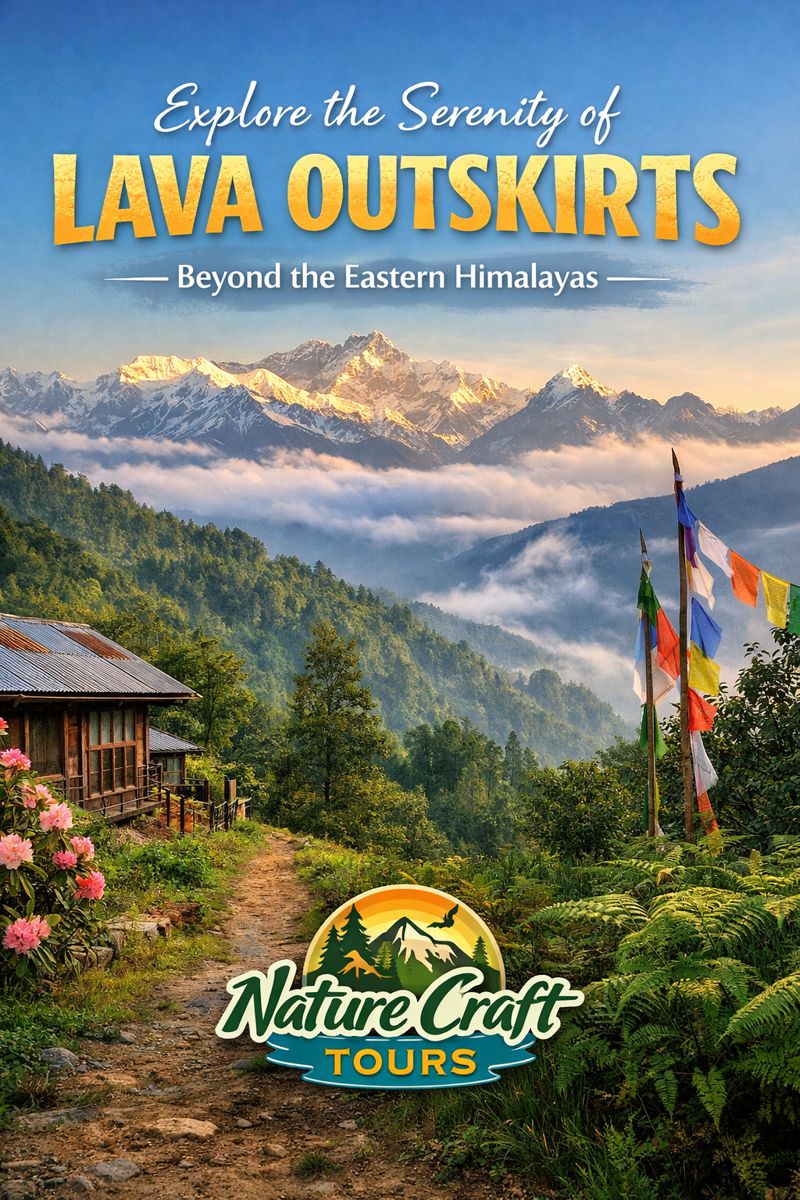
Lava Outskirts: A Deep Travel Narrative Beyond the Familiar Hills
The outskirts of Lava, nestled quietly in the eastern Himalayas of Kalimpong district, represent a landscape where geography, biodiversity, and human settlement blend in rare harmony. While Lava town itself has become increasingly known among travelers, its surrounding hamlets, forest corridors, ridgelines, and river-fed valleys still remain largely untouched by mainstream tourism. These peripheral zones of Lava are not merely extensions of a hill station; they are living ecological theatres shaped by ancient tectonic forces, dense temperate forests, and generations of mountain communities.
This region lies at an average elevation ranging from 6,200 to 7,500 feet, forming a transitional belt between the subtropical lower slopes and the higher alpine terrains of Neora Valley. The Lava outskirts are characterized by undulating forested slopes, moss-laden oak trees, expansive rhododendron belts, and clear-weather views of the Kanchenjunga massif. For travelers seeking silence, authenticity, and research-worthy landscapes, this zone offers far more than a conventional hill holiday.
Geographical Setting and Ecological Importance
The outskirts of Lava sit strategically along the eastern fringe of the Neora Valley National Park, one of India’s most biologically diverse protected areas. This positioning makes the region a crucial ecological buffer zone. Forests here predominantly consist of oak, magnolia, fir, hemlock, and rhododendron species, interspersed with bamboo thickets and fern-covered undergrowth.
The altitude variation creates multiple microclimates, allowing a wide range of flora and fauna to coexist. Research conducted by regional forest departments and independent ecological studies confirm the presence of over 280 bird species, including satyr tragopan, rufous-throated partridge, black eagle, and several migratory flycatchers. The outskirts also form movement corridors for mammals such as Himalayan black bear, red panda, barking deer, and clouded leopard, though sightings remain rare and ethically protected.
Important Places to See Around Lava Outskirts
Neora Valley Forest Fringe Trails
The peripheral trails of Neora Valley, accessible from Lava outskirts, are ideal for slow forest walks rather than structured treks. These trails pass through old-growth forests where sunlight filters softly through towering trees, illuminating orchids, lichens, and forest fungi. Unlike marked trekking routes, these forest paths remain largely used by locals and forest staff, preserving their raw character.
Changey Water Sources and Forest Streams
Several perennial water streams originate from the forested slopes surrounding Lava. These streams feed into larger river systems downstream and play a critical role in sustaining local agriculture. Visiting these water sources offers insight into the region’s hydrological importance and the sustainable practices followed by nearby villages to protect them.
Ridge Viewpoints and Sunrise Zones
Scattered across the Lava outskirts are unnamed ridges that provide uninterrupted views of the eastern Himalayan range. On clear mornings, travelers can observe the gradual illumination of Kanchenjunga, Kabru, and Pandim peaks. Unlike crowded viewpoints, these locations allow a contemplative experience, often accompanied only by birdsong and wind through the trees.
Traditional Forest Villages
Small settlements around Lava outskirts reflect a lifestyle deeply integrated with the forest. Houses built using wood, stone, and corrugated roofs follow traditional architectural logic suited to high-altitude weather. Interactions here reveal indigenous knowledge related to medicinal plants, seasonal farming, and forest conservation.
Major Distances from Lava Outskirts
Understanding distances is essential for planning travel in hilly terrain where road conditions significantly influence travel time.
- Lava town center: approximately 3 to 8 km depending on the specific outskirts location
- Kalimpong: around 32 km
- Gorubathan: approximately 28 km
- Rishop: nearly 10 km via forest roads
- Siliguri: around 105 km
- Bagdogra Airport: approximately 110 km
- New Jalpaiguri Railway Station: around 108 km
Due to winding mountain roads, average driving speed remains low, and travel time should always be calculated conservatively.
How to Reach Lava Outskirts
By Air
The nearest airport is Bagdogra, well connected with major Indian cities. From Bagdogra, travelers must undertake a road journey through Siliguri, Sevoke, Kalimpong, and Lava. The final stretch into the outskirts involves narrower forest roads, best navigated during daylight hours.
By Train
New Jalpaiguri is the nearest major railway junction. From NJP, road transport remains the only option. Shared and private vehicles operate up to Lava, while onward travel into the outskirts generally requires pre-arranged transport.
By Road
Lava is connected via Kalimpong through a scenic mountain road. The outskirts branch off through smaller village roads, some of which are gravel-surfaced. During monsoon months, landslides and fog may cause delays, making experienced drivers essential.
Staying Options in Lava Outskirts
Accommodation in the Lava outskirts focuses on sustainability, local ownership, and minimal ecological impact. Large commercial hotels are absent, which helps preserve the region’s tranquility.
Eco Homestays
Locally operated homestays offer comfortable rooms, traditional meals, and warm hospitality. These properties often use organic produce sourced from nearby farms and emphasize low-waste living practices.
Forest Lodges and Nature Retreats
Small-scale nature retreats operate near forest edges, catering to birdwatchers, researchers, and slow travelers. These accommodations prioritize silence, responsible tourism, and environmental awareness.
Rural Guesthouses
Simple guesthouses in surrounding villages provide essential amenities and an opportunity to experience everyday mountain life. These stays are ideal for travelers seeking cultural immersion rather than luxury.
Seasonal Characteristics and Best Time to Visit
Spring (March to May)
Spring transforms the Lava outskirts into a botanical haven. Rhododendrons bloom across forest slopes, and bird activity peaks during this period. Temperatures remain mild, making it ideal for long walks and photography.
Summer (June to Early July)
Early summer offers lush greenery and cool mountain air, providing relief from plains’ heat. However, increasing rainfall towards July can affect road conditions.
Monsoon (Mid-July to September)
The region receives heavy rainfall, enriching forests but limiting accessibility. Travel during this season is recommended only for experienced travelers aware of terrain risks.
Autumn (October to November)
Autumn is considered the most stable season. Clear skies, crisp air, and excellent mountain visibility define this period, making it ideal for scenic exploration.
Winter (December to February)
Winter brings cold temperatures and occasional frost. Snowfall is rare but possible. This season appeals to travelers seeking solitude and dramatic Himalayan landscapes.
Responsible Travel and Cultural Sensitivity
Travelers are encouraged to minimize plastic use, respect wildlife corridors, and follow local customs. Photography should be conducted responsibly, especially in villages. Supporting locally owned accommodations and services contributes directly to conservation and community well-being.
For travelers exploring diverse ecosystems across India, curated nature-based journeys such as a
Sundarban Tour offer complementary insights into the country’s ecological richness, creating a meaningful contrast between mangrove deltas and Himalayan forests.
Why Lava Outskirts Appeal to the Thoughtful Traveler
Unlike crowded hill destinations, the Lava outskirts reward patience and curiosity. The absence of commercial attractions allows the natural landscape to take precedence. Every forest bend, village path, and mountain ridge here contributes to a broader narrative of coexistence between humans and nature.
Travelers interested in slow, immersive journeys often extend their exploration beyond a single region, pairing Himalayan experiences with deltaic landscapes through carefully designed itineraries such as a
Sundarban Travel experience, thereby understanding India’s geographical diversity in depth.
A Landscape That Speaks Softly Yet Profoundly
The outskirts of Lava are not destinations defined by landmarks alone. They are environments where silence holds meaning, forests function as living archives, and travel becomes an act of observation rather than consumption. For those willing to step beyond the obvious, this region offers enduring impressions shaped by ecology, culture, and time itself.