


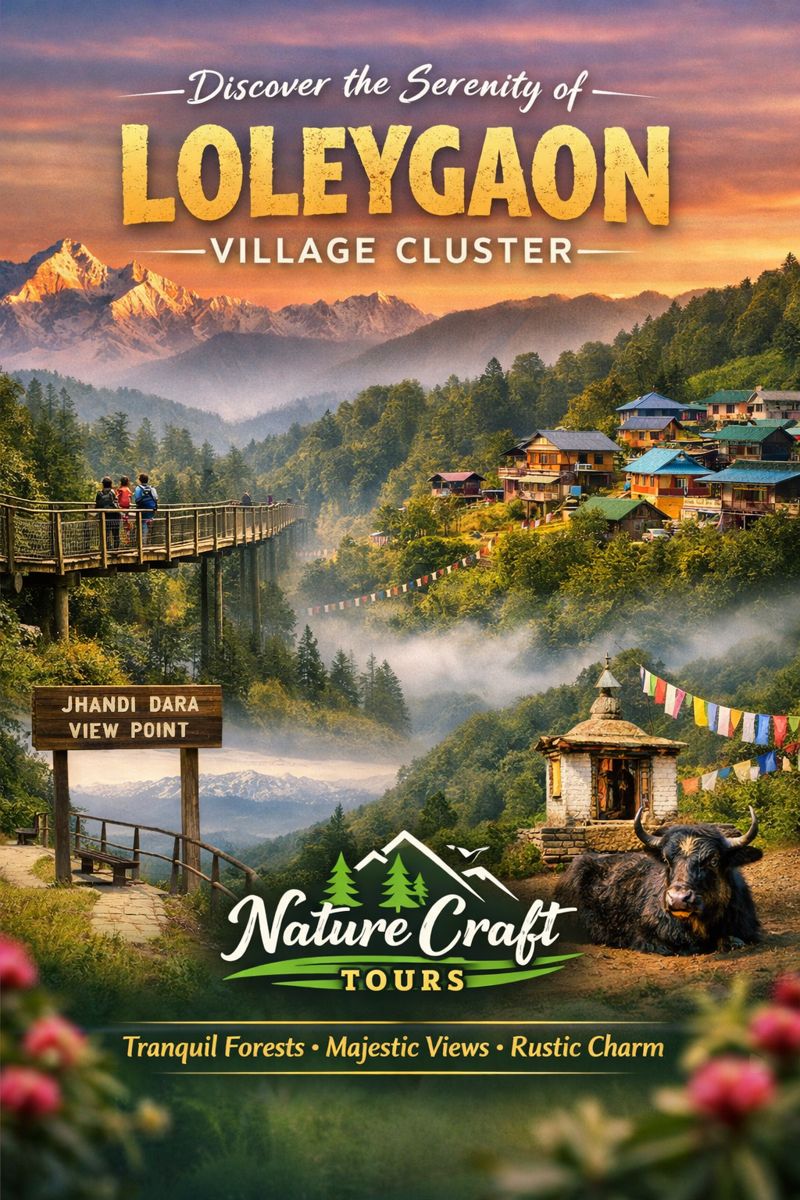
Nestled quietly on the eastern ridge of the Neora Valley landscape, the Loleygaon village cluster stands as one of the most refined yet understated destinations in the Kalimpong hills of North Bengal. Often overshadowed by louder hill stations, this cluster of villages—centred around Loleygaon and gently extending towards Jhandi Dara, Kaffergaon, and surrounding forest hamlets—offers a layered experience of Himalayan ecology, Lepcha heritage, colonial forestry remnants, and uninterrupted mountain silence. Unlike commercial destinations, Loleygaon does not attempt to impress through scale or spectacle; instead, it reveals itself slowly, through mist-laced forests, wooden cottages, echoing bird calls, and sunrises that feel profoundly personal.
Understanding the Loleygaon Village Cluster
Loleygaon is not a single village in the conventional sense, but rather a cluster of forest-side settlements perched at an average altitude of approximately 5,500 feet above sea level. Administratively part of the Kalimpong district, the region is surrounded by dense pine, oak, and rhododendron forests that form a transitional ecological zone between temperate Himalayan forests and subtropical lower valleys. Historically, this area functioned as a forest management zone during the British era, and many of the walking trails still follow old forest department routes.
The cluster includes small habitations such as Upper Loleygaon, Lower Loleygaon, Kaffergaon, and forest-edge settlements that retain traditional Lepcha and Nepali lifestyles. Houses are modest, often wooden or stone-built, with tin or slate roofs, vegetable gardens, and prayer flags fluttering quietly in the mountain breeze. Electricity and mobile networks exist, yet the region remains refreshingly detached from the pressures of urban tourism.
Natural Landscape and Ecological Significance
The defining character of the Loleygaon village cluster is its intimate relationship with the surrounding forest ecosystem. The forests here are part of a larger green corridor that connects with Neora Valley National Park, making the region biologically significant. These woodlands are home to a wide range of bird species, small mammals, and seasonal flora, particularly orchids and wild ferns.
Morning hours are often marked by layered mist drifting upward from the Teesta basin, gradually revealing the silhouettes of pine trunks and distant mountain ridges. The forest floor remains moist for most of the year, nurturing moss-covered rocks and soft leaf litter that absorbs sound, enhancing the region’s profound silence.
Canopy Walk and Forest Trails
One of the most distinctive features within the Loleygaon area is the elevated canopy walk, a wooden pathway suspended gently among tall pine trees. Unlike adventure-focused skywalks, this structure is designed for slow, contemplative movement. It allows visitors to experience the forest from mid-canopy height, observing bark textures, bird nests, and filtered sunlight without disturbing the ecosystem.
Beyond the canopy walk, a network of forest trails radiates outward, suitable for gentle walks rather than strenuous treks. These trails often lead to quiet clearings, old watchpoints, or forest edges overlooking deep valleys.
Key Viewpoints and Scenic Highlights
While Loleygaon is not defined by dramatic cliffs or waterfalls, its viewpoints offer subtle yet deeply rewarding vistas. These are places best experienced during early morning or late afternoon, when light and shadow transform familiar landscapes into living paintings.
Jhandi Dara Viewpoint
Located a short distance from the core Loleygaon settlement, Jhandi Dara is among the highest points in the cluster. On clear days, the viewpoint offers expansive views of the Kanchenjunga range, with snow peaks appearing almost within reach during winter months. At sunrise, the mountains often glow in layered shades of gold and rose, while prayer flags flutter gently in the wind.
Forest Clearings and Valley Overlooks
Scattered across the region are small, unnamed clearings where the forest opens suddenly to reveal sweeping valley views. These locations are not marked on maps, and discovering them often requires guidance from local residents or attentive walking. Such spaces are ideal for quiet reflection, photography, or simply observing changing cloud patterns.
Cultural Life and Local Communities
The villages within the Loleygaon cluster are inhabited primarily by Lepcha and Nepali communities, whose livelihoods traditionally revolve around agriculture, forest produce, and small-scale animal husbandry. Daily life follows the rhythm of daylight, weather, and seasonal cycles rather than tourist schedules.
Cultural expression here is understated yet deeply rooted. Prayer flags, small monasteries, and household shrines reflect Buddhist and animist influences. Festivals are observed with community participation rather than public performance, preserving their authenticity. Visitors are often welcomed warmly but expected to respect local customs, privacy, and environmental sensitivity.
How to Reach Loleygaon Village Cluster
Reaching Loleygaon is part of the experience, as the journey gradually transitions from plains to foothills and finally into dense mountain forests.
From Siliguri and NJP
Siliguri and New Jalpaiguri Railway Station serve as the primary gateways. The road distance from NJP to Loleygaon is approximately 110 kilometres, typically requiring 4.5 to 5.5 hours depending on road and weather conditions. The route passes through Kalimpong town before ascending into quieter forest roads.
From Kalimpong
Kalimpong town lies roughly 25 kilometres from Loleygaon. This final stretch is particularly scenic, with winding roads cutting through pine forests and occasional viewpoints overlooking the Teesta valley. While the distance is short, travel time averages 1.5 hours due to narrow roads and steep gradients.
Major Distances from Key Locations
- Loleygaon to Kalimpong: approximately 25 km
- Loleygaon to NJP Railway Station: approximately 110 km
- Loleygaon to Siliguri: approximately 115 km
- Loleygaon to Darjeeling: approximately 70 km (via Kalimpong)
Staying Options in Loleygaon Village Cluster
Accommodation in the Loleygaon area focuses on comfort, simplicity, and environmental harmony rather than luxury. Most properties are family-run homestays, eco-lodges, and small forest retreats built using local materials. Rooms typically offer panoramic views, basic modern amenities, and home-cooked meals prepared from locally sourced ingredients.
Staying in these properties allows visitors to engage with local life—sharing stories by a fireplace, enjoying organic vegetables, and waking up to bird calls instead of traffic noise. Electricity supply may occasionally fluctuate, reinforcing the importance of slow travel and adaptability.
Best Time to Visit Loleygaon
The Loleygaon village cluster is a year-round destination, yet each season offers a distinct experience.
Spring and Early Summer (March to May)
This period is marked by blooming rhododendrons, pleasant temperatures, and clear mountain views. Forest trails become vibrant with new growth, making it ideal for nature walks and photography.
Monsoon (June to September)
Monsoon transforms the region into a lush green sanctuary, with mist, cloud formations, and intense forest fragrances. While landslides may occasionally affect travel, this season offers unparalleled solitude and dramatic landscapes for seasoned travellers.
Autumn and Winter (October to February)
Post-monsoon months bring crisp air and excellent visibility of snow-clad peaks. Winters are cold but serene, with frost-covered mornings and golden afternoons. This season is particularly suited for travellers seeking quiet introspection.
Responsible Travel and Environmental Sensitivity
Loleygaon’s fragile ecosystem requires mindful travel practices. Visitors are encouraged to minimize plastic use, respect forest regulations, and support local livelihoods. Walking quietly through trails, avoiding loud music, and adhering to waste management practices help preserve the region’s ecological balance.
Travellers exploring the eastern Himalayas often combine such destinations with broader regional journeys, including forest and delta ecosystems. Many visitors who appreciate slow, nature-focused travel experiences also explore responsible wildlife destinations like the Sundarban Tour, creating a meaningful contrast between mountains and mangroves.
Why Loleygaon Appeals to the Thoughtful Traveller
The Loleygaon village cluster does not promise instant gratification. Its appeal lies in gradual discovery—watching clouds drift past tree trunks, sharing tea with villagers, and feeling time slow to a human pace. It attracts writers, photographers, nature enthusiasts, and travellers seeking emotional restoration rather than itineraries filled with attractions.
For those planning extended journeys across West Bengal’s diverse landscapes, combining Himalayan retreats with wetland ecosystems such as a carefully curated Sundarban Travel experience allows for a deeper understanding of the region’s ecological and cultural spectrum.
Loleygaon village cluster represents a rare balance between accessibility and isolation, offering a sanctuary where nature, culture, and silence coexist harmoniously. It is not a destination to be consumed quickly but a place to be inhabited briefly, allowing its forests and people to leave a lasting imprint on the traveller’s consciousness. In an era of hurried tourism, Loleygaon remains a reminder that true journeys unfold slowly, quietly, and with respect.