


Mahanadi–Rohini Ridge-Top Farms:
Where Himalayan Agriculture Touches the Sky
Hidden along the quiet highlands between the lower Darjeeling foothills and the Kalimpong-oriented ridges, the Mahanadi–Rohini ridge-top farms represent one of the least commercialised agrarian landscapes of North Bengal. This elevated rural belt, stretching gently between the Mahanadi settlement zone and the forested Rohini ridge, offers a rare synthesis of mountain farming, panoramic Himalayan views, and cultural continuity that has remained largely untouched by mainstream tourism.
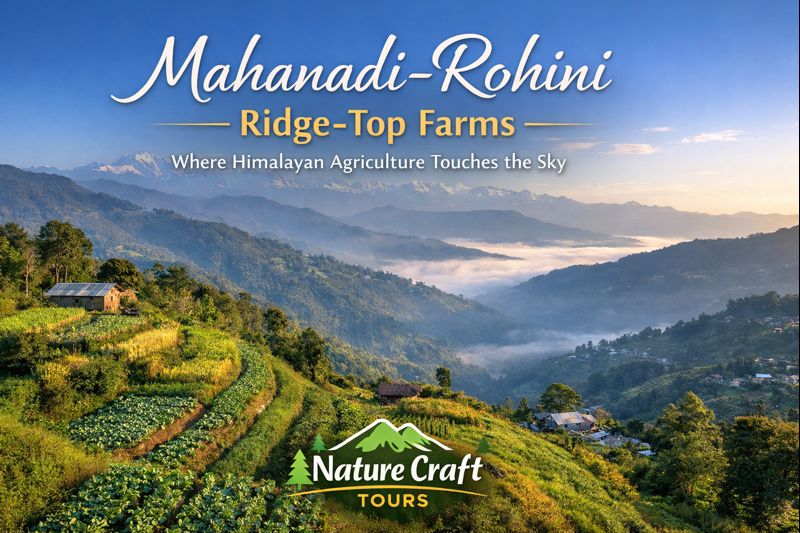
Unlike crowded hill towns or manicured tea estates, these ridge-top farms breathe at their own pace. Here, terraced fields curve like patient verses written into the earth, seasonal vegetables thrive in mineral-rich soil, and farming households continue age-old practices aligned with altitude, monsoon rhythms, and mountain ecology. For the mindful traveller seeking authenticity, silence, and landscape-based storytelling, this region unfolds as a living geography rather than a destination.
Geographical Setting and Landscape Character
The Mahanadi–Rohini ridge-top farming zone lies at an average elevation of approximately 3,800 to 5,200 feet above sea level. Positioned between the lower stretches of Kurseong subdivision and the ascending forest ridges leading towards Kalimpong, this area benefits from uninterrupted mountain airflow, moderate temperatures, and fertile hill soil.
The ridge itself functions as a natural balcony. To the west, the Kurseong hills roll gently downward, while to the east, forest corridors descend towards the Teesta basin. On clear days, distant snow peaks appear faintly at sunrise, while evenings are defined by drifting mist and layered silhouettes of overlapping ridges.
Agricultural plots here are not large commercial farms but carefully maintained family holdings. Their layout follows the contours of the land, minimising erosion and maximising water retention—a practice rooted in indigenous hill-farming wisdom rather than modern intervention.
Agricultural Life on the Ridge
Farming at this altitude is seasonal, precise, and deeply ecological. Ridge-top cultivation depends on rain-fed systems, organic composting, and rotational cropping. Chemical fertilisers are rarely used, both due to cost and long-standing cultural preference for soil preservation.
Key Crops and Produce
The farms yield a diverse range of seasonal produce including maize, millet, ginger, turmeric, local potatoes, beans, squash, mustard greens, and coriander. In winter, leafy vegetables dominate, while summer brings root crops and pulses. Small fruit patches of guava, pear, and seasonal citrus appear near homesteads.
Livestock farming complements agriculture. Goats, poultry, and occasional cattle contribute to both livelihood and soil fertility, forming a closed-loop rural economy that remains remarkably resilient.
Cultural Landscape and Rural Rhythm
Life along the Mahanadi–Rohini ridge unfolds slowly, guided more by daylight and weather than by clocks. Morning hours begin with fieldwork, followed by shared meals and communal tasks. Afternoons often witness elders tending seedlings while children return from hillside schools.
The population consists primarily of Nepali-speaking hill communities whose cultural identity is deeply intertwined with land stewardship. Festivals follow the agricultural calendar, and oral histories are passed down during winter evenings by hearth fires rather than through written records.
Visitors who stay longer than a single day often find themselves drawn into these rhythms—helping with harvests, learning local recipes, or simply observing how silence becomes an active presence rather than an absence.
Important Points to See and Experience
Ridge-Top Terraced Farms
The terraced farms themselves are the primary attraction. Early morning light transforms these stepped fields into luminous layers of green and gold, particularly during post-monsoon months.
Forest–Farm Transition Zones
At the edges of cultivation lie forest buffers rich in birdlife and wild flora. These zones reflect a delicate balance between human habitation and wilderness.
Sunrise and Mist Views
Clear mornings reveal vast valley views, while fog-filled afternoons create shifting landscapes that feel almost meditative in nature.
Village Footpaths and Ridge Trails
Walking trails along the ridge connect scattered hamlets, offering immersive exploration without the need for vehicles.
Major Distances from Key Locations
• Siliguri to Mahanadi–Rohini ridge farms: approximately 35–40 km
• Kurseong to ridge-top farms: approximately 12–15 km
• Darjeeling town to the region: approximately 45 km
• Bagdogra Airport to the area: approximately 50 km
Distances may vary depending on the exact farm cluster or homestay location, as settlements are spread along winding ridge roads rather than centralised hubs.
How to Reach the Mahanadi–Rohini Ridge
The most practical approach is via Siliguri, the primary gateway to North Bengal. From Siliguri, travellers proceed towards Kurseong, branching off near Mahanadi. Roads are motorable but narrow, particularly along ridge sections, making experienced local drivers preferable.
Public transport is limited beyond Mahanadi village. The final stretches often require short walks, which enhance the immersive experience rather than hinder it.
Travellers interested in pairing hill journeys with lowland ecosystems often combine this route with experiences like a Sundarban Tour, creating a contrast between mangrove wilderness and mountain agrarian life.
Staying Options in the Ridge-Top Region
Accommodation remains intentionally low-impact. Small homestays, farm-based lodges, and family-run rural retreats dominate the region. These properties are typically constructed using local materials and provide simple yet comfortable living arrangements.
Stays often include home-cooked meals prepared from farm produce, offering visitors a genuine taste of hill cuisine. Electricity availability is generally reliable, though occasional weather-related interruptions are considered part of the mountain experience.
Those exploring multiple offbeat zones frequently include nearby destinations such as Tinchuley, allowing a seamless journey across ridge-based settlements.
Best Time to Visit
The ideal visiting period spans from October to April. Post-monsoon months offer clear skies and lush fields, while winter brings crisp air and expansive views. Spring introduces flowering plants and renewed agricultural activity.
The monsoon season, though visually dramatic, may present access challenges due to fog and rainfall. However, for travellers comfortable with slower movement and atmospheric landscapes, it holds its own quiet charm.
Responsible Travel and Sustainability
The Mahanadi–Rohini ridge ecosystem is fragile. Visitors are encouraged to respect farming boundaries, minimise plastic use, and engage with local customs thoughtfully. Economic contributions through homestays and locally guided walks directly support community sustainability.
Travelers interested in broader eco-tourism circuits may align this experience with responsible journeys such as a Sundarban Travel itinerary, strengthening appreciation for diverse ecological systems within West Bengal.
From the Ridge
Fields rise where clouds learn how to pause,
Stone by stone, the mountain listens.
Seeds sleep beneath borrowed sunlight,
Dreaming of rain and patient hands.
Wind moves softly between cabbages and prayers,
Footsteps fade into soil and memory.
Here, time kneels before the harvest,
And silence grows taller than words.
Mist signs its name on every leaf,
Leaving the ridge breathing gently into dawn.
Why the Mahanadi–Rohini Ridge-Top Farms Matter
In an era of accelerated travel and curated experiences, the Mahanadi–Rohini ridge-top farms offer something increasingly rare: continuity. This is a landscape where agriculture is not a spectacle but a living practice, where travel becomes observation rather than consumption.
For those willing to listen rather than arrive loudly, these ridge-top farms reveal the Himalayas not as monuments, but as companions—quiet, enduring, and profoundly human.