


Sandakphu Lower Camps and Nearby Settlements
– A Quiet Ascent into the Lesser-Known Himalayas
While Sandakphu itself is celebrated as the highest point of West Bengal, the journey towards it is equally enriched by a series of lower camps and modest Himalayan settlements that quietly shape the soul of the trail. These lower camps—spread across forested ridges, alpine meadows, and wind-brushed valleys—offer a gentler, more intimate introduction to the Singalila range. Far from the crowds that often gather at the summit, these settlements preserve a slower rhythm of life where mountains are not destinations, but companions.
The lower camps of Sandakphu form a vital ecological and cultural corridor between the Indo-Nepal borderlands and the high alpine zones of the Singalila National Park. They serve as resting grounds for trekkers, livelihood centers for local communities, and silent witnesses to centuries of trans-Himalayan movement. This guide explores these understated locations in depth—revealing what to see, how to reach them, where to stay, and when to plan a journey that respects both landscape and tradition.
Understanding the Geography of Sandakphu’s Lower Camps
The lower camps of Sandakphu are not defined by administrative boundaries but by altitude, accessibility, and natural transitions. Situated roughly between 6,000 and 9,500 feet above sea level, these camps and settlements lie below the exposed summit ridge yet above the subtropical foothills. They include forest clearings, seasonal camps, and permanent hamlets that act as gateways into the higher Singalila zone.
Geographically, this belt is dominated by mixed broadleaf forests, extensive rhododendron groves, bamboo brakes, and occasional open pastures. The terrain undulates gently in some sections and steepens abruptly in others, offering constantly changing perspectives of valleys, ridgelines, and distant snow peaks on clear days.
Ecological Significance of the Lower Camp Zone
The lower camps fall within an ecotonal zone where temperate forests gradually transition into sub-alpine vegetation. This region supports an exceptional range of biodiversity, including red pandas, Himalayan black bears, barking deer, and over 300 species of birds. The dense forest canopy also plays a crucial role in watershed protection, feeding numerous streams that sustain villages further downhill.
Important Lower Camps and Nearby Settlements
Each lower camp along the Sandakphu route has its own character—shaped by altitude, landscape, and human presence. Together, they form a narrative of gradual ascent, both physically and spiritually.
Manebhanjan Hinterlands
Beyond the well-known trailhead, the hinterlands of Manebhanjan extend into quiet forest paths and dispersed settlements. These areas are often overlooked by travelers rushing towards higher camps, yet they provide valuable insight into local livelihoods rooted in agriculture, forest produce, and small-scale tourism support.
Chitre and Adjacent Hamlets
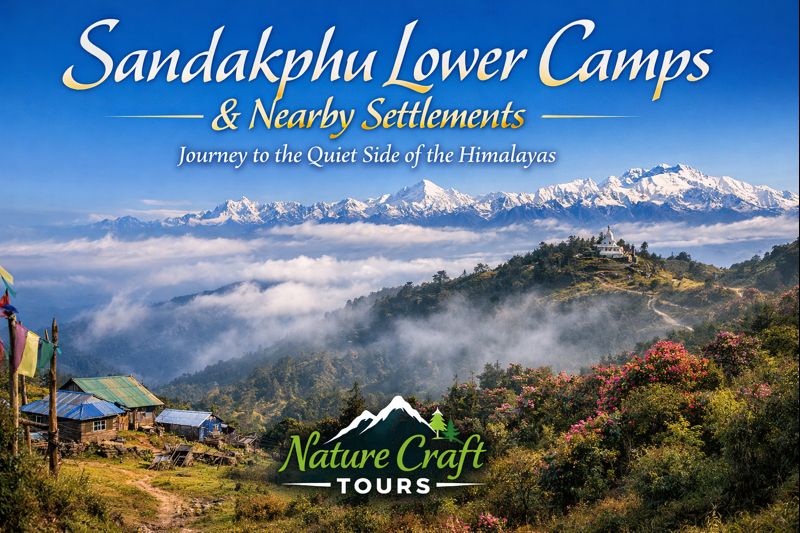
Chitre and its surrounding hamlets mark one of the earliest alpine transitions. Known for its expansive rhododendron forests, this zone bursts into color during spring. Lower camps here are typically surrounded by prayer flags, stone rest shelters, and traditional wooden homes, reflecting a deep Buddhist influence.
Meghma Slopes and Peripheral Settlements
While Meghma itself is a recognized stop, the lower slopes and adjoining settlements remain comparatively silent. These areas are often enveloped in mist, giving rise to their name, which translates to “place of clouds.” The spiritual atmosphere is heightened by monasteries, mani walls, and chortens scattered across ridges.
Forest Camps between Meghma and Tonglu
This stretch is characterized by dense forests, moss-laden trees, and occasional clearings that function as seasonal camps. Wildlife sightings are more common here, and human presence remains minimal, making it ideal for travelers seeking solitude.
What to See and Experience
The lower camps of Sandakphu offer experiences that are subtle rather than dramatic. Their beauty lies in small details—changing light through forest leaves, distant bells of grazing yaks, and the soft murmur of mountain streams.
Rhododendron and Magnolia Forests
Between March and May, the forests around these lower camps transform into living galleries of color. Red, pink, and white rhododendrons bloom in abundance, while magnolia trees add fragrance to the mountain air. This floral diversity is among the richest in Eastern Himalaya.
Himalayan Birdlife
Birdwatchers find the lower camps exceptionally rewarding. Species such as blood pheasants, Himalayan monals, fire-tailed sunbirds, and various laughingthrushes are frequently sighted. Early mornings and late afternoons are particularly active periods.
Cultural Encounters
The settlements are inhabited mainly by Lepcha, Sherpa, and Nepali communities. Visitors may observe traditional agricultural practices, butter-tea preparation, and prayer rituals that seamlessly blend daily life with spiritual belief.
Major Distances and Route Overview
Understanding distances is essential for planning a comfortable journey through the lower camps. The routes are not merely measurements of kilometers but indicators of altitude gain and terrain complexity.
- Manebhanjan to Chitre region: approximately 4–5 km uphill trail
- Chitre area to Meghma lower slopes: approximately 6 km through forested terrain
- Meghma lower settlements to Tonglu periphery: approximately 5 km gradual ascent
Distances may vary depending on the specific camp or settlement chosen, as many routes branch into smaller trails used by local residents and forest staff.
How to Reach the Lower Camps of Sandakphu
Reaching the lower camps requires a combination of road travel and short hikes, making the journey accessible to both trekkers and leisure travelers with moderate fitness levels.
Access from Siliguri and Darjeeling
Siliguri serves as the primary gateway to the region, with road connectivity to Manebhanjan via Mirik. Darjeeling also offers an alternative approach, though routes may be longer and more winding. From Manebhanjan, entry into the lower camps begins either on foot or via designated mountain tracks.
Permits and Entry Considerations
As these camps lie within or adjacent to protected forest zones, valid entry permits are required. These are typically issued at designated checkpoints and help regulate environmental impact while supporting conservation efforts.
Travelers exploring Eastern Himalayan circuits often combine such journeys with lowland nature destinations like the Sundarban Tour, creating a contrast between mangrove delta ecosystems and alpine forests.
Staying Options around Lower Camps and Settlements
Accommodation in the lower camps remains intentionally simple, reflecting the fragile environment and limited infrastructure. However, comfort is not compromised where hospitality is sincere.
Forest Lodges and Trekker Huts
Basic forest lodges and trekker huts provide essential amenities, warm bedding, and simple meals. These stays offer an immersive experience, allowing guests to fall asleep to forest sounds and wake to misty mountain mornings.
Village Homestays
Homestays in nearby settlements are increasingly popular, offering cultural immersion and home-cooked meals prepared from locally grown produce. Such stays directly support community livelihoods and preserve traditional knowledge.
Eco-friendly Guesthouses
A limited number of eco-guesthouses operate on sustainable principles, using solar energy, rainwater harvesting, and waste management practices suited to high-altitude environments.
Travelers researching offbeat Himalayan stays often explore quieter destinations like Tinchuley, which shares a similar philosophy of community-based tourism and ecological balance.
Best Time to Visit Sandakphu Lower Camps
Seasonality plays a critical role in shaping experiences across the lower camps. Each season reveals a different personality of the landscape.
Spring (March to May)
Spring is widely regarded as the most visually rewarding season. Blooming forests, mild temperatures, and clear skies make it ideal for nature lovers and photographers.
Autumn (September to November)
Post-monsoon clarity brings crisp air and expansive views of the Himalayan range. Trails are stable, and cultural festivals add depth to the travel experience.
Monsoon and Winter Considerations
Monsoon months bring lush greenery but also slippery trails and limited visibility. Winter, while serene, can be harsh due to snowfall and extreme cold, restricting access to some lower camps.
Those planning multi-ecosystem journeys often align Himalayan travel with delta explorations through platforms like Sundarban Travel, ensuring seasonal balance across regions.
Lower Camps of Sandakphu
Mist walks softly where the forests begin,
Prayer flags whisper secrets to the wind.
Lower camps breathe stories of leaf and stone,
Paths where silence learns to feel like home.
Rhododendrons light the mountain’s skin,
Clouds arrive, then quietly drift within.
Here, steps grow slower, thoughts grow deep,
Dreams wake gently while the valleys sleep.
Before the summit calls with frozen hue,
The lower camps teach what it means to view.
Why the Lower Camps Matter More Than the Summit
While Sandakphu’s summit often dominates travel narratives, the lower camps offer a more profound connection to the land. They reveal the gradual dialogue between human life and Himalayan nature—unrushed, resilient, and deeply rooted.
For travelers seeking authenticity over altitude records, these camps provide a journey that is as reflective as it is scenic. They remind us that sometimes, the most meaningful heights are not measured in meters, but in moments of stillness and understanding.