
Thurbo Tea Slopes
– Where Darjeeling’s Hills Whisper in Shades of Green
Hidden within the undulating middle hills of the Darjeeling Himalayas, the serene expanse of the
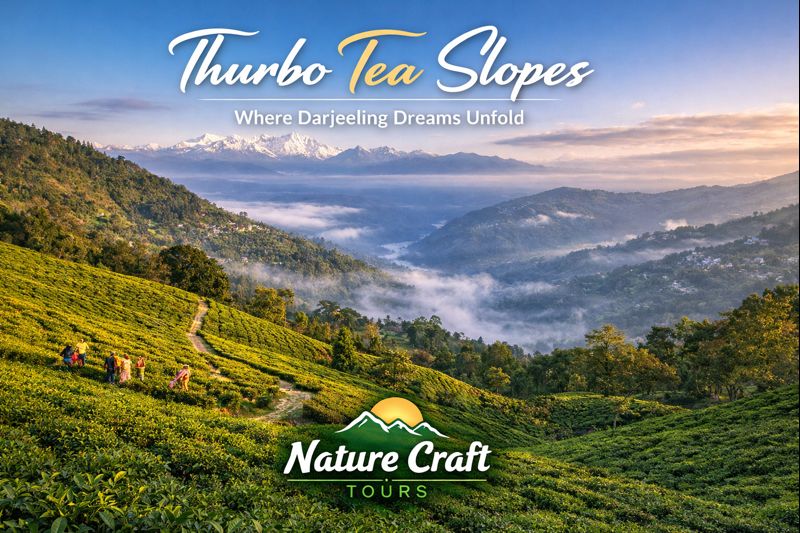
unfolds like a living manuscript of nature, labour, and legacy. The Thurbo Tea Slopes are not merely agricultural terraces; they are a slow-moving landscape where mist, sunlight, and human rhythm co-exist in remarkable harmony. Far from crowded viewpoints and commercial bustle, this region offers a deeply immersive experience for travellers who value silence, authenticity, and cultural continuity.
These slopes are particularly cherished by offbeat explorers, photographers, writers, and mindful travellers seeking
to understand Darjeeling beyond its conventional tourist frame. Here, time does not rush—it brews, much like the tea that has made these hills globally renowned.
Geographical Setting and Landscape Character
The Thurbo Tea Slopes are situated between Peshok Road and the upper stretches of the Teesta Valley, at an approximate altitude ranging from 3,000 to 4,000 feet above sea level. The terrain is marked by gracefully layered tea bushes, interspersed with forest patches, worker settlements, and narrow mountain trails. On clear days, the slopes reveal dramatic views of the Teesta River far below, while monsoon clouds transform the landscape into a theatre of drifting fog.
The ecological balance here is noteworthy. Tea bushes grow alongside indigenous trees, ferns, wild orchids, and
seasonal flora, making the area visually rich throughout the year. Birdsong often replaces urban noise, and the
air carries a distinct freshness shaped by altitude and vegetation.
Historical and Cultural Significance of Thurbo
Established in the mid-19th century during the British colonial expansion of tea cultivation, Thurbo is one of the
older tea estates of the Darjeeling region. Its slopes have witnessed generations of tea pluckers, estate managers,
and evolving agricultural practices. Unlike many commercial plantations, Thurbo has retained a strong sense of
community identity rooted in Nepali, Lepcha, and Bhutia traditions.
Daily life on the slopes follows a quiet discipline. Early mornings begin with workers walking uphill carrying baskets,
their paths etched permanently into the hills. Local festivals, oral folklore, and seasonal rituals continue to
define social life, offering visitors a rare opportunity to observe living heritage rather than staged culture.
Important Points to See Around Thurbo Tea Slopes
Rolling Tea Terraces and Walking Trails
The primary attraction is the landscape itself. Slow walks along estate trails reveal ever-changing perspectives—tight
curves of tea rows, sudden forest openings, and distant river views. These trails are ideal for unhurried exploration
and reflective travel.
Teesta Valley Vantage Points
Certain sections of the slopes open towards the Teesta Valley, offering sweeping views especially during early mornings
and late afternoons. The interplay of light and shadow on the river basin is particularly striking for photographers.
Worker Hamlets and Estate Life
Small clusters of estate quarters provide insight into everyday mountain life. Observing traditional cooking methods,
terraced kitchen gardens, and communal spaces adds depth to the visitor experience when approached respectfully.
Major Distances from Thurbo Tea Slopes
Understanding distances helps travellers plan a relaxed itinerary:
- Darjeeling town: approximately 32 km
- Kalimpong: approximately 28 km
- Siliguri: approximately 65 km
- Bagdogra Airport: approximately 70 km
- New Jalpaiguri Railway Station: approximately 68 km
These moderate distances make Thurbo an excellent midpoint retreat between popular hill destinations.
How to Reach Thurbo Tea Slopes
The most practical approach is via Siliguri, which serves as the primary gateway to the eastern Himalayas. From Siliguri or Bagdogra, travellers can hire private vehicles towards Kalimpong or Darjeeling routes, diverting via Peshok Road.
The final approach involves narrow hill roads that gradually open into tea-covered slopes.
Public transport options exist but are limited in frequency. Shared jeeps run on fixed schedules, though private vehicles offer greater flexibility and comfort for offbeat exploration.
Staying Options Around Thurbo Tea Slopes
Accommodation near Thurbo remains intentionally understated. Travellers can choose from small tea-garden homestays, eco-lodges, and village-run guesthouses. These properties emphasize simplicity, local cuisine, and landscape integration rather than luxury infrastructure.
Some visitors prefer to stay in nearby villages such as Tinchuley, which complements the Thurbo experience with its panoramic viewpoints and organic farming culture. Another reference to Tinchuley village stays is particularly useful for travellers seeking slightly broader accommodation choices without compromising tranquility.
Best Time to Visit Thurbo Tea Slopes
Each season lends a distinct mood to the slopes:
- Spring (March to May): Clear skies, fresh tea flushes, and vibrant greenery.
- Monsoon (June to September): Intense greenery and mist-filled landscapes, ideal for solitude lovers.
- Autumn (October to November): Crisp air and balanced visibility.
- Winter (December to February): Quiet atmosphere, cool temperatures, and occasional fog.
Spring and autumn are generally considered the most comfortable periods for travel.
Responsible Travel and Local Sensitivity
Thurbo Tea Slopes are a working landscape. Visitors are encouraged to respect private estate boundaries, avoid disturbing daily routines, and minimize environmental impact. Supporting local homestays and small businesses ensures that tourism benefits remain within the community.
Why Thurbo Appeals to the Thoughtful Traveller
Unlike heavily marketed destinations, Thurbo offers no checklist tourism. Its appeal lies in slow observation—watching clouds settle on leaves, listening to distant footsteps on gravel paths, and understanding the patience required to cultivate both tea and tranquility.
Travellers combining hill journeys with nature-based experiences often balance their itineraries with contrasting
ecosystems such as the mangrove wilderness offered by Sundarban Tour routes, or curated forest explorations through Sundarban Travel specialists—creating a
journey that spans mountains to mangroves.
Tea Slopes
Mist settles gently on emerald lines,
Leaves breathe stories older than roads.
Footsteps echo where silence lives,
And dawn pours gold into cups of green.
The hills speak softly, never in haste,
Each terrace a verse written by rain.
Hands that pluck carry quiet pride,
Wind remembers every season passed.
Here, time steeps slowly with the land,
And the soul learns to rest, unasked.
The Thurbo Tea Slopes are not designed to impress—they are designed to endure. For travellers willing to slow down, listen, and observe, this landscape offers a rare form of luxury: unfiltered presence. As part of an offbeat Darjeeling journey, Thurbo stands as a reminder that the most meaningful destinations often whisper rather than call.