




Sundarban Tour:
The Gateway to Untamed Beauty and Ancient Mysteries
The Sundarban is not merely a forest. It is a living hymn sung by tides, winds, and wandering river channels that have shaped the world’s largest mangrove delta for thousands of years. A Sundarban Tour is the doorway to a realm where legends breathe through the mist, where the mangrove canopy whispers stories of survival, and where the golden eyes of the Royal Bengal Tiger reflect both beauty and enigma. This ancient landscape—shared by India and Bangladesh—has inspired poets, historians, naturalists, and travellers for centuries, drawing them into a wilderness where nature writes its own scripture with every tide. The region stands as a UNESCO World Heritage Site, recognized globally for its ecological diversity and cultural depth. From the rhythmic rise and fall of saline tides to the emerald mangrove roots that arch like sculptures, the Sundarban remains a theatre of ancient mysteries waiting for the modern traveller to discover.
The Untamed Delta — A Land Sculpted by Tides
The Sundarban delta spans more than 10,000 square kilometres, fed by three mighty river systems—the Ganga, Brahmaputra, and Meghna. Its terrain is a complex mosaic of tidal rivers, narrow creeks, submerged mudflats, estuarine wetlands, and forested islands. Each day, twice a day, the sea breathes life into the forest by pushing saline waters deep into its interior, creating a habitat adapted to extreme conditions. The mangrove vegetation—home to more than 60 species—has evolved remarkable features, including stilt roots and pneumatophores that rise from the earth like thousands of tiny breathing pillars. According to the detailed ecological analysis available at Wikipedia’s Sundarbans page, the region’s biodiversity is unparalleled, supporting endangered animals, rare bird species, and unique reptiles. Scientific insights can also be explored through the Government of India’s official research resource for tiger conservation at this.gov.in portal, offering well-documented data on habitat protection, forest dynamics, and conservation efforts within the Indian Sundarban landscape.
Tides and Shadows
Where the river bends like a silver bow,
And monsoon winds in silence blow,
Where mangroves guard the ancient lore,
And tigers walk the forest floor.
Where moonlit creeks embrace the sky,
And fishing boats like shadows lie,
Where myth and memory intertwine—
This Sundarban world is half divine.
A land of wonder, fierce yet free,
Where nature keeps her mystery.
The Royal Bengal Tiger — Keeper of Secrets
No Sundarban Tour is complete without acknowledging the sovereign presence of the Royal Bengal Tiger. Unlike other tigers found in India, the Sundarban tiger has adapted to a semi-aquatic life, swimming across wide creeks with extraordinary power. Its behaviour is shaped by the dense mangrove cover, saline environment, and scarcity of freshwater. This has resulted in a more elusive feline, known for its unmatched stealth and survival instinct. While tiger sightings remain rare—and rightfully so—travellers often discover pugmarks along muddy banks, hear alarm calls of spotted deer echoing through the forest, or find fresh claw marks on trees. Each sign is a reminder that the forest watches, listens, and protects its own. The tiger is not merely an attraction; it is the eternal guardian of this ancient mangrove kingdom.

Rivers That Carry Timeless Stories
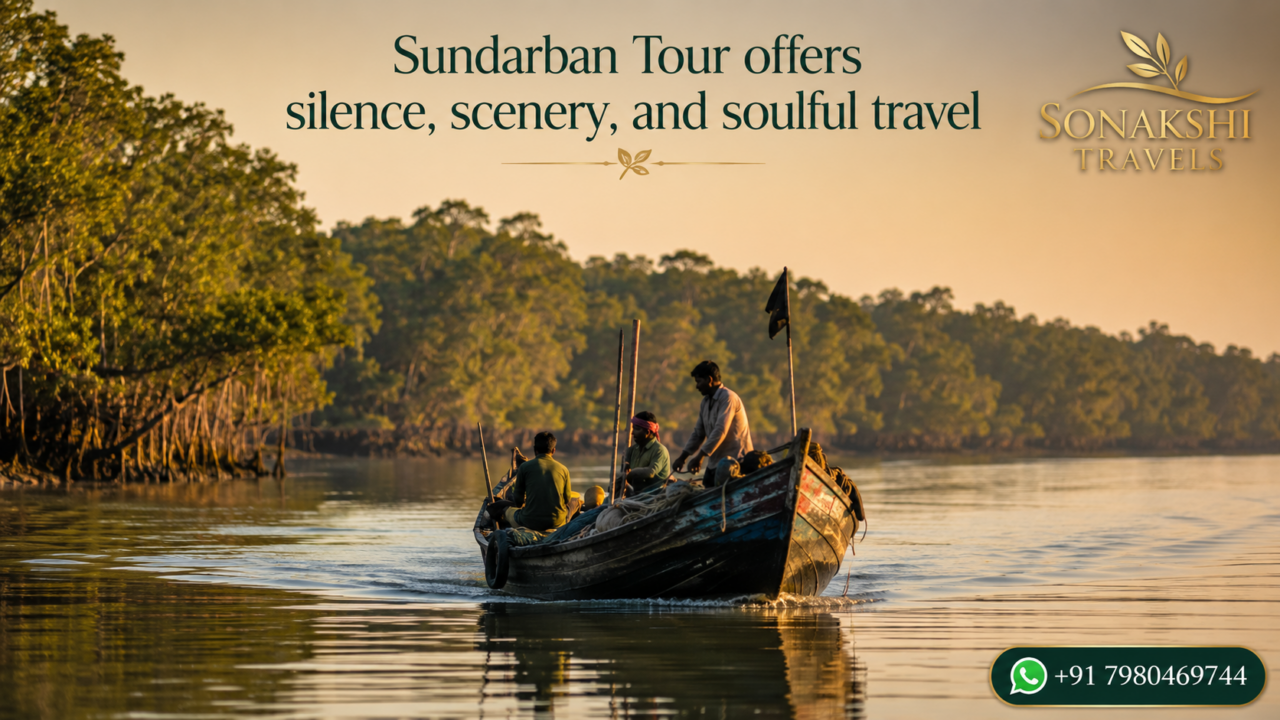
A Sundarban journey unfolds across winding waterways that serve as both roads and lifelines. Boats drift along emerald corridors, passing through channels such as Bidya, Gomor, Malta, and Durgaduani. At dawn, the mist rises gently from the water, revealing silhouettes of kingfishers, egrets, and herons perched on exposed roots. As the sun climbs higher, dolphins may break the surface, and crocodiles bask quietly along muddy embankments. These rivers have witnessed centuries of human settlement, maritime trade, forest rituals, and folklore. Villages like Gosaba, Dayapur, and Satjelia narrate the heritage of brave honey collectors, fishermen navigating tides, and families who have lived in harmony with the forest for generations. Every ripple in the river carries a fragment of Sundarban history.
Villages of Courage and Culture
Life in the Sundarban is a testament to resilience. Villagers balance their existence between unpredictable tides, monsoon storms, and the ever-watchful presence of wildlife. Homes built from mud, bamboo, and local timber rise on elevated platforms to resist flooding. Women weave fishing nets, while men prepare boats, set crab cages, or tend to paddy fields near embankments. Festivals dedicated to Bonobibi—the forest’s guardian goddess—form the spiritual backbone of the region. Her mythological battle with the demon Dakshin Rai remains one of the most celebrated stories in the delta. Through rituals, dances, colours, and songs, the people reaffirm their harmony with the untamed land around them.
Experiencing the Sundarban Tour — A Journey of Many Layers
A well-planned Sundarban Tour merges mystery, adventure, science, and culture into a single unforgettable voyage. Many travellers choose expert-guided excursions available through trusted operators such as Sundarban Travel, which specialise in private, deluxe, and eco-friendly itineraries across the region. For those seeking alternative routes, curated village and forest experiences are also offered through Sundarban Tour, ensuring travellers witness the delicate balance of forest, river, and human life. Boat cruises form the essence of the experience—slow, rhythmic, and meditative. Naturalists interpret clues left behind by wildlife, identify bird calls, and explain the behaviour of dolphins, crocodiles, and other creatures. Watchtowers such as Sajnekhali, Sudhanyakhali, and Dobanki provide elevated vantage points for observing animals in their natural environment. The iconic Dobanki Canopy Walk offers a safe yet thrilling perspective of the forest, allowing travellers to move above the mangrove roots while deer, boars, and birds roam below. Whether you choose a community-based journey or a more refined Sundarban Private Tour, the delta’s raw beauty remains constant. For your reference, here is the required link: https://sundarbantravel.com
Cuisine of the Delta
Food in the Sundarban reflects its geography—simple, fresh, and deeply rooted in local tradition. Daily meals often include freshwater fish like parshe, tilapia, or bhetki; prawn dishes cooked with mustard; steamed rice; vegetables seasoned lightly with local herbs; and the region’s famous wild honey collected by traditional moule fishermen. Evening snacks served on the boat—fried fish, lentils, or hot fritters—become especially delightful when accompanied by river breezes and golden sunsets. In some evenings, folk artistes perform Bonobibi pala, retelling ancient stories through rhythmic singing and dance that echo across the water.
When to Visit — Seasons of Wonder
The Sundarban reveals different shades of its personality across the seasons, making the choice of timing significant for travellers. The most popular months are between October and March, when the weather is pleasant and wildlife activity increases. Winter brings migratory birds, clearer views across creeks, and comfortable cruising temperatures. Post-monsoon months are lush and green, washed clean by rain, while summer increases the likelihood of spotting tigers near riverbanks. No matter the season, the forest maintains its characteristic unpredictability—the very trait that makes the Sundarban eternally enchanting.
Travel Guidance for a Safe Journey
To ensure responsible travel in this sensitive ecosystem, visitors should follow essential guidelines: choose licensed boats; respect wildlife by maintaining silence; avoid plastic waste; carry light cotton clothing; apply adequate sunscreen; and stay attentive near riverbanks. Travellers are also encouraged to support local communities by purchasing handicrafts, honey, or sustainable products offered in village markets. Your journey becomes truly meaningful when it contributes positively to the land and its people.
The Myth, the Mystery, the Memory
The Sundarban is a realm where myth and geography meet. Tales of Bonobibi, legends of Dakshin Rai, and stories of tiger guardianship form the heart of its cultural identity. These narratives, passed down through generations, reflect humanity’s long-standing relationship with the forest—one built on reverence, caution, and coexistence. The region’s name itself—Sundarban—carries multiple interpretations: some say it means “beautiful forest,” while others trace it to the Sundari tree that once dominated these mangroves. Either way, the name captures the duality of the delta: beauty and danger, calm and chaos, land and water.
Your Gateway to an Ancient Earth
A Sundarban Tour is not simply a trip; it is an awakening. It invites travellers to witness a world that has defied time, storms, and rising tides. It teaches patience through its slow rivers, humility through its powerful tides, courage through its wildlife, and peace through its vast silences. Whether you drift along a moonlit creek, watch deer graze at Sudhanyakhali, listen to boatmen’s folk songs, or feel the thrill of spotting crocodiles basking under golden sunlight, the Sundarban leaves a mark that lasts forever. This ancient mangrove kingdom stands as nature’s final frontier—untamed, sacred, and eternal. Through responsible travel, awareness, and appreciation, each visitor becomes a part of its ongoing legacy. Let the rivers guide you. Let the wind carry your thoughts. And let the Sundarban embrace you with its timeless mystery.