





Where the Forest Meets the Sea
— Discover the Wonders of Sundarban Tour
There exist landscapes where time slows, where silence speaks, and where the very air carries the breath of ancient tides. And then, there is the Sundarban—one of the world’s last, greatest wildernesses, where the forest meets the sea in an eternal embrace. To travel here is to witness nature in its purest form, to feel the rhythm of tides shaping destinies, and to step into a living poem written by the wind, water, and mangroves. A Sundarban Travel experience is a journey into the very architecture of the Earth, crafted by countless rivers and guarded by the legendary Royal Bengal Tiger.
A Realm Sculpted by Water, Time, and Tides
What sets the Sundarban apart from all other wildernesses is its constant movement. The tides rewrite the map every day. Rivers carve new channels. Islands dissolve and reappear. The mangrove roots breathe through the soil like the forest’s ancient lungs. This dance of creation and erosion forms the soul of this ecosystem, described extensively in global ecological journals and documented in scientific studies such as those referenced in international research.
To stand here, surrounded by this majestic interplay of land and sea, is to witness nature sculpting its masterpiece—slow, powerful, and eternal.
Journey Through the Waterways of Wonder
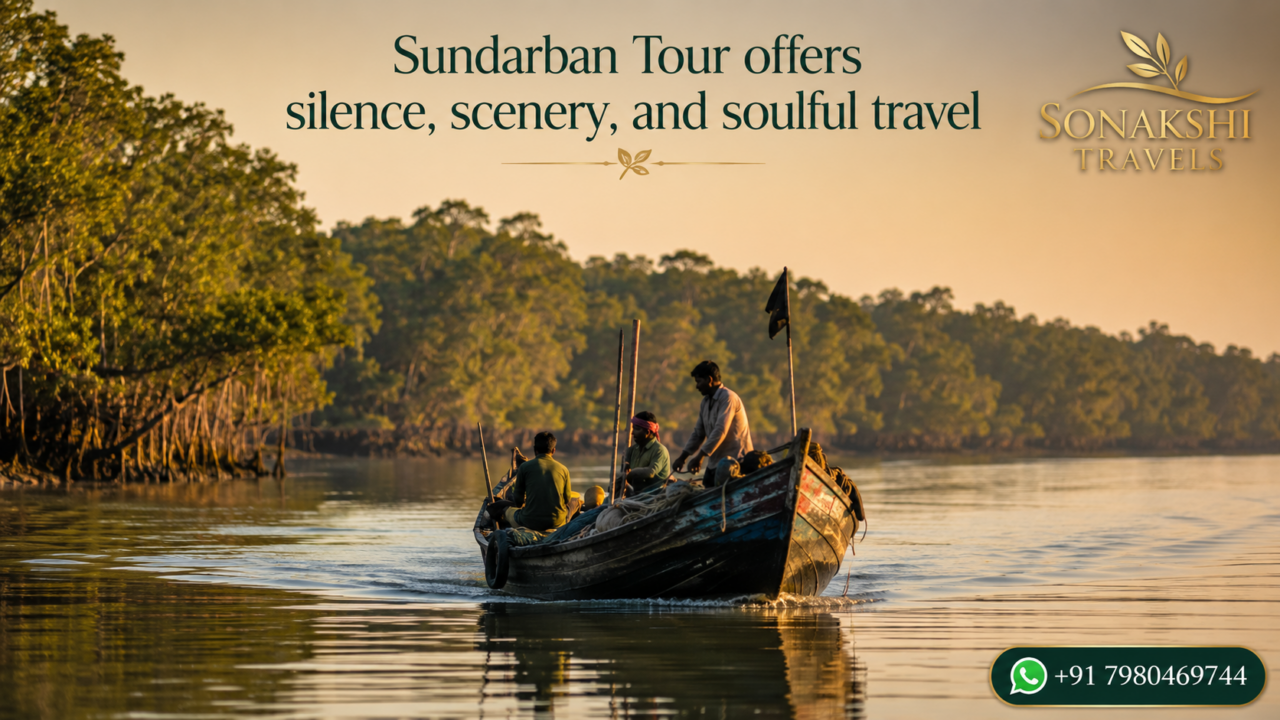
As your boat glides through the Sundarban channels, the world begins to dissolve into shades of emerald, bronze, and tidal blue. The air carries the scent of salt and earth. The water murmurs ancient stories. The mangroves stand like guardians, their stilt roots rising from the mud like living sculptures. Every creek seems to hold its own secrets, every turn revealing a new vista shaped by wind, river, and time.
Some waterways are narrow, where branches brush the boat gently like whispers from the forest. Others open into vast expanses where the horizon is a seamless blend of water and sky. The morning sun paints the surface in gold; the afternoon brings green reflections of the mangrove canopy; dusk transforms the delta into a canvas of lavender haze.
The Pulse of the Tides
The Sundarban breathes twice each day, in harmony with the ebb and flow of the tides. With high tide, water invades the forest floor, nourishing life in ways only nature can script. With low tide, the land reemerges, revealing intricate mudflats that glitter in the sun. This rhythmic inhaling and exhaling is what shapes the wildlife, vegetation, and human life across the delta. It is the pulse of the planet made visible.
This tidal system also influences the behavior of the forest’s most iconic inhabitant—the Royal Bengal Tiger—turning it into a capable swimmer and master of stealth, adapted to this amphibious world.
The Enigmatic Royal Bengal Tiger

Hidden deep within the mangrove labyrinth is the most celebrated symbol of the Sundarban—the Royal Bengal Tiger. Powerful yet elusive, it is a creature shaped by the tides and shadows. Here the tiger is not merely a predator; it is a myth, an emblem of survival, and a guardian of this vast wilderness.
Though sightings are rare due to the density of the forest and the tiger’s enigmatic nature, its presence is felt everywhere—fresh pugmarks beside a creek, distant alarm calls of deer, or ripples on a quiet water passage. The Sundarban tiger is known for its remarkable adaptability; it swims across rivers, hunts in brackish waters, and moves with an elegance that defies the rugged terrain.
To know that this majestic creature roams nearby brings a profound sense of humility, reminding every traveler that this land belongs first and foremost to nature.
A Sanctuary of Extraordinary Wildlife
Beyond the tiger, the Sundarban is a living encyclopedia of biodiversity. This ecosystem is home to more than 300 species of birds, including kingfishers, herons, ospreys, and the rare masked finfoot. Irrawaddy dolphins dance in the estuarine waters, while crocodiles bask like ancient guardians along the muddy banks. Monitor lizards slither with prehistoric poise, and spotted deer move in graceful herds along open clearings.
The forest floor is alive with tiny marvels—mudskippers that hop between land and water, fiddler crabs creating patterns in the mud, and insects that hum in the twilight breeze. Every layer of the forest, from the overhanging canopy to the tidal roots, contributes to the intricate ballet of life here.
Villages of Resilience and Rhythms of Culture
Life in the Sundarban villages flows with the tide. The people here—fishermen, honey collectors, boatmen, and families—are part of one of the world’s oldest communities living in harmony with a dynamic and sometimes unforgiving environment. Their days are shaped by the lunar calendar, the monsoon winds, and the silent language of the forest.
Their devotion to Bonbibi, the protectress of the forest, reflects a cultural heritage rooted in both fear and respect for the wilderness. Rituals are performed before honey collection, prayers whispered before boat journeys, and festivals celebrated with songs that echo across the river.
Walking through these villages, you witness the strength of simplicity—homes built on raised platforms, fishing nets drying in the sun, mud paths lined with wildflowers, and children playing with a familiarity born from generations of coexistence with nature. Their resilience is a testament to the enduring spirit of the Sundarban.
The Art of Coexistence
Local livelihoods revolve around fishing, crab collection, agriculture, and honey gathering. These activities require skill, courage, and traditional knowledge passed down through time. Honey hunters—known as “Mouals”—enter deep forests in groups, guided by rituals and ancient codes of conduct. Fishermen navigate tidal waters with unparalleled expertise. Their survival depends on understanding the delicate balance of the ecosystem.
Their lives are woven into the Sundarban’s seasons—prosperity during harvest, caution during tiger movements, and joy during the festivities that celebrate the forest’s gifts.
The Serenity of Sailing Through Timeless Waters
A Sundarban boat journey is a symphony of calm. The gentle hum of the engine mingles with birdcalls, and the ripple of water against the boat creates a natural rhythm that soothes the soul. As you move deeper into the wilderness, the air becomes thick with tranquillity; even time seems to drift slowly across the river.
Meals prepared onboard carry the warmth of home, and tea served against the backdrop of mangrove silhouettes feels like a luxury gifted by nature itself. This is the essence of slow travel—unhurried, reflective, immersive. Travelers often describe this as the moment they truly connect with the Sundarban, the moment they understand the harmony between land, water, and sky.
It is within these serene hours that many realize why choosing a curated journey such as a Sundarban Tour Package ensures not just comfort but deep immersion into the delta’s natural splendor.
Dusk in the Delta — A Poem in the Sky
Evening in the Sundarban is a spectacle of cosmic artistry. The sky transforms into shades of amber, coral, and rose gold. Birds return to their nests, silhouetted against the glowing horizon. The forest becomes a silhouette of mystery, and the moon gently rises over the creeks, casting silver trails on the water.
The night hums with life—frogs croaking in rhythmic patterns, crickets singing in chorus, and the occasional splash of a fish breaking the surface. Under the starlit sky, the Sundarban feels both ancient and eternal—a world untouched by haste, wrapped in the glow of moonlight.
A Journey That Stays With You
The Sundarban is not a place you simply visit; it is a place that transforms you. Its silence calms your mind. Its vastness humbles your spirit. Its mysteries spark your imagination. Long after you have left its shores, the forest continues to whisper through memory—the rustle of mangrove leaves, the cry of distant birds, the steady rhythm of waves against the hull.
Travelers return again and again because each journey reveals a new layer of wonder—new creeks to explore, new wildlife encounters, new hues of sunset, new stories told by boatmen who have lived their entire lives navigating these waters.
Why the Sundarban Always Beckons
The Sundarban is more than a destination; it is a living testament to the resilience of nature. It teaches patience, gratitude, and the beauty of coexisting with forces far greater than ourselves. It is a canvas where every tide paints a new pattern, every season tells a new tale, and every journey becomes a chapter in one’s personal story.
To discover the Sundarban is to rediscover oneself. It is to learn that true beauty lies in the quietest corners of the world—in forests shaped by tides, in rivers that breathe, and in seas that carry the wisdom of centuries.
Where Earth, Water, and Spirit Unite
“Where the forest meets the sea”—this is not just a poetic line; it is the essence of the Sundarban’s existence. Here the boundaries of geography blur, the laws of nature reign supreme, and the human soul finds rare tranquillity. A journey through this delta is not simply travel; it is communion with the planet’s oldest rhythms.
In the end, the Sundarban leaves you with a gift—the memory of waves echoing the heartbeat of the Earth and the realisation that some wonders are meant to be felt, not merely seen. This is the Sundarban: eternal, untamed, unforgettable.