





Pulbazar: A Quiet Himalayan Corridor of Tea, Forests, and Timeless Village Life
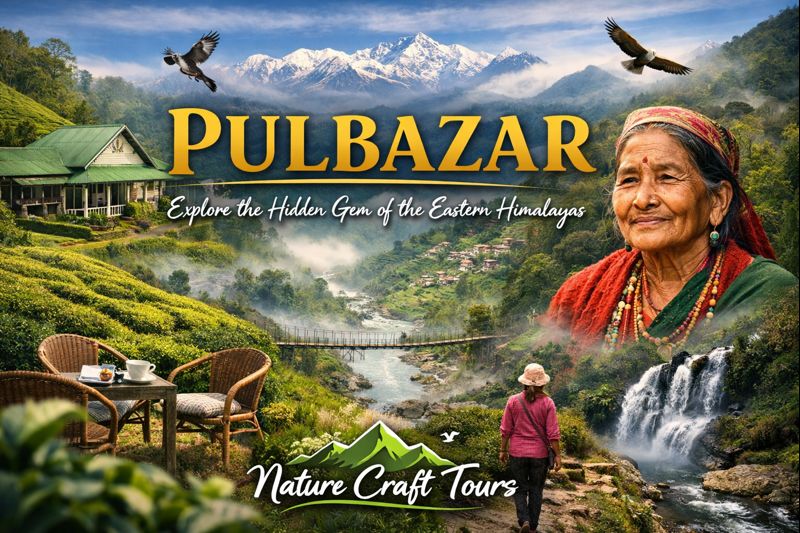
Pulbazar is a serene administrative block and rural township located in the Darjeeling district of West Bengal, positioned gently along the eastern Himalayan foothills. Unlike mainstream hill destinations dominated by commercial tourism, Pulbazar remains largely untouched—defined by tea-covered slopes, winding rivers, forested ridges, and villages that still function at a rhythm dictated by seasons rather than schedules. This region forms a crucial geographical and cultural bridge between Darjeeling town, the Indo-Nepal borderlands, and the lesser-explored interiors of the Kalimpong subdivision.
From a travel and research perspective, Pulbazar holds immense value for visitors seeking experiential tourism—where landscape, livelihood, ecology, and heritage intersect organically. The area is not designed for hurried sightseeing; instead, it rewards slow exploration, long walks, conversations with locals, and an appreciation of Himalayan rural systems that have evolved over centuries.
Geographical Setting and Regional Importance
Pulbazar is situated approximately 20 kilometers southeast of Darjeeling town, along the historic Pankhabari–Pulbazar route. The altitude varies significantly across the block, ranging from around 1,500 feet in the lower valleys to over 5,000 feet near forested ridgelines. This altitude variation contributes to rich biodiversity, microclimatic diversity, and agricultural versatility.
The region is bordered by Rangli Rangliot in the north, Jorebunglow–Sukhiapokhri in the west, and the lower hill tracts gradually descending toward the Teesta basin. Pulbazar also serves as a strategic administrative center for surrounding tea estates, forest villages, and rural development zones, making it an important yet understated hub in the Darjeeling hills.
Landscape Character: Tea Gardens, Forest Corridors, and River Valleys
Tea Estates and Plantation Geography
Pulbazar is surrounded by several historic tea gardens that define both the economy and the visual identity of the region. The tea plantations here are not merely agricultural units but living cultural landscapes. Long rows of Camellia sinensis contour the hillsides, interspersed with shade trees, labor settlements, and narrow estate roads.
These gardens contribute to soil conservation, slope stabilization, and local employment, while also shaping seasonal aesthetics—lush green during monsoon, glossy dark foliage in autumn, and delicate light-green flushes in spring.
Forest Belts and Biodiversity Zones
Beyond the plantations lie dense forest stretches forming part of larger Himalayan ecological corridors. These forests consist primarily of oak, chestnut, pine, bamboo clusters, and rhododendron species at higher elevations. Wildlife sightings are subtle yet significant, including barking deer, Himalayan civets, langurs, and an impressive diversity of birdlife.
Pulbazar’s forests play a critical role in watershed protection, feeding seasonal streams that eventually join larger river systems. For nature researchers and responsible travelers, these zones offer valuable insight into mid-Himalayan forest ecology.
Key Places and Experiences Around Pulbazar
Pulbazar Town and Weekly Markets
The Pulbazar township itself functions as a modest rural center, best known for its weekly haat (local market). On market days, villagers from surrounding areas gather to trade fresh vegetables, fermented foods, dairy products, spices, and traditional household items. These markets provide a vivid ethnographic experience, reflecting barter traditions, seasonal produce cycles, and regional food culture.
Pankhabari Road and Heritage Route
The Pankhabari road connecting Pulbazar to Darjeeling is one of the oldest hill cart routes, historically used during the colonial era. This road passes through mist-laden forests, old stone culverts, and scenic bends offering dramatic valley views. It is particularly significant for heritage enthusiasts and slow travelers interested in colonial-era infrastructure and hill transportation history.
River Valleys and Stream Walks
Numerous small rivers and perennial streams flow through Pulbazar, especially during post-monsoon months. These watercourses support agriculture, livestock, and domestic needs. Gentle riverside walks reveal traditional irrigation methods, footbridges, and riverbank vegetation unique to Eastern Himalayan foothills.
Cultural Fabric and Village Life
Pulbazar’s population consists primarily of Nepali-speaking communities, along with Lepcha influences in certain pockets. Cultural life here is deeply tied to agricultural cycles, forest resources, and community rituals. Festivals such as Dashain, Tihar, and local harvest celebrations are observed with sincerity rather than spectacle.
Village architecture reflects climatic adaptation—sloped roofs, wooden balconies, stone foundations, and open courtyards. Oral traditions, folk songs, and communal labor systems remain active, offering cultural researchers an authentic view of Himalayan rural sociology.
How to Reach Pulbazar
From Siliguri
Pulbazar is approximately 75 kilometers from Siliguri. The journey typically follows the Hill Cart Road or alternative routes via Peshok and Teesta Valley intersections before ascending toward Darjeeling district interiors. Travel time ranges between 3.5 to 4.5 hours depending on road conditions and weather.
From Darjeeling Town
Pulbazar lies about 20 kilometers from Darjeeling town and is easily accessible by local taxis and shared vehicles. The route via Pankhabari is particularly scenic and preferred by travelers seeking a quieter alternative to the main Hill Cart Road.
Nearest Railhead and Airport
The nearest major railway station is New Jalpaiguri (NJP), while the closest airport is Bagdogra. From both points, road transport is the only practical option. Travelers are advised to plan daytime arrivals due to hilly terrain and fog conditions.
Major Distances from Pulbazar
- Pulbazar to Darjeeling: approximately 20 km
- Pulbazar to Siliguri: approximately 75 km
- Pulbazar to Kalimpong: approximately 55 km
- Pulbazar to NJP Railway Station: approximately 80 km
- Pulbazar to Bagdogra Airport: approximately 85 km
Staying Options in and Around Pulbazar
Homestays and Village Residences
Pulbazar offers a growing number of family-run homestays that emphasize cultural immersion and sustainability. These accommodations typically provide home-cooked meals, guided village walks, and opportunities to participate in daily rural activities. Such stays are ideal for travelers seeking authenticity rather than luxury.
Tea Garden Bungalows and Eco-Lodges
In surrounding areas, heritage tea garden bungalows and small eco-lodges provide comfortable stays amidst plantations and forests. These properties often focus on low-impact tourism, landscape conservation, and local employment.
Travelers planning longer Himalayan circuits often combine Pulbazar stays with broader regional itineraries, similar to how travelers structure experiences around destinations such as
Sundarban Travel, where ecology, culture, and slow exploration define the journey.
Best Time to Visit Pulbazar
Spring (March to May)
Spring is one of the most favorable seasons, marked by mild temperatures, blooming wildflowers, and clear mountain views. Agricultural activity is vibrant, making this period ideal for cultural observation and nature walks.
Autumn (October to November)
Post-monsoon autumn offers crisp air, excellent visibility, and stable weather. This season is particularly suitable for photography, tea garden exploration, and heritage walks along old hill routes.
Monsoon and Winter Considerations
Monsoon months bring heavy rainfall and occasional landslides, while winter temperatures can drop significantly, especially at night. Winter travel is best suited for experienced hill travelers comfortable with limited daylight and colder conditions.
Pulbazar in Responsible Tourism Circuits
Pulbazar fits naturally into responsible tourism frameworks that emphasize local participation, ecological sensitivity, and offbeat exploration. When thoughtfully integrated into broader itineraries—much like carefully curated
Sundarban Tour Package experiences—it demonstrates how lesser-known regions can benefit from tourism without cultural erosion or environmental strain.
For travelers, researchers, and planners seeking alternatives to overcrowded hill stations, Pulbazar stands as a reminder that the Eastern Himalayas still hold quiet corridors of authenticity—where landscape, livelihood, and legacy continue in quiet harmony.