




Kalej Valley: An Untouched Himalayan Basin of Forests, Streams, and Slow Mountain Life
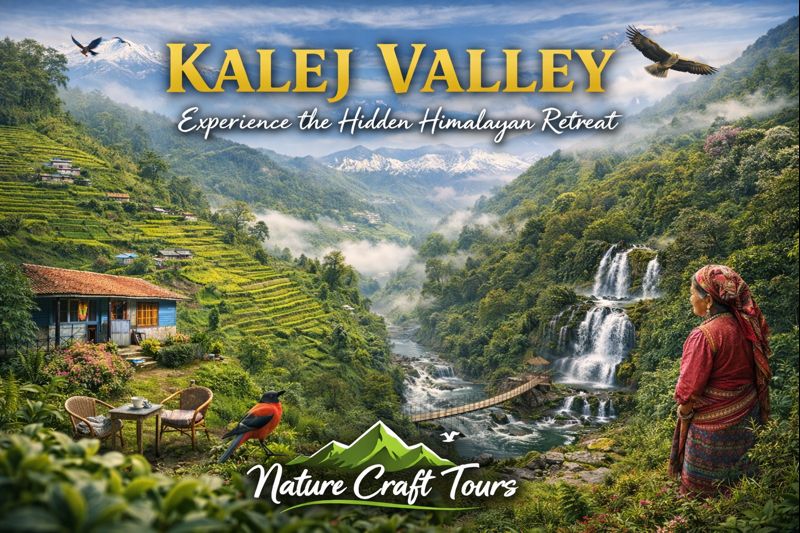
Kalej Valley is one of the least-documented and quietly evolving offbeat destinations of the Eastern Himalayas, located within the Darjeeling hill region of West Bengal. Hidden beyond popular tourist circuits, the valley unfolds as a gentle confluence of forested slopes, terraced farmlands, perennial streams, and sparsely populated hamlets. Unlike destinations shaped primarily for tourism, Kalej Valley continues to exist as a lived landscape—where geography, livelihood, and culture remain organically interlinked.
From a research and travel-writing perspective, Kalej Valley represents a transitional Himalayan zone where lower hill ecology meets mid-altitude forest systems. This makes the region particularly valuable for travelers seeking slow tourism, landscape studies, rural sociology, and immersive nature-based experiences rather than checklist sightseeing.
Geographical Location and Valley Formation
Kalej Valley is situated within the interior folds of the Darjeeling district, accessible through a network of secondary hill roads branching away from established routes leading to Darjeeling town, Pulbazar, and Kalimpong interiors. The valley sits at an average altitude ranging between 3,200 and 5,000 feet above sea level, creating a moderate mountain climate characterized by cool summers, misty mornings, and crisp winters.
Geologically, the valley has been shaped by ancient fluvial systems. Seasonal and perennial streams cut through forested slopes, gradually forming a basin-like topography. These water channels support agriculture, forest regeneration, and village settlements, making Kalej Valley a naturally self-sustaining Himalayan micro-region.
Landscape Character and Natural Environment
Forest Composition and Vegetation Zones
The forests of Kalej Valley belong primarily to the Eastern Himalayan broadleaf ecosystem. Dominant tree species include oak, alder, chestnut, bamboo groves, wild banana clusters, and seasonal flowering shrubs. At higher ridgelines, pine and rhododendron species appear, adding to the botanical diversity.
These forests function as ecological buffers, regulating water flow, preventing soil erosion, and supporting wildlife corridors. The absence of large-scale commercial activity has allowed native vegetation to thrive with minimal disturbance.
Streams, Waterfalls, and Valley Hydrology
One of Kalej Valley’s defining features is its intricate network of streams. Fed by monsoon rains and underground springs, these streams remain active throughout most of the year. Small waterfalls form naturally during the rainy season, while winter months reveal clear rock beds and gentle flows ideal for contemplative walks.
The hydrological system directly influences local farming patterns, irrigation methods, and settlement placement—making water not just a natural feature but a structural element of valley life.
Important Points and Experiences to Explore
Valley Viewpoints and Natural Lookouts
Several natural viewpoints are scattered along the upper slopes of Kalej Valley. These points offer expansive views of layered hills, forest canopies, and distant ridgelines that shift color with changing light. Early mornings often reveal mist-filled valleys, while late afternoons bring warm golden hues across terraced fields.
Village Hamlets and Terraced Agriculture
Small villages within Kalej Valley are built around terraced farming systems. Crops such as maize, millet, seasonal vegetables, and cardamom are cultivated using traditional techniques. These terraces not only sustain livelihoods but also stabilize slopes and preserve soil fertility.
Walking through these villages allows travelers to observe sustainable Himalayan agriculture in practice—an experience increasingly rare in more commercialized hill destinations.
Forest Walks and Birdlife Observation
Kalej Valley is particularly rewarding for birdwatchers and nature observers. The forests host a variety of Himalayan bird species, including flycatchers, barbets, sunbirds, and seasonal migratory birds. Forest trails are informal and best explored with local guidance to ensure safety and ecological sensitivity.
Cultural Landscape and Community Life
The cultural fabric of Kalej Valley is woven primarily by Nepali-speaking hill communities, with subtle influences of Lepcha traditions in certain pockets. Community life here revolves around agriculture, forest resources, and seasonal festivals rather than tourism-driven schedules.
Homes are constructed using stone foundations, wooden frames, and corrugated or sloped roofs designed for heavy rainfall. Social interactions often take place in shared courtyards, fields, and village paths, offering visitors an authentic window into Himalayan rural sociology.
How to Reach Kalej Valley
Access from Siliguri
Kalej Valley is approximately 80 to 90 kilometers from Siliguri, depending on the chosen route. The journey typically involves ascending through hill roads leading toward Darjeeling district interiors, followed by diversion onto narrower secondary roads. Travel time generally ranges from 4 to 5 hours under normal conditions.
Access from Darjeeling Town
From Darjeeling town, Kalej Valley can be reached within 25 to 35 kilometers. The drive passes through quieter stretches of hill roads, tea garden fringes, and forest corridors. Private vehicles or reserved local taxis are the most practical options for reaching the valley.
Nearest Railhead and Airport
The nearest major railway station is New Jalpaiguri (NJP), while Bagdogra Airport serves as the closest air link. From both points, onward travel must be completed by road. Visitors are advised to schedule arrivals during daylight hours due to winding terrain and occasional fog.
Major Distances from Kalej Valley
- Kalej Valley to Darjeeling: approximately 30 km
- Kalej Valley to Siliguri: approximately 85 km
- Kalej Valley to Kalimpong: approximately 60 km
- Kalej Valley to NJP Railway Station: approximately 90 km
- Kalej Valley to Bagdogra Airport: approximately 95 km
Staying Options in Kalej Valley
Village Homestays
Accommodation in Kalej Valley is primarily centered around family-run homestays. These properties emphasize local architecture, home-cooked meals, and cultural exchange. Guests often participate in daily activities such as farming, cooking, or forest walks, making the stay immersive rather than transactional.
Eco-Stays and Nature Retreats
A limited number of eco-focused stays exist on the outskirts of the valley. These properties prioritize minimal environmental impact, use of local materials, and low-density construction. They are suitable for travelers seeking privacy, long stays, and nature-based routines.
Travelers exploring Kalej Valley often integrate it into broader offbeat itineraries, much like experiential journeys curated under
Sundarban Tour models, where destination depth is valued over speed.
Best Time to Visit Kalej Valley
Spring Season (March to May)
Spring offers mild temperatures, blooming vegetation, and clear skies. Agricultural activities are at their peak, making this an excellent time to observe rural life and enjoy forest walks.
Autumn Season (October to November)
Autumn is considered the most stable season for travel. Post-monsoon clarity enhances valley views, and the weather remains comfortable for outdoor exploration.
Monsoon and Winter Insights
Monsoon months bring lush greenery but also slippery trails and occasional road disruptions. Winter months are quiet and cold, best suited for travelers seeking solitude and crisp mountain air.
Kalej Valley and Responsible Tourism
Kalej Valley exemplifies the principles of responsible tourism—low footfall, community engagement, and environmental respect. When approached thoughtfully, tourism here can support local livelihoods without disrupting ecological balance.
As with nature-centric experiences promoted through platforms like
Sundarban Travel, Kalej Valley encourages travelers to slow down, observe deeply, and engage respectfully with landscapes that still retain their original rhythm.
For those seeking an offbeat Himalayan destination rooted in authenticity, Kalej Valley offers a rare opportunity—where silence carries meaning, forests tell stories, and travel becomes a process of understanding rather than consumption.