





Phalut
– Where the Horizon Breathes and the Himalayas Speak in Silence
Introduction to Phalut
Phalut is one of the most remote and least disturbed high-altitude destinations in the Eastern Himalayas. Situated at an elevation of approximately 3,600 meters, it is the second-highest point in West Bengal after Sandakphu. Unlike popular hill stations that thrive on comfort and accessibility, Phalut remains austere, elemental, and profoundly meditative. The absence of crowds, urban distractions, and commercial noise transforms this mountain outpost into a sanctuary for travelers seeking silence, clarity, and an unfiltered Himalayan experience.
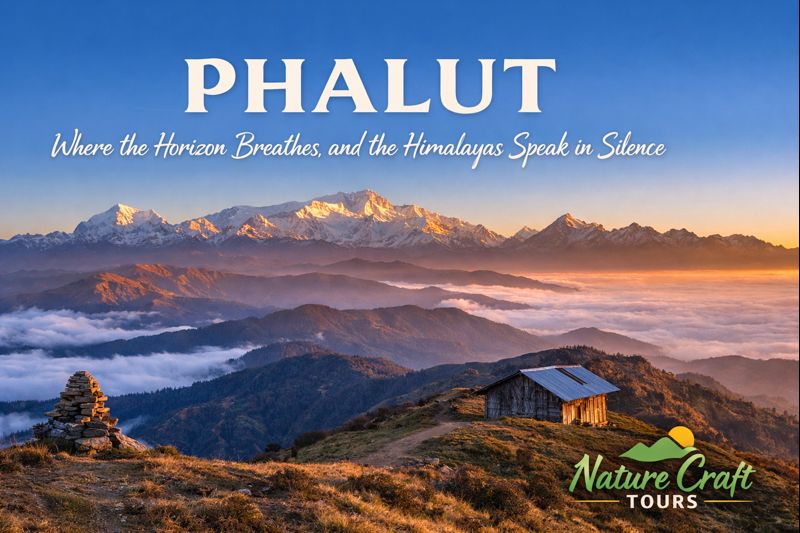
Located on the historic Singalila Ridge near the Indo–Nepal border, Phalut commands uninterrupted views of some of the world’s tallest mountains. The terrain is shaped by alpine meadows, dwarf rhododendron shrubs, and rolling grasslands that stretch into the horizon. Here, the sky feels closer, the air thinner, and the sense of scale humbling.
Historical and Cultural Context
Historically, the Singalila Ridge served as a natural trade and movement corridor between Sikkim, Nepal, and Tibet. Phalut itself was once a strategic observation post during the British colonial period. Today, remnants of that past survive in the form of a modest trekkers’ hut and scattered stone structures that blend seamlessly into the landscape.
Culturally, the region is influenced by Tibetan Buddhist traditions and the mountain lifestyles of Nepali-speaking communities inhabiting the lower valleys. Though Phalut has no permanent settlement, its cultural resonance lies in its role as a seasonal passage and a spiritual threshold between nations and natural realms.
Landscape and Natural Environment
Alpine Meadows and High-Altitude Flora
Phalut’s landscape is dominated by expansive alpine meadows that change character with the seasons. During late spring and early summer, these meadows bloom with primulas, gentians, and dwarf rhododendrons. In autumn, the grasslands turn golden, creating a dramatic contrast against deep blue skies.
Wildlife and Ecology
Phalut lies within the Singalila National Park, a biodiversity-rich zone known for rare Himalayan fauna. Red pandas, Himalayan black bears, and musk deer inhabit the forested stretches below. Birdlife is particularly rich, with species such as blood pheasants, Himalayan monals, and various high-altitude finches observed along the trail.
Panoramic Mountain Views
Phalut is celebrated for offering one of the most expansive Himalayan panoramas in Eastern India. On clear days, travelers can witness a continuous procession of peaks including Mount Everest, Lhotse, Makalu, and the entire Kanchenjunga massif. Sunrise and sunset here are not events but ceremonies, as light slowly unveils the contours of the world’s highest mountains.
Important Points to See Around Phalut
Phalut Summit Area
The summit area is a vast, open expanse rather than a sharp peak. From here, the sense of openness is overwhelming, with horizons extending in all directions. It is an ideal spot for quiet contemplation and landscape photography.
Singalila Ridge Trail
The trail connecting Sandakphu to Phalut is considered one of the finest high-altitude walks in India. The ridge walk offers alternating views of Nepal on one side and India on the other, reinforcing the transboundary character of the landscape.
Major Distances to Phalut
• Manebhanjan to Sandakphu: approximately 32 km by trekking route
• Sandakphu to Phalut: approximately 21 km on foot along the ridge
• Manebhanjan to Phalut (via trekking): approximately 53 km
• Nearest town: Darjeeling, approximately 75 km (road + trek combined)
How to Reach Phalut
Reaching the Base Point
The journey to Phalut typically begins from Manebhanjan, a small town near Darjeeling that serves as the gateway to the Singalila region. Manebhanjan is accessible by road from Darjeeling, Siliguri, and NJP Railway Station.
Trekking Route
From Manebhanjan, travelers usually trek via Chitre, Tumling, Kalipokhri, and Sandakphu before proceeding to Phalut. This gradual ascent allows for proper acclimatization, which is essential given Phalut’s altitude.
Alternative Vehicle-Assisted Access
For those unable to complete the entire trek, certain segments up to Sandakphu can be covered using specialized high-altitude vehicles. The final stretch to Phalut, however, is best experienced on foot to truly absorb the landscape.
Staying Options Near Phalut
Accommodation near Phalut is intentionally minimal, preserving the ecological sensitivity of the area. Options typically include trekkers’ huts and basic lodges managed by local authorities or community groups. These facilities provide simple shelter, meals, and warmth, emphasizing sustainability over luxury.
At Sandakphu and intermediate villages such as Tumling and Kalipokhri, travelers will find modest homestays and lodges offering essential comforts. Staying in these places also supports local livelihoods and responsible tourism.
Best Time to Visit Phalut
Spring (April to May)
Spring is marked by blooming alpine flowers, clear skies, and moderate temperatures. It is ideal for nature lovers and photographers.
Autumn (October to November)
Autumn offers the clearest mountain views and stable weather conditions. The crisp air and golden landscapes make this the most popular season for trekking.
Seasons to Avoid
The monsoon months (June to September) bring heavy rainfall, slippery trails, and poor visibility. Winter (December to March) sees heavy snowfall, often rendering the route inaccessible.
Phalut
Above the world where footsteps fade,
Phalut waits in quiet grace.
Meadows whisper to the wind,
And clouds drift slow across the face.
Snowy peaks in endless rows,
Guard the dreams of ancient skies.
Here, the heart forgets its weight,
And time itself learns how to rise.
Silence speaks in mountain breath,
At Phalut’s edge, the soul feels whole.
Responsible Travel and Final Reflections
Phalut demands respect—for its altitude, its ecology, and its silence. Travelers are encouraged to follow responsible trekking practices, minimize waste, and remain mindful of the fragile Himalayan environment. This is not a destination to conquer, but one to quietly receive.
For those who wish to explore other offbeat Himalayan villages, the serene hamlet of Tinchuley offers a contrasting yet equally enriching experience of rural mountain life. Similarly, curated travel insights from Sundarban Travel and Sundarban Tour highlight how diverse natural landscapes across India can shape meaningful journeys.
Phalut remains a place where the Himalayas are not merely seen but felt—where distance, silence, and altitude combine to remind the traveler of nature’s enduring scale and quiet wisdom.