





Where emerald valleys whisper with pine-scented winds and memories of Rabindranath Tagore bloom like orchids on cliffside gardens, there stands a quiet Himalayan retreat—Mungpoo.
Mungpoo
– The Poet’s Himalayan Refuge Surrounded by Cinchona Forests and Cloud-Kissed Valleys
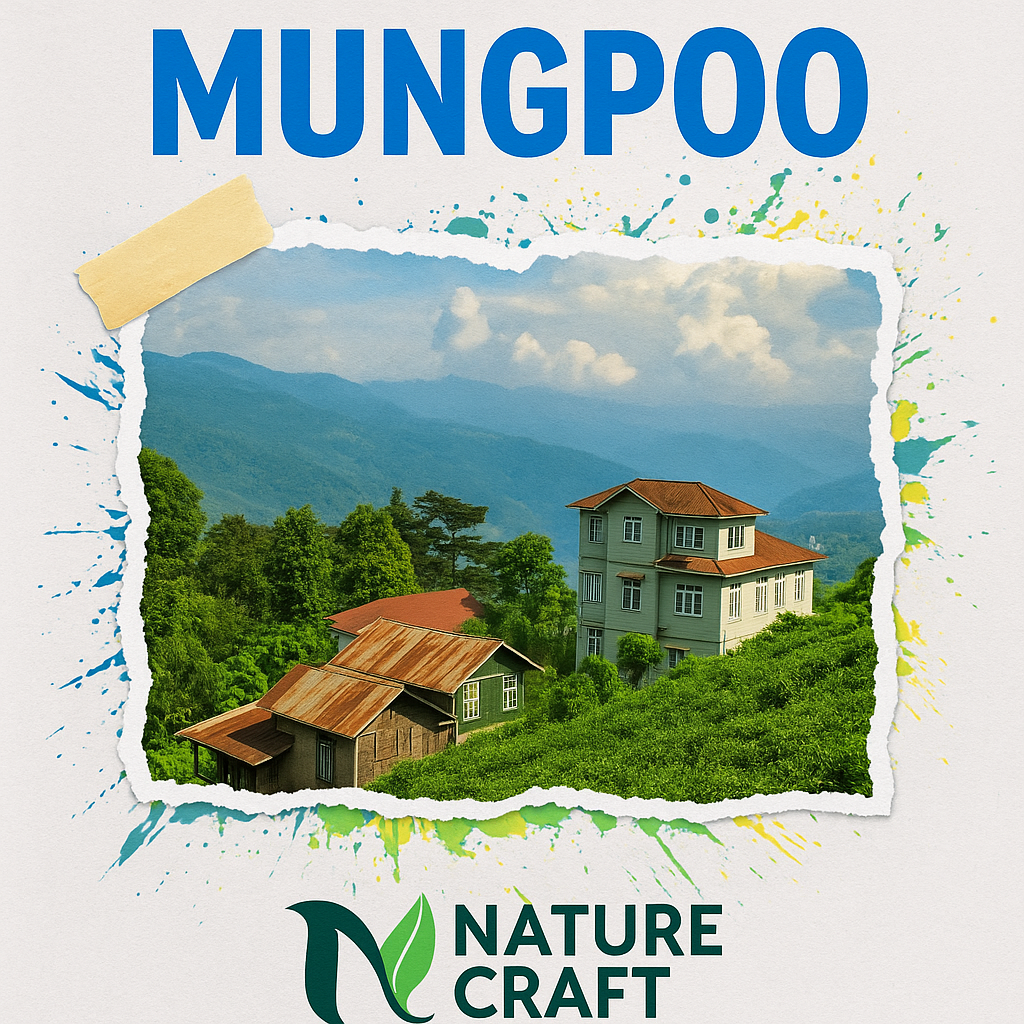
Mungpoo (also spelled Mongpu) is one of the most soulful and historically significant hill villages near Darjeeling. Unlike bustling tourist towns, Mungpoo offers tranquillity woven with literary heritage, botanical wonders, sprawling cinchona plantations, orchid research centres, and mountain panoramas. This serene village stands at an altitude of nearly 3,700 feet and is renowned for its association with Nobel laureate Rabindranath Tagore, who visited Mungpoo multiple times to recuperate and seek creative refuge.
Draped in velvety green forests and steeped in cultural legacy, Mungpoo welcomes travellers who seek peace, heritage experiences, nature walks, and a deeper connection to the Himalayas. This extensive 2500-word guide provides a research-based, thoughtfully structured exploration of Mungpoo—covering attractions, distances, travel routes, accommodations, and the best time to visit—written in a formal yet descriptive style suitable for professional travel websites.
Overview of Mungpoo
Located approximately 32 km from Darjeeling and about 45 km from Kalimpong, Mungpoo sits amidst vast cinchona plantations that once played a crucial role in India’s medical history. Cinchona bark extract was historically used to produce quinine, a vital medicine for treating malaria, which led to the British establishing large plantations here in the late 19th century.
Even today, the village hosts the Government Cinchona Plantation & Quinine Factory, a historically significant institution that highlights the legacy of botanical science in the region. For official updates or government-led initiatives around North Bengal tourism and plantation management, travellers can refer to:
Government of West Bengal (Official .gov portal)
Mungpoo’s climatic conditions are mild, with misty mornings, cool breezes, and monsoon-fed greenery throughout the year. Beyond its natural charm, what truly elevates its appeal is its literary heritage—Tagore’s beloved residence, where he spent time during 1938 to 1940, remains preserved as a museum.
Important Points of Interest in Mungpoo
1. Rabindranath Tagore Memorial Museum (Rabindra Bhavan)
The main attraction of Mungpoo is the bungalow where Rabindranath Tagore stayed during his visits to the village. Originally belonging to Maitreyi Devi’s family, the house has been converted into an exquisitely preserved museum. Tagore’s writing desk, bed, personal items, handwritten letters, paintings, and furniture remain intact, offering a deeply immersive experience.
One of the most striking exhibits is the poet’s specially designed chair—crafted with wheels—to allow him to move comfortably across the sloping floors. The museum also displays rare photographs of Tagore’s final years, making it an unforgettable heritage site for literature aficionados.
2. Cinchona Plantation & Quinine Factory
Established in 1864, the plantations around Mungpoo form the backbone of the village’s history. Acres of cinchona trees spread across the surrounding hills, offering a scenic yet scientifically significant landscape. Visitors can observe the plantation processes and learn about the history of quinine extraction, once a lifeline for malaria treatment.
3. Government Orchid Centre
Located near the main settlement, the Orchid Research Centre is one of India’s major facilities dedicated to cultivating rare Himalayan orchids. The centre houses numerous species such as Cymbidiums, Coelogynes, Dendrobiums, and Himalayan wild orchids. Peak flowering season offers a vibrant display of colours and delicate fragrances.
4. Mungpoo Viewpoints
Multiple vantage points around the village offer unparalleled views of Kalimpong, the Teesta Valley, and layers of blue-green mountains fading into the horizon. Early morning and pre-sunset hours are especially rewarding for photographers and nature lovers.
5. Walks Through Cinchona Forests
The forests around Mungpoo are unlike typical Himalayan pine belts—they contain large clusters of cinchona, eucalyptus-like foliage, and medicinal herbs. These forest trails are perfect for quiet walks, birdwatching, and botanically rich exploration.
6. Kalijhora and Teesta Riverside Stretch
A scenic extension from Mungpoo, Kalijhora is a riverside destination located along the Teesta, known for its calm waters and jungle-backed roads. The riverbank is ideal for photography and peaceful riverside strolls.
7. Nearby Literary & Cultural Points
Mungpoo’s proximity to Darjeeling enriches cultural possibilities. Visitors may explore related literary landmarks found in the Darjeeling district, whose broader cultural details are documented on:
Darjeeling District – Wikipedia
Major Distances from Mungpoo
- Darjeeling to Mungpoo: approx. 32 km (1.5 hours)
- Kalimpong to Mungpoo: approx. 45 km (1.5–2 hours)
- NJP Railway Station to Mungpoo: approx. 55–60 km (2–2.5 hours)
- Bagdogra Airport to Mungpoo: approx. 60–62 km (2.5 hours)
- Teesta Bazaar to Mungpoo: approx. 18 km
- Lamahatta to Mungpoo: approx. 20 km
- Tinchuley to Mungpoo: approx. 22 km
Road conditions vary seasonally, especially during monsoon. The Peshok Road and Kalimpong routes are scenic but include steep turns.
How to Reach Mungpoo
Reaching Mungpoo by Air
Bagdogra Airport in Siliguri serves as the nearest air gateway. Once at Bagdogra, travellers can hire reserved vehicles or pre-arranged pickups. Most journeys follow:
Bagdogra → Siliguri → Sevoke → Teesta Bazaar → Mungpoo
The drive through Sevoke Road offers views of forests, the Teesta River, and rolling mountain scenery before climbing towards the village.
Reaching Mungpoo by Rail
The nearest railway station is New Jalpaiguri (NJP), well connected across India. From NJP, travellers proceed via Siliguri, Sevoke, and Teesta Bazaar. Transport options include:
- Private cars
- Shared taxis up to certain points (rare beyond Teesta)
- Pre-booked tourist vehicles
Some travellers plan their North Bengal journey along with other destinations, including a Sundarban Tour, creating a diverse combination of mountain and delta experiences.
Reaching Mungpoo by Road
Visitors may reach Mungpoo through multiple scenic routes:
- Teesta Bazaar – Mungpoo Road: The most common route.
- Darjeeling – Jorebunglow – 6th Mile – Mungpoo: Forested, scenic drive.
- Kalimpong – Algarah – Mungpoo: Long but extremely picturesque.
All routes pass through picturesque river valleys, mountain curves, tea gardens, and forested slopes.
Staying Options in Mungpoo
Mungpoo does not have commercial hotels or large resorts. Instead, it offers:
- Village homestays
- Eco-stays
- Botanical-lodge style retreats
These stays are typically managed by local families and offer authentic hospitality.
Homestays
Homestays provide:
- Comfortable rooms with basic amenities
- Traditional meals made from local produce
- Organic vegetables sourced from host gardens
- Warm family-style atmosphere
Eco-Lodges & Nature Retreats
Some stays built near cinchona forests offer:
- Wooden cottages
- Balconies facing valley views
- Pine-scented environments
- Quiet corners for reading or meditation
Heritage-Themed Stays
Although Mungpoo does not have Tagore-themed accommodations, many homestays maintain a rustic, heritage-friendly ambience that complements visits to Rabindra Bhavan.
Local Culture, Food, and Lifestyle
The culture of Mungpoo is a blend of Nepali, Lepcha, Bhutia, and Bengali influences. Life moves at a gentle pace—villagers engage in farming, plantation work, and small-scale trade. Evenings often bring together families around warm kitchens where conversations flow over simple yet wholesome meals.
Typical meals include:
- Rice and lentils
- Local greens and vegetables
- Steamed dumplings and soups
- Homemade pickles
Seasonal fruits such as oranges, guavas, and hill bananas are commonly served.
Best Time to Visit Mungpoo
Winter (November to February)
Winter is crisp and cool. Mornings are often mist-free, which makes this the ideal season for Tagore museum visits, forest walks, and photography.
Spring (March to April)
Spring transforms Mungpoo into a floral paradise as orchids and rhododendrons begin to bloom. This is an exceptional time for botanical enthusiasts and seasonal photographers.
Summer (May to June)
A pleasant season with moderate temperatures. Ideal for families, nature lovers, and cultural tourists.
Monsoon (July to September)
Monsoon brings heavy rains. The landscape turns lush and vivid, but travel may be difficult due to mud and landslides. Suitable for seasoned travellers.
Autumn (October)
Autumn is one of the finest seasons—clear skies, shining mountain views, and comfortable temperatures.
Nearby Attractions for Day Trips
- Kalimpong: Monasteries, nurseries, and heritage structures.
- Lamahatta: Eco-park with prayer flags and pine forest trails.
- Takdah: British-era bungalows and orchid centres.
- Tinchuley: Tea garden walks and valley viewpoints.
- Darjeeling: Museums, Himalayan Zoo, tea gardens, and toy train rides.
Travel Tips for Visitors
- Wear sturdy shoes for plantation and forest walks.
- Carry warm layers regardless of the season.
- Respect the quiet, literary ambience of the village.
- Avoid littering; the region is ecologically sensitive.
- Pre-book stays during peak seasons like winter and spring.
Conclusion
Mungpoo is a rare Himalayan village that seamlessly blends natural beauty, literary heritage, botanical science, and slow-paced rural charm. Whether you walk through cinchona forests, sit quietly in Tagore’s preserved room, explore orchid houses, or simply watch drifting clouds from your balcony, the essence of Mungpoo lies in its gentleness.
This is not a place for hurried itineraries; it is a destination for travellers who savour silence, culture, and the unspoken poetry of the hills. As you leave its winding roads and descend toward the plains, the memory of Mungpoo’s mist-filled mornings and Tagore’s timeless presence lingers like a beautiful verse—soft, profound, and unforgettable.