
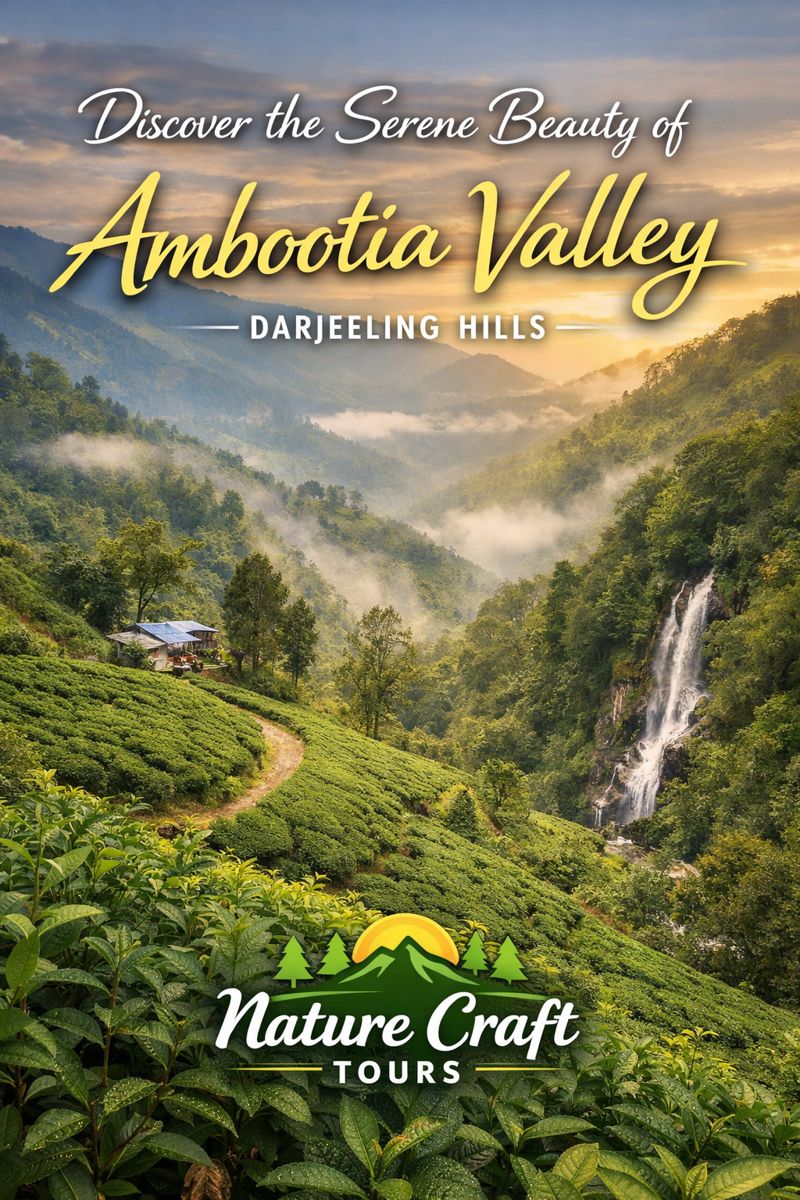
Ambootia Valley – An Exploration of Darjeeling’s Hidden Tea and Forest Landscape
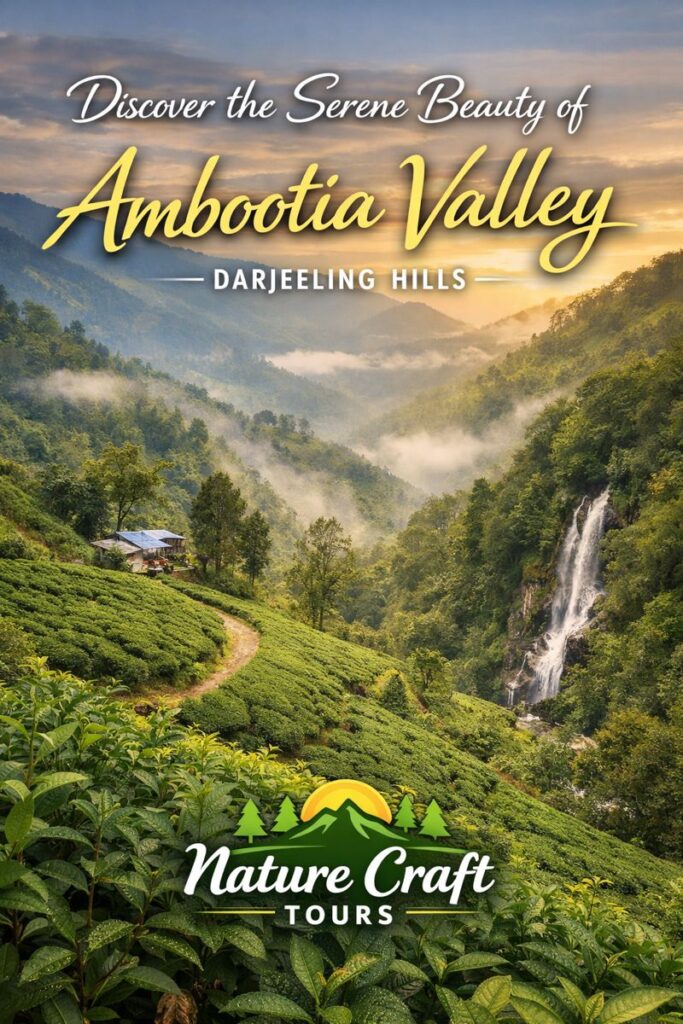
Nestled quietly in the southern slopes of the Darjeeling Himalayan region, Ambootia Valley represents a rare convergence of ecological richness, colonial-era tea heritage, and rural Himalayan life. Often overshadowed by more commercial destinations such as Darjeeling town, Mirik, or Kurseong, this valley remains largely untouched by mass tourism. For discerning travelers, researchers, nature enthusiasts, and slow-travel advocates, Ambootia Valley offers a deeply immersive experience rooted in landscape authenticity rather than spectacle.
Administratively falling within the Darjeeling district of West Bengal, Ambootia is best known internationally for its historic tea estate. However, the valley itself extends far beyond tea cultivation. It encompasses forested ridges, river-fed gorges, terraced hamlets, and colonial plantation trails that narrate over a century of socio-economic and environmental evolution in the eastern Himalayas.
Geographical Setting and Topography
Ambootia Valley is located at an average elevation ranging between 2,500 and 4,000 feet above sea level. The valley lies between the Balasun River catchment and the forested ridges connecting Kurseong to Mirik. This intermediate altitude creates a temperate climatic zone, neither as cold as upper Darjeeling nor as warm as the foothills.
The topography is characterized by rolling tea-covered slopes, interspersed with patches of mixed evergreen and deciduous forests. Numerous seasonal streams descend from the ridges, feeding into larger river systems and supporting biodiversity corridors. The region forms part of the Eastern Himalayan biodiversity hotspot, recognized globally for its ecological significance.
Historical Background of Ambootia
The history of Ambootia Valley is inseparable from the development of tea plantations during British colonial rule in the mid-19th century. Established in 1861, the Ambootia Tea Estate is one of the earliest organic tea estates in India. Originally developed using conventional plantation practices, it later gained global recognition for its pioneering shift toward biodynamic and organic cultivation.
Beyond tea, the valley also reflects the layered cultural history of Lepcha, Nepali, and Tibetan influences. Over generations, plantation labor communities evolved into settled villages, preserving oral traditions, folk rituals, and agricultural practices adapted to steep Himalayan terrain.
Cultural Landscape and Village Life
The villages scattered across Ambootia Valley are modest in scale yet culturally rich. Homes are traditionally built with stone bases and wooden superstructures, often surrounded by kitchen gardens growing seasonal vegetables, herbs, and maize. Daily life follows agrarian rhythms shaped by monsoon cycles, tea plucking seasons, and religious festivals.
Visitors who engage respectfully with local communities gain insight into a lifestyle that values ecological balance, collective labor, and minimal consumption. This makes Ambootia particularly appealing to travelers interested in responsible tourism and community-based travel models.
Important Places and Experiences in Ambootia Valley
Ambootia Tea Estate Trails
The tea gardens of Ambootia stretch across undulating slopes, offering scenic walking trails that reveal the intricacies of tea cultivation. From pruning cycles to leaf selection and organic composting techniques, the estate represents a living laboratory of sustainable agriculture.
Early morning walks through the mist-laden gardens provide opportunities to observe birdlife and appreciate the subtle gradients of green that define the valley’s visual identity.
Forest Edges and Biodiversity Zones
The valley’s peripheral forests host species such as Himalayan bulbuls, sunbirds, barking deer, and a variety of butterflies. These transitional zones between cultivated land and forest are ecologically significant and ideal for nature interpretation walks.
Researchers and wildlife enthusiasts often note the presence of medicinal plants traditionally used by local communities, underscoring the valley’s ethnobotanical importance.
River Valleys and Seasonal Streams
Several small streams crisscross the valley, swelling during monsoon months and receding into gentle flows during winter. These waterways shape the microclimate of Ambootia and contribute to soil fertility in tea plantations.
Quiet riverbanks offer contemplative spaces for travelers seeking solitude, photography, or reflective writing amid natural surroundings.
How to Reach Ambootia Valley
Access by Road
Ambootia Valley is accessible via road from major hubs in North Bengal. The nearest town with regular connectivity is Kurseong. From Kurseong, a scenic drive of approximately 12–15 kilometers leads into the heart of the valley.
Private vehicles or pre-arranged local transport are recommended, as public transport options inside the valley are limited and infrequent.
Nearest Railway Station
New Jalpaiguri (NJP) Railway Station serves as the primary railhead for travelers. The distance from NJP to Ambootia Valley is approximately 60–65 kilometers, with an average travel time of 3 to 3.5 hours depending on traffic and road conditions.
Nearest Airport
Bagdogra Airport is the closest airport, located about 58–62 kilometers from Ambootia Valley. From the airport, travelers can proceed by road through Siliguri and Kurseong.
Major Distances from Ambootia Valley
- Kurseong: approximately 14 km
- Mirik: approximately 22 km
- Darjeeling Town: approximately 38 km
- Siliguri: approximately 55 km
- New Jalpaiguri Railway Station: approximately 62 km
- Bagdogra Airport: approximately 60 km
Staying Options in and around Ambootia Valley
Accommodation in Ambootia Valley is intentionally limited, preserving the area’s low-impact tourism character. Available options primarily include eco-lodges, heritage plantation stays, and small homestays operated by local families.
Plantation stays provide immersive experiences centered around tea culture, often offering guided estate walks, organic meals, and valley-facing rooms. Homestays, on the other hand, offer cultural immersion and personalized hospitality, ideal for long-stay travelers and researchers.
Travelers seeking curated nature-based itineraries across Eastern India often combine destinations like Ambootia Valley with forest and delta experiences arranged through professional travel planners such as
Sundarban Travel, ensuring seamless logistics and responsible tourism practices.
Best Time to Visit Ambootia Valley
Spring and Early Summer (March to May)
This period offers clear skies, blooming flora, and comfortable temperatures. Tea gardens are particularly vibrant, and forest trails are accessible. It is considered the most balanced season for both sightseeing and exploration.
Monsoon (June to September)
The monsoon transforms Ambootia into a lush green sanctuary. While landslides and heavy rainfall can affect road conditions, this season appeals to photographers and nature lovers who appreciate dramatic landscapes and mist-covered hills.
Autumn and Winter (October to February)
Post-monsoon months bring crisp air and expansive views. Winter mornings can be chilly, but daytime temperatures remain pleasant. This season is ideal for slow travel, birdwatching, and long nature walks.
Why Ambootia Valley Appeals to Thoughtful Travelers
Unlike mainstream hill destinations, Ambootia Valley does not rely on artificial attractions. Its appeal lies in authenticity, ecological continuity, and cultural depth. The valley offers a meaningful alternative to crowded tourist circuits, aligning with global trends toward sustainable and experiential travel.
Travelers interested in pairing Himalayan destinations with other unique ecosystems, such as mangrove forests and riverine landscapes, often plan extended journeys through curated itineraries offered by platforms like
Sundarban Tour Package, creating a holistic understanding of Eastern India’s geographical diversity.
Ambootia Valley stands as a quiet testament to the harmony possible between human livelihood and natural systems. Rooted in tea heritage yet extending far beyond it, the valley invites visitors to slow down, observe, and engage deeply with landscape narratives shaped over centuries.
For those seeking a destination that prioritizes substance over spectacle, learning over leisure, and balance over excess, Ambootia Valley offers an enduring and intellectually enriching travel experience in the heart of the Darjeeling Himalayas.