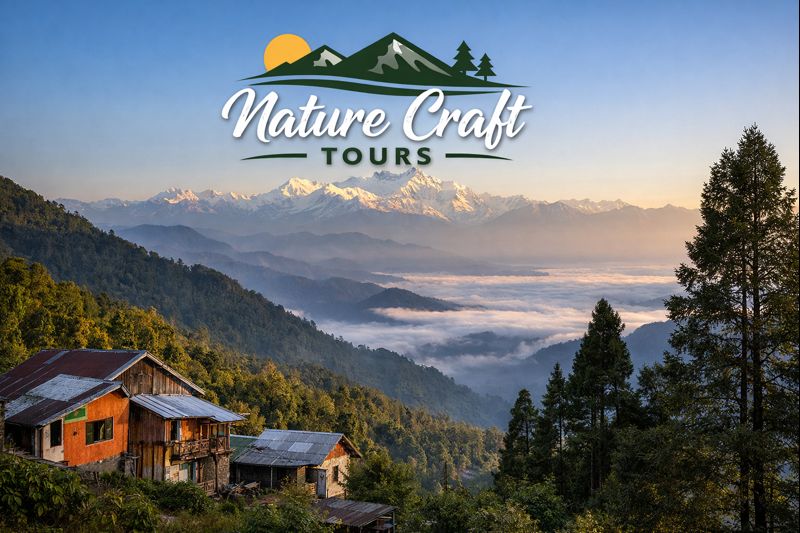
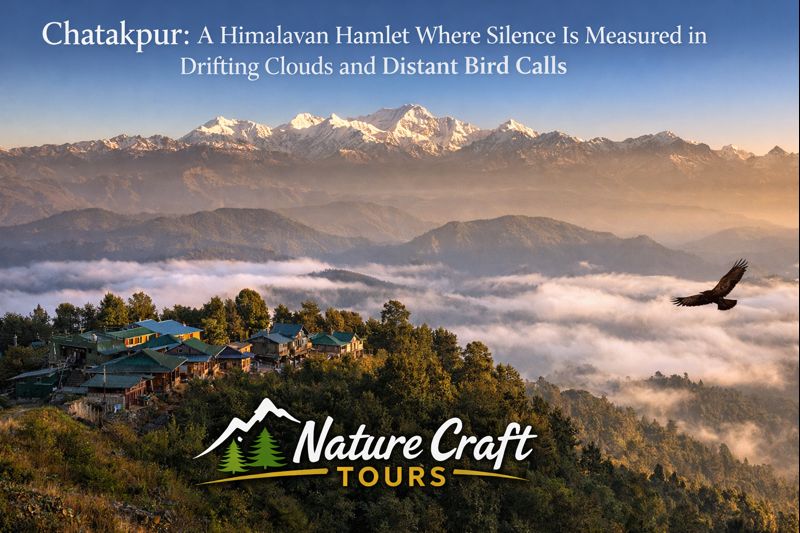

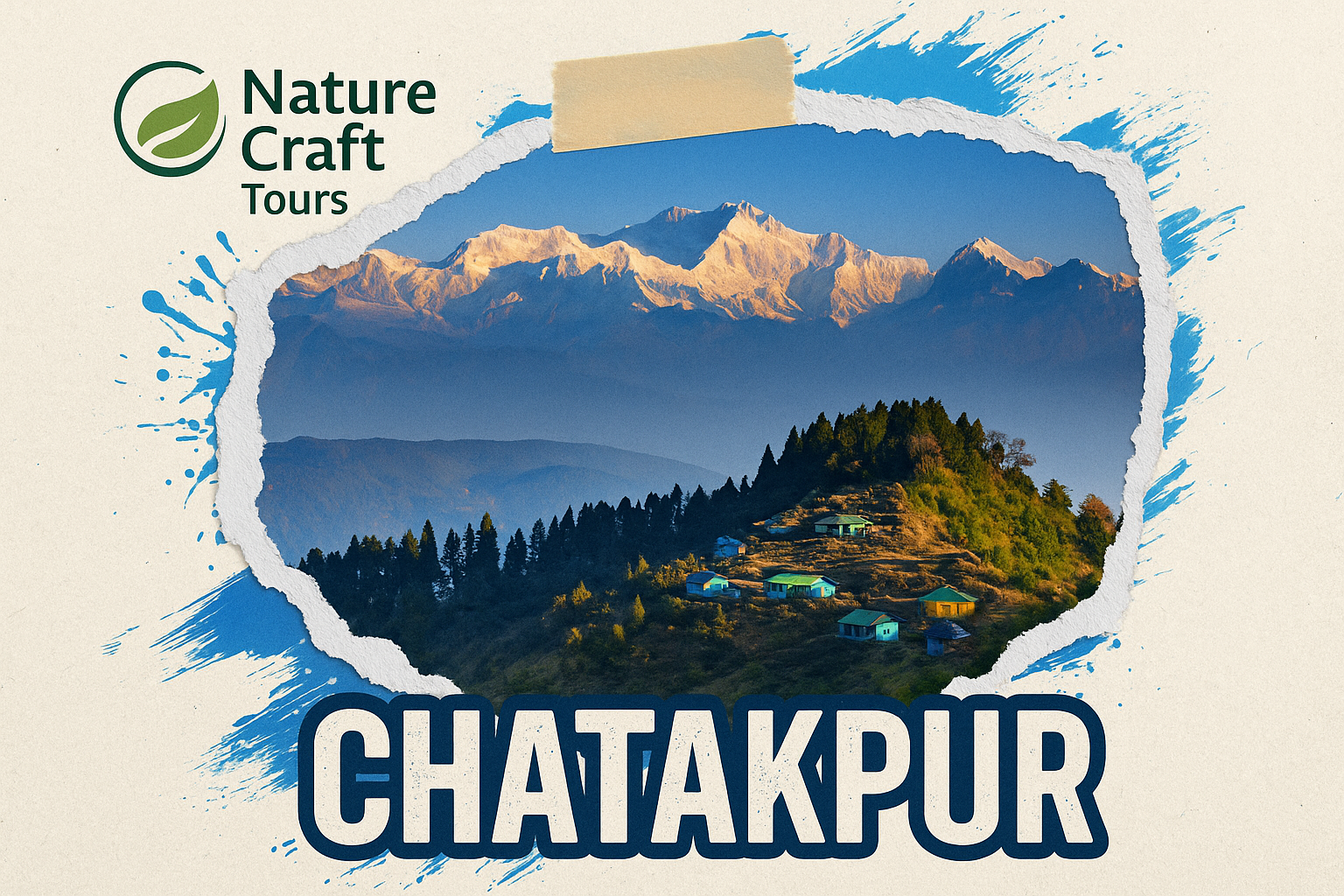
Where dawn unveils Kanchenjunga in molten gold, where cedar forests breathe ancient secrets, and where silence flows like a clear Himalayan stream—Chatakpur awaits atop the clouds.
Chatakpur
– A Pristine Himalayan Eco-Village Overlooking the Kanchenjunga Range
Chatakpur, a serene Himalayan hamlet located at an altitude of approximately 7,900 feet, is one of the most enchanting eco-villages in the Eastern Himalayas. Perched within the Senchal Wildlife Sanctuary, Chatakpur stands as a refuge of stillness—surrounded by moss-laden forests, high-altitude trails, vibrant birdlife, and unspoiled panoramic views of the mighty Kanchenjunga. Far removed from the bustle of Darjeeling, this village offers an intimate rendezvous with mountains, forests, and rural Himalayan life.
With only a handful of homes, sustainable tourism practices, and breathtaking sunrise viewpoints, Chatakpur has emerged as a preferred destination for travellers seeking peace, immersion in nature, and responsible travel experiences. This extensive 2500-word guide unfolds the beauty of Chatakpur through its attractions, distances, access routes, accommodation options, culture, and the best time to visit—written in a formal, descriptive style suitable for high-quality travel websites.
Overview of Chatakpur
Chatakpur lies within the Senchal Forest Range, one of the oldest forest reserves in India, renowned for its biodiversity and ecological significance. The village, once dependent on forest resources, has transformed into a model eco-village under forest department initiatives. With strict conservation policies, Chatakpur maintains:
- Zero-litter environment
- Minimal human impact on wildlife
- Sustainable use of natural resources
- Limited number of eco-huts for responsible tourism
Its governance and conservation initiatives fall under the jurisdiction of the West Bengal Forest Department. Travellers seeking official updates on forest zones or environment policies may visit:
Government of West Bengal – Official Portal (.gov)
The air is crisp, filled with the scent of pine, cedar, and wild basil. The trails echo with the call of Himalayan birds, while clouds frequently drift through the village, giving it a mystical appearance. Chatakpur’s greatest treasure, however, is its front-row view of Mt. Kanchenjunga, which appears dramatically close on clear mornings.
Important Places to See in Chatakpur
1. Kanchenjunga Viewpoint
The signature attraction of Chatakpur is its unobstructed view of Mt. Kanchenjunga. The viewpoint is located on a high cliff area, offering breathtaking vistas of:
- The entire Kanchenjunga range
- Snow-capped peaks of Sikkim
- Rolling ridges of Darjeeling and Kalimpong
- Layers of valleys fading into soft blue haze
At sunrise, the snowy peaks transform into a golden crown of fire—a sight that draws photographers and nature lovers from far and wide.
2. Senchal Wildlife Sanctuary
Chatakpur lies inside this protected sanctuary, which hosts:
- Himalayan black bears
- Barking deer
- Leopards (rarely spotted)
- Wild boars
- Over 250 bird species
Its ecological significance and fauna are referenced across conservation platforms, such as:
Senchal Wildlife Sanctuary – Wikipedia
3. Chatakpur Forest Trails
The village is encircled by dense forests of oak, pine, fir, and magnolia. Trails wind through these woods, offering stunning viewpoints, birdwatching opportunities, and natural encounters. These trails are ideal for meditation walks, nature photography, and forest bathing.
4. Upper Chatakpur & Lower Chatakpur
Chatakpur consists of two sections:
- Upper Chatakpur: Known for eco-huts, viewpoints, and sunrise points
- Lower Chatakpur: More residential, with traditional huts, farms, and village life
Visitors can explore both to gain a deeper understanding of local culture and ecological harmony.
5. Tiger Hill (Nearby)
Tiger Hill, located near Ghoom, is globally famous for its sunrise spectacle. It is close enough to be visited from Chatakpur, although many travellers choose Chatakpur’s viewpoints for a more peaceful experience without crowds.
6. Senchal Lake
Located within the sanctuary, Senchal Lake is one of the oldest reservoirs supplying water to Darjeeling town. Its calm waters, surrounded by deep forest belts, create a tranquil ambience.
7. Lepcha Villages Nearby
Some neighbouring settlements still preserve the cultural traditions of the Lepcha community. Their bamboo houses, handmade items, and agricultural practices offer valuable cultural insights.
Major Distances from Chatakpur
- Darjeeling to Chatakpur: approx. 18–20 km (1.5 hours)
- Ghoom to Chatakpur: approx. 16 km
- NJP Railway Station to Chatakpur: approx. 65–70 km (3 hours)
- Bagdogra Airport to Chatakpur: approx. 70 km (3–3.5 hours)
- Kurseong to Chatakpur: approx. 32 km
- Teesta Bazaar to Chatakpur: approx. 45 km
Distances may vary slightly based on the last-mile route, especially during monsoon due to road repairs inside forest areas.
How to Reach Chatakpur
By Air
Bagdogra Airport is the nearest air gateway. Upon arrival, travellers can hire a reserved vehicle to reach Chatakpur. The route typically follows:
Bagdogra → Siliguri → Sonada → Ghoom → Chatakpur
The final stretch involves steep forest roads maintained by the forest department.
By Rail
New Jalpaiguri (NJP) is the nearest major railway station. travellers follow:
- NJP → Kurseong → Chatakpur
- NJP → Ghoom → Chatakpur
Some travellers combine hills and delta regions together in extended nature tours. For example, a serene forest holiday in Chatakpur may be paired with a Sundarban Travel experience for a contrasting ecosystem journey.
By Road
Multiple scenic routes lead to Chatakpur:
- Ghoom → 6th Mile → Chatakpur (most common)
- Kurseong → Bagora → Chatakpur
- Sonada → Forest Road → Chatakpur
Forest roads are narrow but manageable with experienced hill drivers.
Staying Options in Chatakpur
Accommodation in Chatakpur is entirely eco-friendly. The forest department permits only limited lodging to maintain ecological balance. As a result, the stays here are:
- Eco-huts constructed with wood and local materials
- Minimalist, clean, and surrounded by forest
- Designed to blend seamlessly with the natural surroundings
Eco-Huts
Eco-huts are the signature accommodation in Chatakpur. Features include:
- Wooden interiors
- Warm blankets and simple furnishings
- Solar lighting in some units
- Balconies facing Kanchenjunga
Village Homestays
A few homestays in Lower Chatakpur offer:
- Family-style hospitality
- Fresh home-cooked local meals
- Views of forests and farms
Stays in Nearby Areas
Travellers may also choose to stay in:
- Kurseong
- Sonada
- Ghoom
These towns offer easier access to urban amenities while keeping Chatakpur as a day-trip or overnight destination.
Food, Culture, and Local Lifestyle
The residents of Chatakpur belong primarily to Nepali-speaking Himalayan communities, living in harmony with forest ecology. Local cuisine includes:
- Rice and lentil-based meals
- Fresh seasonal vegetables
- Momos and thukpa
- Homemade pickles and fermented delicacies
- Wild herbs cooked in traditional styles
Cultural life revolves around agriculture, forest-based livelihoods, and seasonal festivities. Evenings are usually quiet, as wildlife roams the surrounding zones.
Best Time to Visit Chatakpur
Winter (November to February)
Winter delivers crystal-clear views of Kanchenjunga. The air is chilly but invigorating. This season is excellent for photography and sunrise viewing.
Spring (March to April)
Forests bloom with rhododendrons, magnolias, and wildflowers. Birdwatching is particularly rewarding during this season.
Summer (May to June)
Comfortable temperatures and gentle breezes make this a pleasant season for nature walks and outdoor activities.
Monsoon (July to September)
Monsoon paints the forests in lush green hues. However, travel may be challenging due to slippery forest roads.
Autumn (October)
Autumn is one of the best seasons—clear skies, golden sunlight, and excellent wildlife activity.
Nearby Attractions for Day Visits
- Tiger Hill: Iconic sunrise point
- Senchal Lake: Quiet high-altitude reservoir
- Ghoom Monastery: Historic Buddhist site
- Lamagaon Village: Organic farms and rural life
- Sonada: Monasteries, markets, scenic viewpoints
Travel Tips for Chatakpur Visitors
- Carry warm clothing year-round due to high altitude.
- Avoid loud noise; wildlife zones demand silence.
- Do not venture into forest trails without guides.
- Respect local culture and eco-rules.
- Carry binoculars and cameras for birdwatching.
- Pre-book eco-huts well in advance.
Conclusion
Chatakpur stands as one of the most pristine, soul-soothing destinations in the Darjeeling Himalayas. With its unparalleled Kanchenjunga vistas, lush forest trails, rare wildlife, and sustainable tourism model, it offers a layered experience—one that blends silence, nature, and Himalayan culture. Whether you come seeking solitude, sunrise photography, birdwatching, or simply the gentle rhythm of mountain life, Chatakpur welcomes you with open skies and timeless serenity.
As you watch the sun rise behind snow-draped peaks and listen to the forest awakening to birdsong, Chatakpur leaves you with a single lingering truth—some places are not meant to be rushed; they are meant to be felt, slowly, deeply, and forever.