



Chatakpur: A Himalayan Hamlet Where Silence Is Measured in Drifting Clouds and Distant Bird Calls
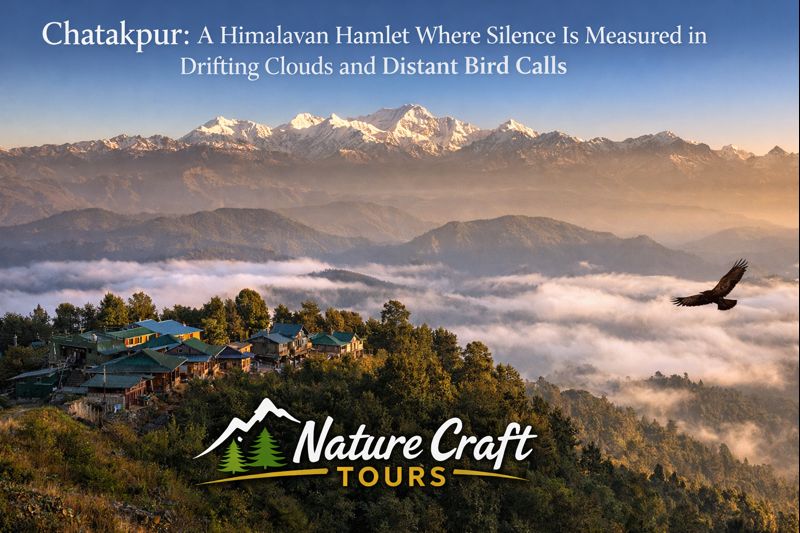
Chatakpur is a Himalayan hamlet where silence is measured in drifting clouds and distant bird calls. This is not a poetic exaggeration but a lived reality encountered the moment one steps onto its forest-edged ridge. At an elevation of approximately 7,900 feet above sea level, Chatakpur occupies a rare ecological and cultural position in the Eastern Himalaya—remote yet accessible, fragile yet resilient, modest yet deeply evocative. Unlike many hill destinations shaped by commercial tourism, Chatakpur has evolved cautiously, guided by geography, conservation priorities, and the rhythm of forest life. For the traveler seeking understanding rather than spectacle, this village offers a rare opportunity to observe the mountains without disturbing them.
Understanding Chatakpur’s Geographic Setting
Chatakpur is located within the Darjeeling district of West Bengal, near the boundary of the Senchal Wildlife Sanctuary. The village rests on a narrow ridge, surrounded on all sides by dense oak, pine, and rhododendron forests. Its position allows unobstructed views of the Kanchenjunga range on clear mornings, while its forest cover ensures that cloud movement, mist, and changing light define the landscape throughout the day.
Unlike valley towns shaped by rivers and trade routes, Chatakpur’s geography is defined by altitude and isolation. The absence of through-roads and commercial corridors has preserved both its ecosystem and social fabric. Human settlement here adapts to the forest rather than reshaping it, resulting in a village layout that feels organic rather than planned.
A Brief Historical Context
Historically, Chatakpur began as a forest settlement during British colonial rule, primarily supporting forestry operations in the Senchal catchment area. Over time, families associated with forest work established permanent homes. Following India’s independence, forest protection policies and reduced logging activity slowed population growth, inadvertently preserving the region’s ecological integrity.
In recent decades, Chatakpur has emerged cautiously as an eco-sensitive travel destination. This transition has been shaped by local participation rather than external development, ensuring that tourism remains supplementary rather than dominant. The village’s small population continues to rely on subsistence agriculture, forest stewardship, and limited hospitality services.
Ecological Significance of the Region
Chatakpur lies within a biologically sensitive zone influenced by the Eastern Himalayan biodiversity hotspot. The surrounding forests support a wide range of bird species, including Himalayan bulbuls, flycatchers, and seasonal migratory birds. The area is particularly valued by ornithologists and naturalists for its relatively undisturbed avian habitats.
Mammalian wildlife, though rarely visible, includes barking deer, Himalayan black bear, and smaller forest species. The strict conservation norms of the nearby sanctuary have limited human interference, allowing natural processes to continue largely uninterrupted. For travelers, this means encounters with nature occur on nature’s terms—unpredictable, subtle, and deeply instructive.
Cultural Life in a Ridge-Top Hamlet
The cultural identity of Chatakpur reflects a blend of Nepali hill traditions and forest-based livelihoods. Daily life follows seasonal cycles rather than tourist calendars. Agriculture remains small-scale, focused on crops suited to high-altitude conditions. Community gatherings, local festivals, and shared responsibilities reinforce social cohesion in a setting where mutual dependence is essential.
Visitors often note the absence of performative culture. There are no staged experiences or curated displays. Instead, cultural understanding emerges organically—through shared meals, conversations, and observation of daily routines. This authenticity is one of Chatakpur’s defining characteristics.
Planning a Journey to Chatakpur
Best Time to Visit
The most favorable period to visit Chatakpur extends from October to April. Post-monsoon months offer clear skies and expansive mountain views, while winter brings crisp air and heightened visibility. Spring introduces flowering forest species and increased bird activity. The monsoon season, though lush, often limits accessibility due to slippery forest roads and dense cloud cover.
Ideal Duration of Stay
An ideal visit spans two to three nights. This duration allows sufficient time to observe daily changes in light and weather, explore forest trails, and experience the village’s rhythm without haste. Longer stays may appeal to researchers, writers, and travelers seeking extended solitude.
Route and Accessibility
Chatakpur is typically accessed via Siliguri or New Jalpaiguri, followed by a drive toward Darjeeling and a final forest approach road. The last stretch requires careful navigation, as the road narrows and ascends through protected forest zones. Vehicular movement is regulated, reinforcing the area’s conservation priorities.
Travelers familiar with other nature-centric destinations such as the https://sundarbantravel.com/sundarban-tour/ may recognize similar principles of controlled access and ecological sensitivity applied in Chatakpur, albeit within a Himalayan context.
Key Attractions and Experiences
Kanchenjunga Viewpoints
On clear mornings, Chatakpur offers unobstructed views of the Kanchenjunga massif. These moments are fleeting and weather-dependent, reinforcing the importance of patience. Unlike crowded viewpoints elsewhere, observation here occurs in silence, often accompanied only by wind and bird calls.
Forest Walks and Bird Observation
Walking trails around the village pass through mixed forest ecosystems. Early morning and late afternoon walks are particularly rewarding for bird observation. The absence of artificial noise enhances sensory awareness, making even subtle movements noticeable.
Sunrise and Atmospheric Changes
Sunrise in Chatakpur is less about dramatic color displays and more about gradual illumination. The interplay of mist, light, and shadow creates a constantly shifting visual field. Observing these changes from the ridge is an experience rooted in stillness.
Responsible Tourism and Conservation Ethics
Chatakpur’s sustainability depends on restrained visitor behavior. Waste management, energy use, and water consumption are closely monitored within the village. Travelers are expected to adapt to local practices rather than impose external expectations.
This approach mirrors conservation-oriented tourism models found in ecologically sensitive regions such as the Sundarbans, where structured offerings like Sundarban Tour Packages emphasize environmental awareness alongside travel experience.
Practical Insights for Travelers
Visitors should prepare for limited connectivity and basic infrastructure. Electricity supply may fluctuate, and mobile networks are unreliable. These conditions are integral to the experience, encouraging disengagement from digital distractions.
Clothing should be layered, as temperatures vary significantly between day and night. Walking shoes suitable for uneven terrain are essential. Travelers with medical conditions should plan accordingly, as access to healthcare facilities is distant.
Chatakpur in the Context of Offbeat Himalayan Travel
Within the broader landscape of offbeat Himalayan destinations, Chatakpur stands apart for its disciplined minimalism. It does not seek to compete with established hill stations but offers an alternative defined by restraint.
For travelers exploring curated itineraries that respect this balance, options such as a Chatakpur Tour Package can provide structured access while maintaining ecological sensitivity.
The Value of Stillness
Chatakpur does not promise entertainment or distraction. Its value lies in offering space—space to observe, to listen, and to recalibrate one’s relationship with landscape and time. In an era where travel often equates to consumption, this village presents a quieter proposition: to witness a Himalayan environment that remains largely intact, not because it is inaccessible, but because it is respected.
For those willing to accept its terms, Chatakpur offers an experience measured not in activities completed, but in moments absorbed—drifting clouds, distant bird calls, and the profound presence of silence.