
Dilaram
– A Quiet Himalayan Pause Where the Hills Breathe Slowly
Introduction to Dilaram: An Unspoken Name in the Eastern Himalayas
Hidden gently along the less-travelled folds of the Eastern Himalayan corridor, Dilaram is not a destination that announces itself loudly. Instead, it waits—patient, composed, and profoundly calm. Unlike mainstream hill towns shaped by rapid tourism, Dilaram retains a rare sincerity, where forested slopes, village pathways, and mountain silence coexist without disturbance. This tranquil hamlet forms part of the broader offbeat Darjeeling region, offering travelers a deeply immersive rural–mountain experience rooted in ecology, heritage, and slow living.
Dilaram is best understood not as a point on a map, but as a state of mind—where mornings unfold with birdsong rather than alarms, and evenings are guided by mist instead of neon lights. It appeals especially to travelers seeking authenticity, researchers of Himalayan settlement patterns, photographers of natural light, and those who believe that travel should restore rather than exhaust.
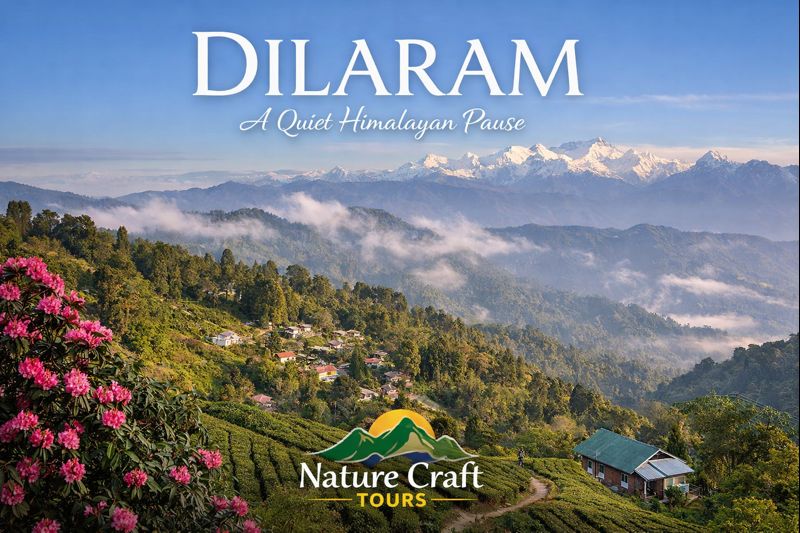
Geographical Setting and Environmental Character
Dilaram is nestled within the mid-altitude Himalayan belt of northern West Bengal, positioned between dense forest fringes and small agrarian clearings. The region experiences a temperate mountain climate, shaped by moist monsoon winds, winter chills from higher elevations, and prolonged spring clarity. Its ecological profile includes mixed broadleaf forests, pine clusters, terraced agriculture, and seasonal streams that feed into larger river systems downstream.
The terrain around Dilaram is moderately undulating, making it suitable for village walks and low-impact exploration. Unlike higher-altitude destinations, the oxygen levels remain comfortable, allowing visitors of all age groups to acclimatize easily.
Why Dilaram Remains Untouched by Mass Tourism
Several factors have preserved Dilaram’s understated charm. The absence of large commercial resorts, limited road traffic, and community-led land use have collectively ensured that tourism remains low-volume and respectful. Local families still depend primarily on agriculture, horticulture, and forest-based livelihoods, with homestays emerging slowly as supplementary income rather than replacement.
This model mirrors sustainable tourism philosophies practiced in other offbeat Himalayan settlements such as Tinchuley, where conservation and community well-being remain central to visitor engagement.
Important Places and Experiences in and Around Dilaram
Forest-Fringe Walking Trails
Dilaram’s most defining experience lies in its forest-edge walking trails. These paths, used daily by villagers, traverse through sal, pine, and mixed Himalayan flora. Morning walks reveal dew-laden leaves and distant mountain silhouettes, while afternoon trails echo with cicadas and filtered sunlight.
Village Life Observation
The rhythm of daily life in Dilaram is a lesson in Himalayan resilience. Observing farming practices, seasonal crop cycles, and traditional kitchen gardens provides valuable insight into sustainable mountain living. Visitors are often welcomed into conversations rather than transactions, a hallmark of genuine rural tourism.
Mountain Vantage Points
Several informal viewpoints around Dilaram offer wide-angle vistas of rolling hills and layered ridgelines. On clear days, early mornings may reveal snow-fed peaks shimmering faintly on the horizon. These viewpoints are not marked or commercialized, preserving their contemplative atmosphere.
Seasonal Birdlife and Biodiversity
Dilaram lies within a rich bird corridor, making it particularly attractive to birdwatchers and ecological researchers. Species vary with altitude and season, and winter months often bring migratory visitors. Butterflies, insects, and native flora add further ecological depth.
Major Distances from Dilaram
- Siliguri: approximately 65–70 km
- Darjeeling town: approximately 45–50 km
- Kurseong: approximately 35 km
- Bagdogra Airport: approximately 75 km
- New Jalpaiguri Junction: approximately 72 km
These distances make Dilaram accessible while still feeling distinctly removed from urban influence.
How to Reach Dilaram
By Air
The nearest airport is Bagdogra, well-connected to major Indian cities. From the airport, a road journey through foothill towns and ascending mountain roads leads toward Dilaram. The gradual climb enhances scenic appreciation without abrupt altitude changes.
By Rail
New Jalpaiguri serves as the primary rail gateway. From here, road transport is the most practical option. The route passes through tea estates, river valleys, and forested bends that introduce travelers to the Himalayan landscape progressively.
By Road
Road connectivity to Dilaram is reliable, though intentionally modest. The final stretches are narrower village roads, reinforcing the destination’s offbeat identity. Private vehicles or pre-arranged local transport are recommended for comfort and flexibility.
Staying Options in Dilaram
Accommodation in Dilaram focuses on experiential comfort rather than luxury branding. Visitors typically stay in:
- Community-run village homestays
- Eco-conscious mountain lodges
- Small family-operated guesthouses
These properties emphasize clean living spaces, local cuisine, and cultural interaction. Electricity and connectivity are generally stable but intentionally minimal, encouraging digital detox and mindfulness. As in many sustainable destinations, direct contact details are best avoided to maintain privacy and community balance.
Best Time to Visit Dilaram
Spring (March to May)
Spring transforms Dilaram into a landscape of renewed color and gentle warmth. Wildflowers bloom, forests regain density, and temperatures remain ideal for long walks and photography.
Autumn (October to November)
Autumn offers unmatched clarity. Skies remain crisp, mountain views sharpen, and cultural festivals in nearby regions add contextual richness. This is often considered the most balanced season for first-time visitors.
Winter (December to February)
Winters in Dilaram are quiet and introspective. While nights can be cold, daytime sunshine creates a cozy rhythm. This season appeals to writers, researchers, and solitude-seekers.
Monsoon (June to September)
Monsoon brings lush greenery and dramatic cloud formations. However, road conditions and rainfall patterns require cautious planning, making this season more suitable for experienced travelers.
Responsible Travel and Cultural Sensitivity
Visitors to Dilaram are encouraged to engage with respect—towards local customs, environmental limits, and daily life. Supporting local produce, minimizing plastic usage, and maintaining silence in forest zones ensure that tourism remains regenerative rather than extractive.
For travelers combining multiple eco-destinations across eastern India, curated journeys such as a Sundarban Tour followed by Himalayan retreats create a balanced itinerary bridging riverine and mountain ecosystems.
Dilaram in the Larger Offbeat Darjeeling Circuit
Dilaram complements nearby offbeat settlements rather than competing with them. Travelers often pair it with villages like Tinchuley to understand the diversity within Darjeeling’s lesser-known geography.
Such circuits are increasingly favored by travelers moving away from overcrowded hill stations toward slower, experience-driven routes. Many extend their journeys further toward deltaic ecosystems through platforms offering structured Sundarban Travel experiences, creating a complete eastern India narrative.
Dilaram
In Dilaram, the hills speak softly,
Not in echoes, but in breath.
Paths wander without destination,
And time loosens its grip on hours.
Mist rests like an old memory,
Forests listen more than they reveal.
Homes glow with borrowed sunlight,
Evenings arrive without urgency.
Here, silence is not empty—
It is carefully, lovingly full.
Dilaram as a Philosophy of Travel
Dilaram does not promise spectacle; it offers presence. In an era where destinations are increasingly curated for speed and consumption, this quiet Himalayan hamlet stands as a reminder that true travel often lies in unmarked roads and unspoken moments. Whether approached as a retreat, research site, or soulful pause between journeys, Dilaram rewards those willing to slow down and listen.
For travelers, writers, and seekers drawn toward landscapes that heal rather than impress, Dilaram remains one of the Eastern Himalayas’ most meaningful yet understated invitations.