

In Mungpoo, History and Nature Coexist Without Spectacle, Only Substance
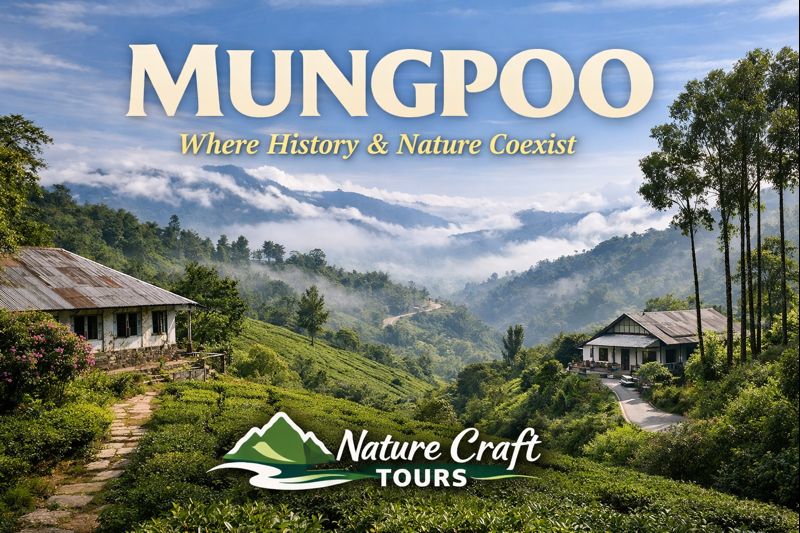
There are hill settlements in the eastern Himalaya where the landscape seems to speak in lowered tones. Mungpoo is one of them. It does not perform. It does not decorate itself for visitors, nor does it compete for attention with dramatic viewpoints or tourist theatrics. Instead, it offers a rarer kind of travel experience: a place where the forested air, plantation-era institutions, and everyday village life sit together without friction—history and nature sharing the same narrow roads, the same slopes, the same unhurried pace.
The hook is not poetic exaggeration; it is the most precise way to read the destination. In Mungpoo, the most meaningful moments are often small and unadvertised: the scent of damp leaf litter after a short shower, the sudden quiet at a bend where the road slips into shade, the way a century-old building looks neither “heritage” nor “ruin” but simply functional in its own time. This is a place to be observed rather than consumed. If you travel here with patience, Mungpoo returns something substantial—a sense of the Himalayan foothills as a lived landscape, where ecology and memory are not curated into a show, but remain part of the daily ground.
Destination Overview: Where Mungpoo Sits on the Map and in the Mind
Mungpoo (often spelled “Mongpu” in older references and signage) lies in the lower eastern Himalayan belt of North Bengal, within the Darjeeling district. It occupies a middle altitude—high enough to carry cool evenings and misty mornings, yet low enough to remain green when higher ridges grow sharper and colder. The terrain is an intricate mix of cultivated slopes and forested pockets: cinchona stands, tea bushes, terraced homesteads, bamboo thickets, and road-edge ferns that look freshly polished after rain.
Unlike “summit” towns built around vistas, Mungpoo feels like a settlement built around work: plantation life, horticulture, and the quieter institutions that arrived in the colonial period and continued into modern times. That functional origin shapes the atmosphere even today. Roads are practical; buildings are modest; people move with purpose. For travelers, this creates a strong sense of authenticity—not as a marketing word, but as a visible structure of living.
The most widely known historical association of Mungpoo is its connection to Rabindranath Tagore’s stays in the region, remembered through local heritage spaces and cultural memory. But the deeper story is broader than one figure: it is about how the Himalayan foothills became a zone where botany, medicine, plantation economies, and mountain culture overlapped. In that overlap, Mungpoo formed—quietly, persistently, and without the loud identity-making that surrounds more commercial hill towns.
The Character of the Place: Why Mungpoo Feels Different
A landscape of working greenery, not ornamental scenery
In Mungpoo, green is not decoration; it is livelihood and climate. Plantation vegetation—especially cinchona and tea—shares space with native Himalayan flora. Along short walks, you may notice how the vegetation changes with sunlight and slope: denser, darker shade where plantations mature; softer, mixed growth where forest edges remain; sudden bursts of wild flowers in open patches. The beauty here is not staged. It is the beauty of a place still governed by seasons, rain, and soil.
History that remains present without being packaged
Many destinations “present” history through curated circuits and interpretive signs. Mungpoo often does the opposite. You encounter history in the form of older buildings still in use, plantation-era roads still serving everyday routes, and the continuing presence of research-oriented cultivation. The past has not been polished into spectacle; it has simply persisted. For an attentive traveler, this is more moving than a museum-like reconstruction. It allows you to sense continuity—how places evolve without entirely breaking from their origins.
A pace that quietly reforms your travel habits
Mungpoo encourages a slower discipline. Because it does not offer loud “attractions” at every corner, the mind stops hunting for highlights and begins noticing textures: the way mist collects in lower folds of the hillside, the soft percussion of distant birds, the crisp change in air after sundown. This is an ideal destination for travelers who want to step out of checklist tourism and into a more observant, research-oriented way of moving.
Best Time to Visit Mungpoo: Season-by-Season Travel Intelligence
Spring (March to early May): clarity, flowers, and comfortable days
Spring is among the most balanced seasons for Mungpoo. Days are pleasantly mild, mornings are often clear, and the hills carry a fresh brightness after winter. This is a good time for walking and for travelers who want maximum visibility on drives through the Teesta valley corridor. Plantation greenery looks especially crisp, and village paths remain comfortable for exploration.
Monsoon (mid-June to September): the lushest version of Mungpoo, with real-world caution
Monsoon turns Mungpoo intensely green. Forest edges swell, streams become energetic, and the entire landscape feels alive. If your travel style values ecology and atmosphere, monsoon can be deeply rewarding. However, it is also the season of landslide risk and road disruptions in the hill belt. If traveling in monsoon, plan conservatively: keep buffer time, avoid tight connections, and accept that the hills decide the schedule.
Autumn (October to November): the most reliable season for visibility and stable travel
Autumn is often considered the most dependable season in the Darjeeling–Kalimpong belt. Rain reduces, visibility improves, and roads tend to remain stable. Mornings can be cool, evenings colder, and the air feels clean and thin in a comfortable way. If you want a first visit that is logistically smooth, this is an excellent window.
Winter (December to February): quiet, crisp, and introspective
Winter brings a quieter Mungpoo. Days can remain pleasant in sunshine, but evenings become distinctly cold. This season suits travelers who enjoy solitude, reading, slow walks, and the subdued palette of winter hills. It is also a time when the lack of tourist spectacle becomes especially meaningful: the destination feels more like a lived settlement than a “spot.”
Ideal Travel Duration: How Many Days Does Mungpoo Deserve?
Mungpoo can be visited briefly, but it is best experienced with time. The destination rewards depth rather than speed, and even a small extension of stay changes the quality of travel.
- 1 night / 2 days: Suitable if Mungpoo is a stopover en route to other hill destinations. You can absorb the atmosphere, take a plantation-side walk, and visit a primary heritage point.
- 2 nights / 3 days: The most balanced option. It allows for unhurried local exploration, short drives to nearby viewpoints or river corridors, and time to experience early mornings and evenings—when Mungpoo’s character is strongest.
- 3 nights / 4 days: Ideal for researchers, writers, photographers, or travelers who want to walk, read, and observe without pressure. This duration lets you include nearby lesser-known areas and still keep days calm.
Route and Accessibility: How to Reach Mungpoo Smoothly
Nearest rail and airport gateways
Most travelers approach Mungpoo through the Siliguri corridor. The nearest major railhead is New Jalpaiguri (NJP), and the nearest airport is Bagdogra. From either point, you move into the hill belt via Kalimpong-side routes or the broader Darjeeling district road network. The journey is not just transport; it is a gradual ecological transition—from plains humidity to river-valley air to cooler hill vegetation.
Road approach: the Teesta valley context
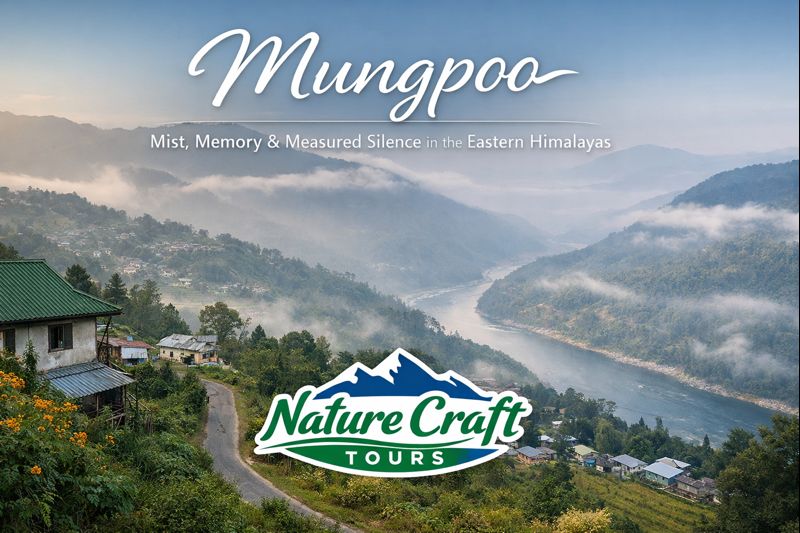
Many routes pass through or near the Teesta river corridor, which is one of the defining landscape experiences of travel in this region. The Teesta valley is dramatic in its own way, but Mungpoo itself does not mirror that drama; instead, it offers the softened continuation of the landscape—forest folds and plantation slopes that feel more intimate than monumental. If you are prone to motion sickness, plan for breaks, hydrate, and avoid heavy meals just before steep sections.
Local movement: what transport style fits Mungpoo best
Within and around Mungpoo, short-distance travel is best handled by a vehicle for the roads and by walking for the settlement itself. Walking reveals what vehicles conceal: the small shrines by the roadside, the soundscape of birds and insects, the subtle shifts in plant life. A mixed approach—drive for reach, walk for understanding—is the most effective way to experience Mungpoo.
Key Attractions and Special Highlights: What to See, Without Turning It into a Checklist
Cinchona landscape: an understated botanical identity
Cinchona is central to the historical identity of this belt. Even if you do not arrive with prior knowledge, the trees and plantation structure make the story visible. Cinchona cultivation has long been tied to medicinal history in the region, and in places like Mungpoo, it shaped roads, settlements, and institutional spaces. For travelers interested in how landscapes become “working ecologies,” this is one of the most meaningful aspects of the destination.
Rabindra memory: cultural heritage with quiet gravity
Mungpoo’s association with Rabindranath Tagore adds a cultural depth that does not feel commercial. The key is to approach this heritage not as a photo stop but as context: a reminder that the hills were not only scenic backdrops, but also places where ideas, literature, and reflection found space. If you want a single consolidated reference point to understand this connection and the traveler’s perspective on the location, you may consult Mungpoo as a contextual read alongside your planning.
Tea slopes and village edges: the “everyday” that becomes the real highlight
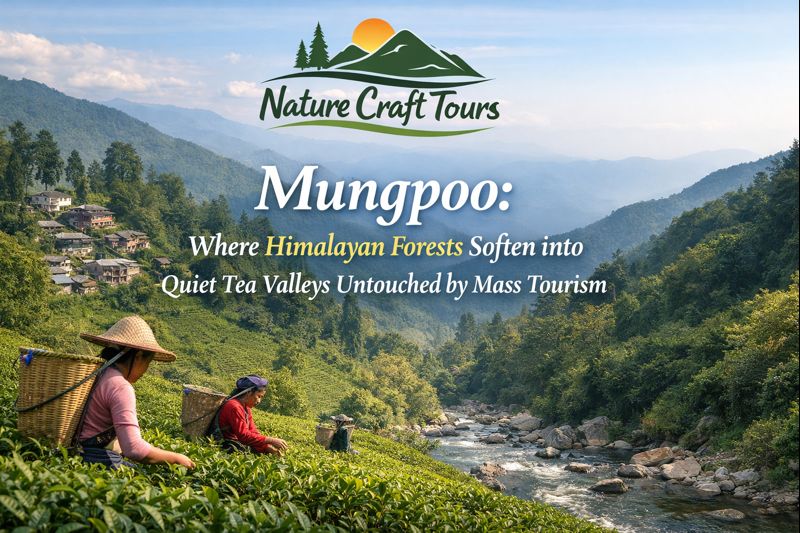
Mungpoo’s tea areas may not be as famous as those nearer Darjeeling town, but that can be an advantage. The experience feels closer to village life than to heritage branding. You see how tea landscapes merge into homesteads and how paths used for work become walking routes for travelers. The most memorable scenes often come from this edge-zone—where cultivated land meets forest shade.
Short walks into forested pockets: small distances, strong atmosphere
You do not need long treks to feel Mungpoo’s ecology. Short walks around forested pockets can reveal a dense Himalayan soundscape: bird calls that change with light, cicada-like rhythms in warmer months, and the hush that settles after brief rain. Carry water, keep footwear suitable for damp ground, and avoid disturbing any wildlife or local cultivation areas.
Local viewpoints: modest frames rather than grand panoramas
Mungpoo’s viewpoints tend to be modest—gaps in the vegetation, bends in the road, clearings near plantations. Their value lies in how they frame the landscape, not in how they overwhelm it. You are more likely to appreciate layered hills and changing light than dramatic “skyline” scenes. This suits travelers who prefer mood and detail over scale.
Cultural, Ecological, and Historical Significance: Reading Mungpoo Like a Researcher
A Himalayan foothill settlement shaped by institutions
Mungpoo’s identity is closely tied to institutional and plantation histories—an example of how the colonial period reorganized landscapes through cultivation, research, and administration. Yet the present-day story is not simply colonial residue. Local communities have long adapted these structures into contemporary life. For a traveler, this means the destination can be read in layers: what was built, what persisted, and what has been repurposed over time.
A living corridor of biodiversity
The eastern Himalayan region is known for high biodiversity, and while a visitor should avoid exaggerated claims, the ecological richness is visible even without specialist training. The mix of cultivated and semi-wild zones supports varied birdlife, insects, and plant species. Responsible travel here is not merely ethical; it is practical. Disturbance reduces what makes the place meaningful in the first place.
Cultural continuity in small gestures
In Mungpoo, culture is not staged as “performance.” It appears through everyday practices—food habits shaped by climate, local markets and seasonal produce, the social rhythm of mornings and evenings, and the quiet politeness often found in smaller hill settlements. Travelers who seek “folk shows” may feel the destination is understated; travelers who seek continuity and real life will feel enriched.
A Complete Tour Plan: A Field-Realistic Itinerary for 3 Days in Mungpoo
The plan below is designed for travelers who want depth without exhaustion. It keeps the schedule realistic for hill roads and includes time for observation, which is essential to experiencing Mungpoo’s “substance.”
Day 1: Arrival, settlement orientation, and the first quiet walk
Arrive from NJP/Bagdogra via the hill corridor. Check in and allow your body to adjust: hydrate, eat lightly, and take time to breathe the cooler air. In the late afternoon, take a slow orientation walk along a plantation-side road or a village-edge path. Do not force “sightseeing” immediately; let the place introduce itself. Watch how light shifts across slopes as evening approaches. If you enjoy reflective travel, keep a small notebook—Mungpoo has a way of offering details worth recording.
After sunset, temperatures can drop. A warm drink and a quiet evening suit the destination’s character. If you are traveling with a group, keep noise low; Mungpoo’s charm is tied to its soundscape, and respectful quiet is part of responsible presence.
Day 2: Heritage context, cinchona landscape, and slow ecological exploration
Begin early. Mornings are often the most atmospheric hours in the hills—mist in the folds, birds more audible, and the landscape still unheated by midday sun. Spend the first part of the day exploring heritage-linked sites and cultural memory associated with Mungpoo. Approach them not as “stops,” but as context: what did people come here to do, and what did this landscape offer them—climate, quiet, medicinal cultivation, reflective distance from city intensity?
Later, move into the cinchona/plantation landscape. Even a short guided explanation (where available) can help you understand how cultivation patterns shape ecology and settlement form. Pay attention to the geometry of plantations, the age of trees, and the way paths are laid. These are not random. They are the visible consequences of history interacting with terrain.
In the afternoon, choose a short forest-edge walk. Keep it unhurried. Look for small signs: fungi on damp trunks, fern clusters near water, sudden insect activity in a sun patch, birds moving in quick, coordinated bursts. This is where “nature without spectacle” becomes most convincing—the richness is present, but it does not demand applause.
Day 3: Nearby exploration, final walk, and departure with buffer time
On the final day, keep the morning free for one last local walk—often the most emotionally satisfying moment of a Mungpoo visit. If you have the time and conditions are stable, take a short drive to a nearby corridor or viewpoint, but avoid stretching the day too tightly. Hills reward buffer time. Roads, weather, and traffic can change quickly.
Depart after lunch if you want a more relaxed return to NJP/Bagdogra; or depart earlier if you need to align with trains or flights. The key is to avoid last-minute pressure. Mungpoo is a destination that teaches patience; it is best not to abandon that lesson on the final stretch.
Alternative Tour Plan: 4 Days for Deeper Travelers (Writers, Photographers, Researchers)
Day 1: Arrival and immersion without agenda
Check in, take a gentle walk, and spend time simply listening to the place. This is not wasted time; it is the foundation of deeper travel.
Day 2: Cultural memory and plantation ecology
Combine heritage understanding with field-style observation of plantation landscapes. Spend longer at fewer places. Depth matters more than coverage.
Day 3: Nearby corridors and extended walking time
Take a short drive to a nearby area for landscape variation, then return for longer walking loops near Mungpoo. Use the day for photography, journaling, and slow exploration.
Day 4: Market rhythm, final reflections, and departure
If a local market or small bazaar activity aligns with your schedule, observe it respectfully—what people buy, how seasons influence produce, how hill life organizes necessities. Depart with generous buffer time.
Practical Insights for Travelers: What Experienced Hill Travel Looks Like in Mungpoo
Pack for microclimates, not forecasts
Hill weather changes quickly. Carry light layers even in warmer months. A compact rain jacket is useful outside winter. Footwear should handle damp ground and uneven paths. If you plan monsoon travel, waterproof protection for phone and documents is essential.
Respect plantation and village boundaries
Many of the most scenic paths in Mungpoo overlap with working routes. Treat plantations as livelihoods, not playgrounds. Do not enter fenced areas, avoid trampling vegetation, and ask before photographing people or private property. Small respect builds genuine goodwill.
Keep your schedule flexible
The best Mungpoo experiences often happen when you do not rush: an unexpected clearing in the mist, a quiet conversation, a sudden change in birdsong after rain. Build space for these moments. Rigid schedules flatten the destination into “stops,” which is the opposite of what Mungpoo offers.
Travel ethics: leave the soundscape intact
Avoid loud music and unnecessary noise. Mungpoo’s atmosphere depends on subtle sound: wind through trees, distant calls, evening quiet. Preserving this is part of responsible travel. Also avoid littering; carry waste back where disposal is appropriate.
Food expectations: simple, warming, and local
Food in smaller hill settlements tends to be simple and nourishing. Expect rice, seasonal vegetables, lentils, eggs, and locally influenced preparations. If you have strict dietary requirements, plan with care and carry small essentials. Avoid demanding “tourist menus” in places that are not built for performance dining.
How to Plan Mungpoo in a Wider North Bengal Circuit
Mungpoo is often best understood as part of a broader offbeat circuit rather than as an isolated “tourist town.” It can pair well with Kalimpong-side corridors, quieter tea-and-forest zones, and short nature-focused stays that avoid the crowd density of peak hubs. For travelers who are comparing routes and want a planning-oriented overview, the destination page titled Mungpoo Tour Package can serve as a structured reference while you keep your actual journey slow and personal.
If you are a traveler who enjoys contrasting ecosystems, you may also consider balancing a Himalayan foothill journey with a later visit to coastal mangrove landscapes. For example, reading about https://sundarbantravel.com/sundarban-tour/ can help you understand how different Indian wilderness systems—mountain foothills versus tidal forests—shape travel rhythm, biodiversity visibility, and cultural life in radically different ways.
Similarly, if you are mapping longer-term nature travel in eastern India, exploring planning information for Sundarban Tour Packages can be useful as a comparative exercise. Mungpoo teaches you to read subtle changes in altitude and vegetation; the Sundarbans teaches you to read tides, channels, and mangrove ecology. Seen together, they deepen your understanding of how Indian landscapes demand different forms of attention.
A Traveler’s Code for Mungpoo: How to Take the Place Seriously
To travel in Mungpoo is to practice a quieter form of tourism. The destination does not reward impatience. It does not respond well to those who demand constant entertainment. It is best approached with a field mindset:
- Observe first: allow the settlement to reveal its patterns—work routines, climate shifts, landscape textures.
- Ask gently: when you need directions or local insight, ask politely and accept brief answers without forcing conversation.
- Walk slowly: the most meaningful details appear at walking speed, not through car windows.
- Photograph responsibly: avoid turning people into “subjects.” Seek permission. Focus on landscapes and textures.
- Leave no trace: carry waste, avoid disturbing vegetation, and keep the soundscape intact.
Conclusion: The Real Reward of Mungpoo Is Not a View, but a Shift in Perception
Mungpoo is not a destination that tries to win you over through spectacle. It does not offer the fast satisfaction of dramatic panoramas or heavily packaged attractions. What it offers is more enduring: a quiet coexistence of history and nature that remains embedded in everyday life. Plantation landscapes and forest edges share the same slopes. Cultural memory exists without loud presentation. The travel experience becomes less about consuming highlights and more about learning how to notice.
If you arrive with the right expectations—patient, respectful, and curious—Mungpoo gives you something rare in modern travel: substance. It teaches you that the Himalaya is not only a stage of peaks and postcards, but also a working, lived world where ecology, memory, and ordinary routines continue without performance. And in that quiet continuity, the destination becomes unforgettable—not because it shouts, but because it remains.