
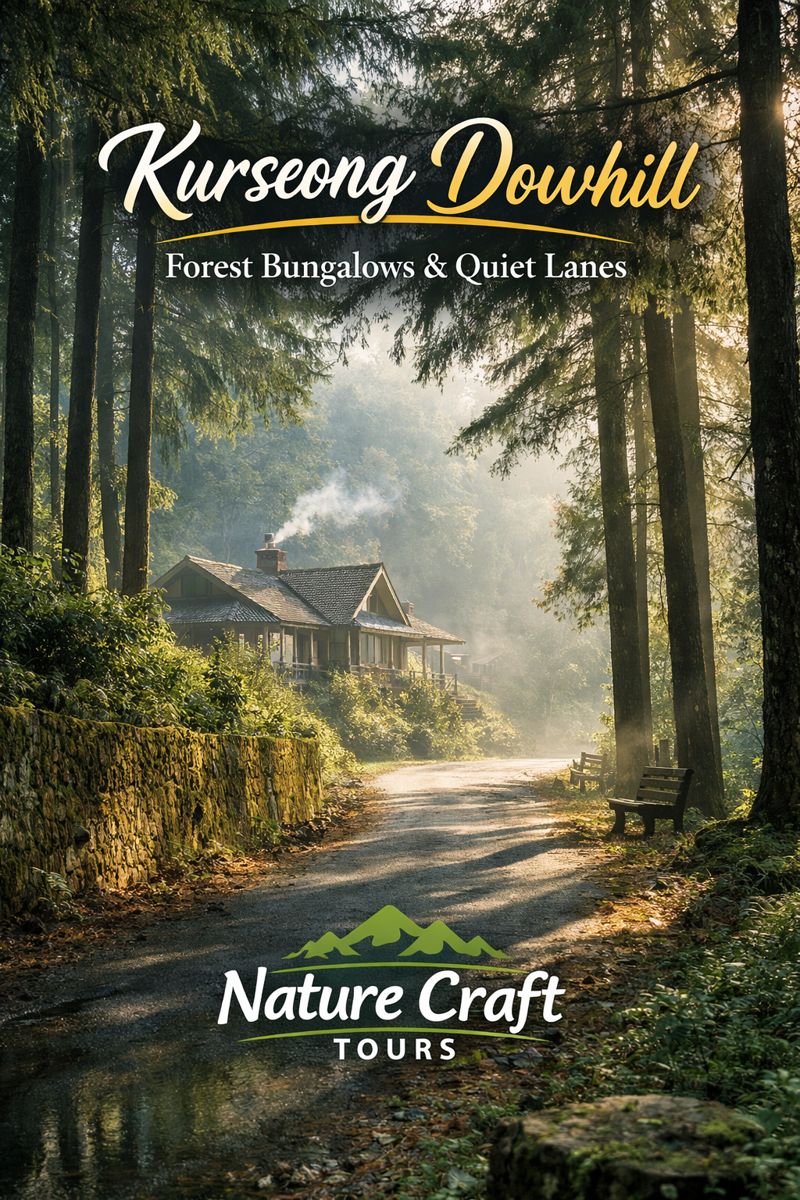
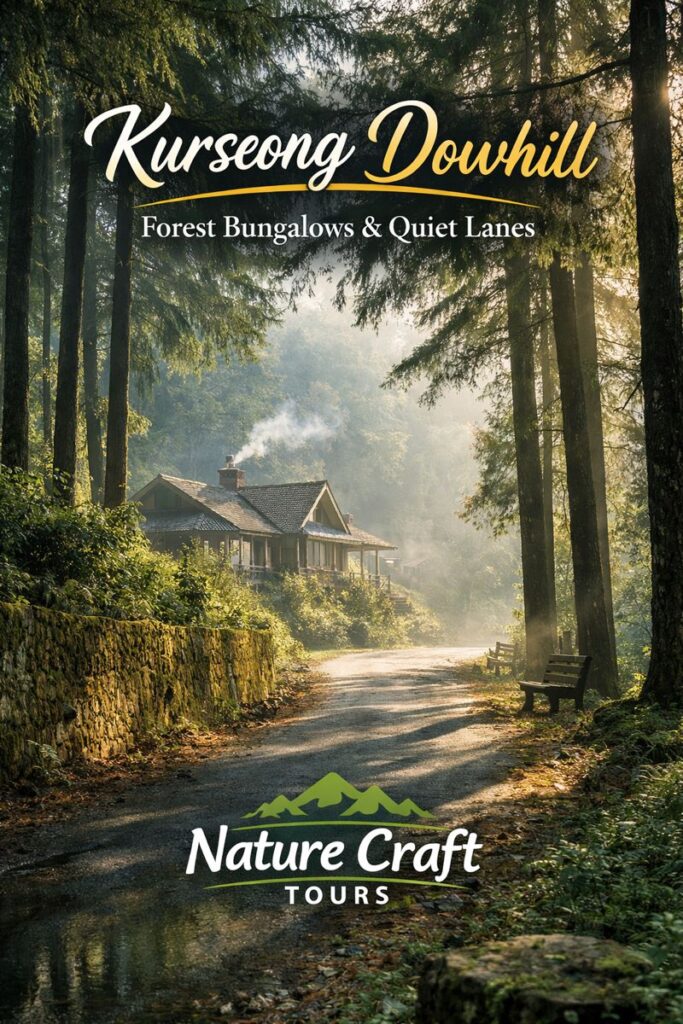
Unlike the commercial centres of Darjeeling or even central Kurseong, Dowhill maintains an introspective character. Its charm lies not in monumental attractions but in forest silence, heritage structures, and nature-led experiences that appeal to writers, walkers, birdwatchers, and travellers seeking contemplative escapes. The following detailed guide explores the Dowhill forest bungalows, its quiet lanes, travel logistics, seasonal nuances, and accommodation possibilities in a structured, research-based manner.
Geographical Setting and Environmental Character
The Dowhill area is situated on the southern fringe of Kurseong town, gently descending towards the plains of North Bengal. This slope-based geography allows uninterrupted forest cover, primarily composed of cryptomeria, pine, oak, and mixed Himalayan broadleaf species. The terrain is undulating rather than steep, which historically made it ideal for sanatoriums and forest rest houses during the British period.
Ecologically, the region forms part of the Eastern Himalayan biodiversity corridor. The layered forest canopy supports numerous bird species, including flycatchers, minivets, sunbirds, and seasonal migratory visitors. Moss-covered tree trunks, fern-lined paths, and shaded gullies dominate the visual landscape, making Dowhill a naturally preserved green zone within close proximity to Kurseong town.
Climate and Micro-Weather Patterns
Dowhill experiences a cooler and more humid micro-climate compared to lower Kurseong. Morning fog is frequent, especially between October and March, while afternoons tend to be calm and diffused with filtered sunlight. Summer temperatures remain moderate, rarely becoming oppressive, whereas winters bring crisp air without extreme snowfall. The forest density also moderates temperature fluctuations, enhancing comfort for long walks and outdoor observation.
Historical Significance of Dowhill and Its Forest Bungalows
The Dowhill stretch gained prominence during the late nineteenth and early twentieth centuries when British administrators and medical professionals identified Kurseong as a recuperative hill station. Dowhill, with its sheltered forest slopes and salubrious climate, was selected for sanatoriums, schools, and forest inspection bungalows.
Several forest bungalows in this zone were constructed primarily for colonial officers, forest department officials, and visiting dignitaries. These structures followed classic hill architecture—high sloping roofs, thick stone or wooden walls, fireplaces, wrap-around verandas, and large sash windows designed to maximise light while retaining warmth.
Architectural Character of Forest Bungalows
Forest bungalows in Dowhill are notable for their understated elegance. Built with local timber and stone, they blend seamlessly into the surrounding woodland. Interiors often feature wooden floors, high ceilings, and minimal ornamentation, reflecting functional colonial design principles. The sense of isolation and silence around these bungalows remains one of their most defining attributes.
Although access to many forest bungalows is regulated due to administrative oversight, their presence defines the heritage ambience of Dowhill and contributes significantly to its timeless atmosphere.
Quiet Lanes and Walking Trails of Dowhill
One of the most compelling aspects of the Kurseong Dowhill area is its network of quiet lanes—narrow, gently curving roads and footpaths that pass through dense forest patches and open glades. These lanes are largely free from heavy traffic, making them ideal for unhurried walks, photography, and mindful exploration.
Dowhill Forest Walks
Walking through Dowhill is a sensory experience. Pine needles soften the ground underfoot, distant bird calls echo through the trees, and occasional glimpses of the Teesta valley appear through breaks in the foliage. Early mornings are particularly rewarding, as mist curls along the paths and sunlight filters through tree canopies in muted golden tones.
Many travellers choose Dowhill specifically for these forest walks, which offer both solitude and a strong connection with nature—qualities increasingly rare in popular hill destinations.
Important Places to See Around Dowhill
Dowhill Forest Area
The core forest zone is the heart of the Dowhill experience. This protected green stretch is ideal for birdwatching, nature observation, and slow exploration. The forest’s silence, occasionally broken by rustling leaves or distant whistles of the Darjeeling Himalayan Railway, creates a deeply immersive environment.
Dowhill School Vicinity
The historic Dowhill School, established during the colonial era, adds an institutional heritage layer to the area. While access to the school premises may be restricted, the surrounding zone reflects old-world academic architecture and contributes to the cultural landscape of Dowhill.
Heritage Railway Curves
Certain walking points near Dowhill offer views of the Darjeeling Himalayan Railway tracks as they curve through forested terrain. These moments, where steam or diesel locomotives pass quietly through the woods, are subtle yet memorable highlights for visitors.
Major Distances from Kurseong Dowhill
- Kurseong Town Centre: Approximately 3 km
- Darjeeling Town: Approximately 32 km
- Siliguri: Approximately 45 km
- Bagdogra Airport: Approximately 50 km
- New Jalpaiguri Railway Station: Approximately 48 km
These distances make Dowhill easily accessible while still maintaining a distinct sense of separation from busy tourist circuits.
How to Reach Kurseong Dowhill Area
By Air
The nearest airport is Bagdogra, well-connected to major Indian cities. From Bagdogra, road travel via Siliguri leads to Kurseong, followed by a short uphill drive towards Dowhill. The journey gradually transitions from plains to forested hills, offering scenic continuity.
By Rail
New Jalpaiguri serves as the primary broad-gauge railway hub. From here, travellers may opt for road transport or experience the Darjeeling Himalayan Railway’s narrow-gauge route to Kurseong. The latter, though slower, provides unmatched scenic and heritage value.
By Road
Road access to Dowhill is straightforward from Siliguri via National Highway routes leading to Kurseong. The final approach roads are narrower and forest-lined, reinforcing the area’s secluded charm.
Travellers often include Dowhill as part of a broader Eastern India itinerary that may also connect with eco-destinations and wildlife regions, similar to journeys curated under Sundarban Travel themed circuits, where nature and slow exploration form the core experience.
Staying Options in and Around Dowhill
Forest Bungalows
Government-managed forest bungalows remain the most authentic accommodation option within Dowhill. These properties emphasise simplicity, location, and natural immersion rather than luxury. Availability is limited, and stays are typically structured around conservation guidelines.
Heritage-Style Lodges
Certain heritage lodges and colonial-inspired guesthouses operate near the Dowhill zone. These properties reflect traditional hill architecture and cater to travellers seeking quiet surroundings rather than commercial amenities.
Homestays and Small Retreats
In nearby Kurseong areas, family-run homestays offer comfortable alternatives with local hospitality. These stays allow cultural interaction while providing easy access to Dowhill’s forest lanes.
Best Time to Visit Kurseong Dowhill
Spring (March to May)
Spring brings blooming wildflowers, mild temperatures, and clear walking conditions. Forest colours are vibrant, making it ideal for photography and leisurely exploration.
Monsoon (June to September)
Monsoon transforms Dowhill into a lush green sanctuary. While rainfall enhances forest beauty, mist and slippery paths require cautious movement. This season appeals primarily to solitude-seeking travellers.
Autumn and Winter (October to February)
Autumn offers clear skies and crisp air, while winter introduces atmospheric fog and quiet stillness. These months are particularly suited for writers, researchers, and those drawn to reflective travel.
Dowhill as a Slow-Travel Destination
Dowhill’s true value lies in its ability to slow the traveller’s pace. Without commercial distractions, visitors naturally gravitate towards walking, reading, observing, and engaging with the environment. This aligns with evolving travel philosophies that prioritise depth over destination counts, similar to nature-centric journeys promoted through curated platforms such as Sundarban Tour Package experiences.
In this sense, Kurseong Dowhill functions not merely as a location but as a mental retreat—a space where forests, architecture, and silence collaborate to restore equilibrium.
The Enduring Appeal of Kurseong Dowhill
Kurseong Dowhill area stands apart as a forest-embraced enclave where colonial heritage, ecological richness, and contemplative travel intersect. Its forest bungalows, quiet lanes, and layered history create an environment that resists hurried tourism. Instead, Dowhill invites visitors to linger, to listen, and to rediscover the subtle rhythms of mountain life.
For travellers seeking authenticity, silence, and a deeply atmospheric Himalayan experience, the Dowhill zone of Kurseong remains one of the region’s most quietly rewarding destinations.