

Darjeeling Himalayan Railway
Darjeeling Himalayan Railway (Toy Train):
A Living Chronicle of Engineering, Heritage, and Himalayan Romance
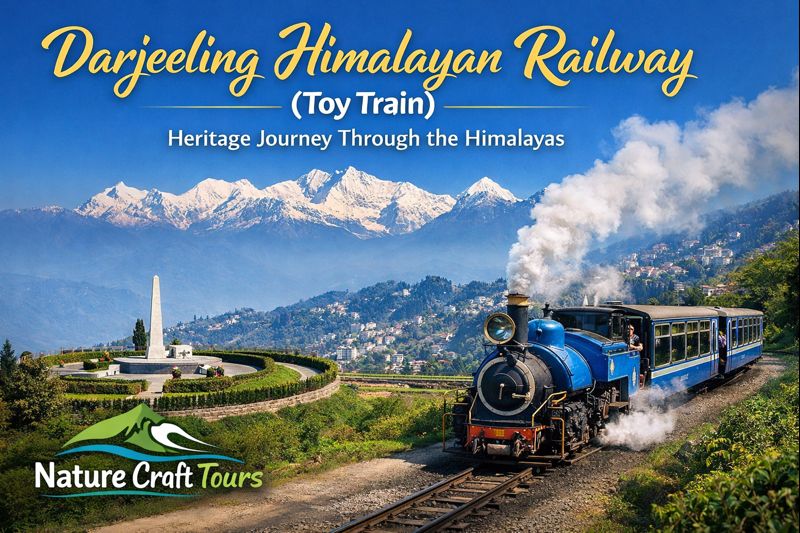
The Darjeeling Himalayan Railway, affectionately known across the world as the Toy Train of Darjeeling, is far more than a mountain railway. It is a moving museum, a heritage corridor, and a living testament to late-19th-century engineering ingenuity that continues to operate in the challenging terrain of the Eastern Himalayas. Declared a UNESCO World Heritage Site, this narrow-gauge railway has, for over a century, carried not only passengers but also stories, livelihoods, and the timeless charm of the hills.
For the explorer, the Toy Train represents slow travel at its purest—where distance is measured not in kilometres alone, but in landscapes observed, cultures encountered, and moments preserved. This detailed travel guide presents a comprehensive, research-based exploration of the Darjeeling Himalayan Railway, covering its history, key points to see, route details, distances, travel logistics, staying options, and the most suitable seasons for an immersive journey.
Historical Evolution of the Darjeeling Himalayan Railway
The idea of a railway connecting the plains of North Bengal to the hill station of Darjeeling emerged during the British colonial period, primarily to support tea plantations and administrative movement. Construction began in 1879, and by 1881 the railway was fully operational, spanning from Siliguri to Darjeeling through steep gradients, dense forests, and fragile mountain slopes.
What distinguished the Darjeeling Himalayan Railway from other hill railways was its innovative use of loops and zigzags rather than tunnels to negotiate altitude. This method not only reduced construction costs but also allowed trains to ascend steep gradients gradually, making the journey safer and more scenic.
In recognition of its outstanding universal value, the Darjeeling Himalayan Railway became the first railway in Asia to be inscribed as a UNESCO World Heritage Site in 1999. Today, despite natural challenges and modern transport alternatives, it remains operational—an extraordinary example of sustainable heritage preservation.
Route Overview and Major Distances
The full stretch of the Darjeeling Himalayan Railway covers approximately 88 kilometres, beginning at New Jalpaiguri/Siliguri in the plains and culminating at Darjeeling at an altitude of about 2,042 metres. The ascent is gradual yet dramatic, offering constantly changing vistas.
- New Jalpaiguri to Siliguri Town: ~7 km
- Siliguri to Kurseong: ~51 km
- Kurseong to Ghum: ~28 km
- Ghum to Darjeeling: ~4 km
Among these, the stretch between Kurseong and Darjeeling is considered the most visually captivating, as the train winds through tea gardens, pine forests, and mountain settlements.
Important Points to See Along the Toy Train Route
Batasia Loop
The Batasia Loop is one of the most iconic engineering features of the Darjeeling Himalayan Railway. This spiral loop allows the train to gain height within a confined space while offering panoramic views of Darjeeling town and, on clear days, the snow-clad peaks of the Eastern Himalayas. The landscaped garden and war memorial at the loop add cultural depth to the stop.
Ghum Railway Station
At an elevation of about 2,258 metres, Ghum is among the highest railway stations in India. The station houses the Railway Museum, which displays vintage photographs, original steam locomotive components, and historical documents related to the railway’s construction and operation.
Kurseong Town
Kurseong serves as an important midpoint on the route. Surrounded by tea estates and mist-covered hills, it offers a glimpse into colonial-era hill life and remains a significant operational halt for the railway.
Hillside Villages and Tea Gardens
Between Siliguri and Darjeeling, the train passes directly through village markets, schoolyards, and tea gardens. Unlike modern railways, the Toy Train shares space with everyday life, making the journey deeply immersive and culturally enriching.
Types of Toy Train Experiences
Travelers can experience the Darjeeling Himalayan Railway in different formats, depending on time availability and travel goals.
Joy Ride (Darjeeling–Ghum–Darjeeling)
This short heritage ride is the most popular option, especially for first-time visitors. It covers the stretch between Darjeeling and Ghum, including the Batasia Loop, and lasts approximately two hours.
Partial Route Journeys
Segments such as Kurseong to Darjeeling are often chosen by travelers who wish to experience the scenic ascent without committing to the full route.
Full Route Heritage Journey
The complete journey from the plains to Darjeeling is rare but deeply rewarding. It offers the fullest understanding of how geography, engineering, and human settlement interact along the Himalayan foothills.
How to Reach the Darjeeling Himalayan Railway
By Rail
New Jalpaiguri (NJP) is the nearest major railway junction, well connected to Kolkata, Delhi, Guwahati, and other Indian cities. From NJP, travelers can access Toy Train services or proceed by road to Darjeeling.
By Road
Darjeeling is connected by motorable roads from Siliguri and NJP. Many travelers combine a road journey with a Toy Train joy ride for a balanced experience.
By Air
Bagdogra Airport serves as the nearest airport. From Bagdogra, Darjeeling can be reached by road in approximately four hours, depending on traffic and weather conditions.
Staying Options Along the Toy Train Corridor
Accommodation options are diverse and cater to different travel preferences, ranging from heritage hotels to family-run homestays.
Darjeeling Town
Darjeeling offers the widest range of accommodations, including colonial-era heritage properties, boutique hotels, and comfortable mid-range stays. Staying close to the railway station allows easy access to joy rides and early-morning departures.
Kurseong
Kurseong provides a quieter alternative to Darjeeling, with tea-estate retreats and hillside lodges ideal for travelers seeking calm surroundings.
Siliguri and New Jalpaiguri
For travelers planning an early start or late arrival, Siliguri and NJP offer practical overnight stays with good connectivity.
Best Time to Visit the Darjeeling Himalayan Railway
The Toy Train operates throughout the year, but seasonal conditions significantly influence the experience.
- March to May: Clear skies, blooming flora, and pleasant temperatures make this the most favorable period.
- October to November: Post-monsoon clarity offers excellent mountain views and comfortable travel conditions.
- June to September: Monsoon months bring lush greenery but also frequent disruptions due to landslides.
- December to February: Winter offers misty landscapes and fewer crowds, though cold weather may affect operations.
Cultural and Heritage Significance
The Darjeeling Himalayan Railway is deeply woven into the social and cultural fabric of the hills. It has influenced settlement patterns, tea trade logistics, and even local architecture. Internationally, it is often compared with other mountain railways, yet it remains unique in its scale of interaction with daily life.
Travelers interested in heritage tourism often combine the Toy Train journey with visits to nearby attractions such as tea estates, monasteries, and colonial landmarks. For those exploring Eastern India further, natural itinerary extensions toward eco-destinations—similar to experiences offered in a curated Sundarban Tour—provide a balanced contrast between mountains and mangroves.
Travel Tips for Explorers
- Advance booking is strongly recommended during peak seasons.
- Choose window seats when available for uninterrupted views.
- Carry light layers, as temperatures can change rapidly.
- Respect local life, as the railway passes through residential areas.
A Journey Beyond Transport
The Darjeeling Himalayan Railway is not merely a means of travel; it is an experience shaped by time, terrain, and tradition. Every whistle echoing through the hills tells a story of resilience and harmony between engineering and nature. For explorers who value depth over speed, the Toy Train remains one of India’s most rewarding heritage journeys—an enduring reminder that the most meaningful travel often unfolds slowly.