

Happy Valley Tea Estate, Darjeeling
Happy Valley Tea Estate, Darjeeling
– Where the Spirit of Tea Meets the Soul of the Himalaya
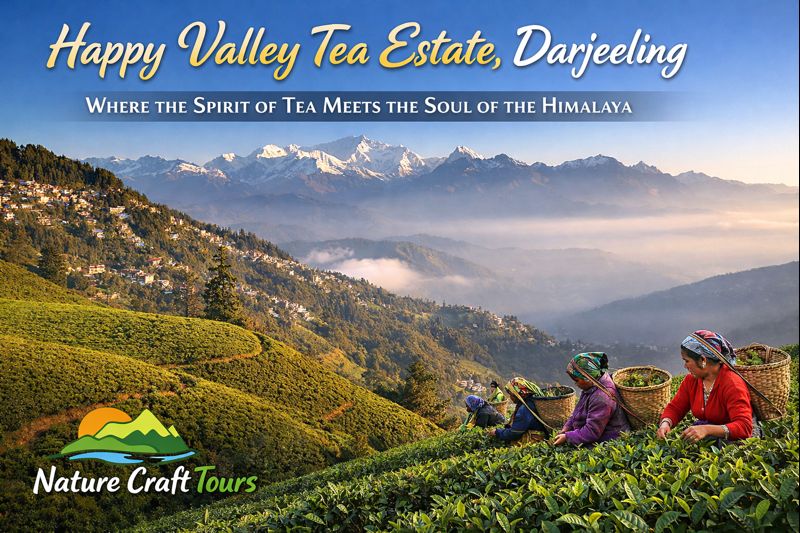
Perched gracefully on the lower slopes of the Eastern Himalaya, Happy Valley Tea Estate stands as one of the most evocative landscapes in Darjeeling, where colonial legacy, botanical precision, and mountain ecology merge into a single living narrative. Visiting this estate is not merely a sightseeing activity; it is an immersion into the origin of one of the world’s most celebrated beverages. As an explorer, one does not arrive here to rush through a factory tour, but to observe, listen, and absorb the rhythms of a working tea garden that has shaped Darjeeling’s identity for more than a century.
Introduction to Happy Valley Tea Estate
Established in the mid-19th century during the British colonial expansion of tea cultivation in the Eastern Himalaya, Happy Valley Tea Estate is regarded as one of the oldest and most accessible tea gardens in Darjeeling. Located barely a few kilometres from the town centre, the estate unfolds over steep, emerald-green slopes that descend gently toward the Lebong valley. Despite its proximity to urban Darjeeling, the estate retains a quiet, contemplative atmosphere, where the scent of fresh tea leaves mingles with mountain air.
Unlike many tea estates that remain hidden deep within forested interiors, Happy Valley offers a rare opportunity to witness large-scale tea cultivation without undertaking long journeys into remote areas. This accessibility, however, has not diminished its authenticity. On the contrary, the estate functions as a living classroom where history, agriculture, and culture coexist in remarkable harmony.
Geographical Setting and Natural Environment
Happy Valley Tea Estate is situated at an average altitude ranging between 6,000 and 6,800 feet above sea level, a range considered ideal for producing high-quality Darjeeling tea. The estate benefits from cool temperatures, frequent mist cover, and well-distributed rainfall, all of which slow the growth of tea leaves and enhance their aromatic complexity.
The surrounding environment is characterised by subtropical broadleaf forests interspersed with conifers, bamboo groves, and seasonal flowering plants. From various vantage points within the estate, visitors can observe layered mountain ridges fading into the distance, often accompanied by drifting clouds that lend the landscape an almost ethereal quality.
Soil and Climate Influence on Tea Quality
The soil of Happy Valley is predominantly loamy with good drainage, enriched over decades through organic matter and traditional cultivation practices. Combined with cool nights and moderate daytime temperatures, these conditions contribute to the production of teas known for their floral aroma, light body, and distinctive muscatel notes. Each harvest reflects subtle variations in climate, making every season’s yield a unique expression of place.
Historical Significance of the Estate
The story of Happy Valley Tea Estate is inseparable from the broader history of Darjeeling itself. When British planters identified the region’s potential for tea cultivation in the 1800s, estates like Happy Valley became experimental grounds for adapting Chinese tea varieties to Himalayan conditions. Over time, cultivation methods were refined, leading to the emergence of Darjeeling tea as a globally recognised geographical identity.
Walking through the estate today, one can still sense the colonial imprint in the layout of pathways, factory structures, and administrative buildings. Yet, the estate’s modern character is shaped equally by the generations of local workers whose knowledge and labour sustain its daily operations.
Key Experiences and Points to Observe
A visit to Happy Valley Tea Estate offers multiple layers of engagement, appealing to both casual visitors and serious tea enthusiasts. Each element of the estate reveals a different aspect of tea culture and mountain life.
Tea Factory Observation
One of the most compelling experiences is observing the tea processing unit. Here, freshly plucked leaves undergo stages of withering, rolling, oxidation, drying, and grading. The process demonstrates how subtle changes in timing and temperature influence the final flavour profile. The aroma within the factory—earthy, floral, and warm—provides a sensory insight into the craftsmanship behind Darjeeling tea.
Tea Garden Walks
Strolling along the narrow paths between tea bushes allows visitors to appreciate the meticulous care involved in maintaining the estate. The neatly trimmed bushes follow the contours of the hills, preventing soil erosion while maximising sunlight exposure. Early morning walks are particularly rewarding, as mist lingers over the slopes and the estate gradually awakens to the sounds of daily activity.
Views of the Lebong Valley
Several points within the estate offer expansive views of the Lebong valley below. These viewpoints highlight the dramatic elevation changes that define Darjeeling’s geography and underscore the physical demands of tea cultivation in such terrain.
Major Distances and Location Context
Happy Valley Tea Estate enjoys a strategic location within the Darjeeling hill area, making it easy to incorporate into a broader sightseeing itinerary.
- Distance from Darjeeling Mall Road: approximately 3 km
- Distance from Ghoom: approximately 7 km
- Distance from NJP Railway Station: approximately 75 km
- Distance from Bagdogra Airport: approximately 70 km
Its proximity to central Darjeeling allows visitors to combine the estate visit with nearby attractions such as monasteries, viewpoints, and heritage walks. Many travellers exploring offbeat Darjeeling experiences consider Happy Valley an essential starting point for understanding the region’s cultural landscape.
How to Reach Happy Valley Tea Estate
Reaching Happy Valley Tea Estate is relatively straightforward compared to many hill-based tea gardens. From Darjeeling town, local taxis or private vehicles can reach the estate via Lebong Cart Road. The journey itself is scenic, passing through residential areas, forest patches, and gentle curves that reveal glimpses of tea-covered slopes.
Travellers arriving by train at NJP or by air at Bagdogra typically proceed to Darjeeling first, after which a short local transfer leads to the estate. For those interested in heritage transport, the Darjeeling Himalayan Railway offers a nostalgic approach to the region, although final access still requires a short road journey.
Staying Options Around the Estate
Accommodation options near Happy Valley Tea Estate range from heritage-style hotels to small boutique stays and eco-friendly lodges. Many properties are located along Lebong Cart Road and nearby areas, offering views of tea gardens or forested slopes. These stays often emphasise tranquillity, making them suitable for travellers seeking quiet surroundings rather than bustling town centres.
While staying closer to the estate allows for early morning walks and relaxed exploration, visitors can also choose accommodation in central Darjeeling and plan a half-day visit. Those interested in deeper engagement with tea culture may prefer properties that offer garden-facing rooms and curated experiences related to local heritage.
Best Time to Visit Happy Valley Tea Estate
The estate can be visited throughout the year, but seasonal variations significantly influence the experience. The most favourable period is between March and May, when spring brings fresh foliage and the first flush harvest. During this time, the landscape appears particularly vibrant, and tea processing activities are at their peak.
The months from September to November also offer pleasant weather, clear views, and a quieter atmosphere following the monsoon. While the monsoon season from June to August enhances the lushness of the gardens, heavy rainfall may limit movement and visibility. Winter months, though colder, provide crisp air and unobstructed views, appealing to travellers who enjoy solitude.
Cultural and Socio-Economic Context
Happy Valley Tea Estate is not only an agricultural enterprise but also a social ecosystem supporting hundreds of families. The workers’ quarters, schools, and community spaces reflect a way of life shaped by the rhythms of tea cultivation. Observing daily routines offers insight into the human dimension behind Darjeeling tea, reminding visitors that each cup represents collective effort and generational knowledge.
For travellers interested in responsible tourism, understanding this context is essential. Many regional travel narratives, including those highlighted through sustainable travel initiatives, emphasise respectful engagement with working landscapes such as tea estates.
Why Happy Valley Tea Estate Matters to Explorers
Happy Valley Tea Estate occupies a unique position in Darjeeling’s tourism and cultural geography. It offers accessibility without compromise, authenticity without isolation, and history without stagnation. For explorers, it serves as a gateway to understanding how landscape, labour, and legacy intertwine in the Eastern Himalaya.
A visit here enriches one’s perception of Darjeeling beyond viewpoints and colonial architecture. It reveals a living heritage where every leaf, slope, and pathway tells a story of adaptation and continuity. In this sense, Happy Valley is not merely a destination, but a lens through which the spirit of Darjeeling can be truly appreciated.