


Peace Pagoda, Darjeeling
Peace Pagoda, Darjeeling
– A White Sanctuary of Silence Above the Hills
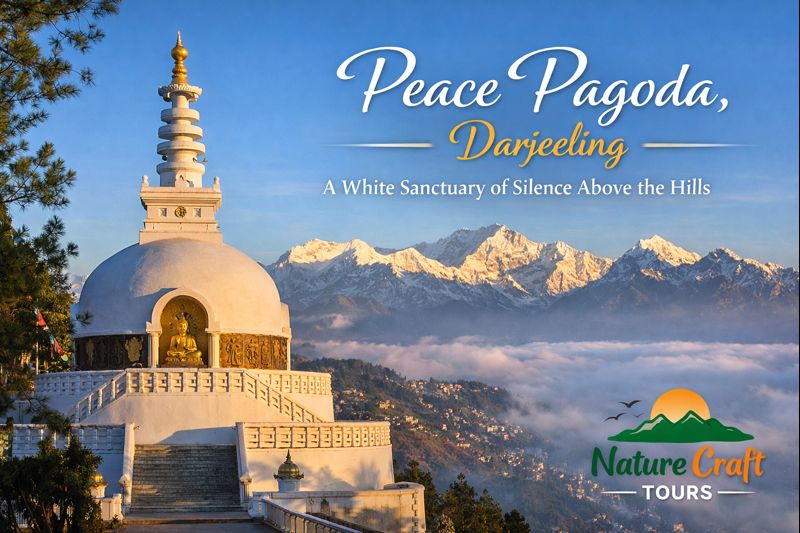
Standing quietly on the wooded slopes near Jalapahar, overlooking layered ridges of Darjeeling and the distant snow walls of the Eastern Himalaya, the Peace Pagoda is not merely a monument—it is an experience shaped by stillness, philosophy, and landscape. Built as part of a global movement for peace, this gleaming white structure invites travelers to slow down, observe, and reflect. Unlike crowded viewpoints that compete for attention, the Peace Pagoda rewards patience, silence, and presence.
For the explorer, the journey to the Peace Pagoda is as meaningful as the destination itself. Winding roads through pine forests, prayer flags fluttering in mountain air, and sudden openings to vast Himalayan vistas create a gradual transition from the busy town to a contemplative realm. This guide presents a detailed, research-based exploration of the Peace Pagoda—its background, surroundings, access routes, distances, best visiting periods, and suitable accommodation zones—written with clarity, formality, and depth.
Historical Background and Spiritual Context
The Peace Pagoda in Darjeeling belongs to a worldwide network of pagodas established under the guidance of a Japanese Buddhist monk and peace activist. These pagodas were envisioned as non-sectarian symbols dedicated to global harmony, nuclear disarmament, and inner peace. The Darjeeling pagoda, inaugurated in the early 1990s, reflects this universal philosophy through its serene architecture and symbolic imagery.
Constructed with the cooperation of Japanese Buddhist organizations and local supporters, the structure integrates Himalayan aesthetics with traditional Japanese pagoda principles. Four golden statues of Buddha, each depicting a significant phase of his life, face the cardinal directions—symbolizing the universality of compassion and enlightenment. The monument’s elevated position reinforces its role as a watchful guardian over the hills, observing both town and mountains in quiet balance.
Architectural Details Worth Observing
The Peace Pagoda’s architecture is intentionally restrained. The pure white dome contrasts sharply with the surrounding greens of pine and cedar, while the circular base encourages circumambulation—a meditative walking practice common in Buddhist traditions. Relief panels, lotus motifs, and sculpted niches are subtle rather than ornate, ensuring that attention remains inward rather than decorative.
The symmetry of the structure, combined with the soft mountain light, creates changing moods throughout the day. Early morning presents a pale, almost ethereal glow, while late afternoon brings warmer tones that highlight the pagoda’s curves against distant Himalayan shadows.
Geographical Setting and Natural Surroundings
Located at an elevation of approximately 2,100 meters above sea level, the Peace Pagoda occupies a strategic ridge near Jalapahar, south of Darjeeling town. The site commands panoramic views of the lower valleys, Kurseong hills, and on clear days, the Kanchenjunga range. Unlike more commercial viewpoints, the Peace Pagoda offers an all-day relationship with the landscape.
Dense conifer forests surround the approach roads, interspersed with rhododendron patches that bloom vividly during spring. Birdlife is abundant, making the area appealing to slow travelers and nature observers. The absence of commercial activity near the pagoda preserves an atmosphere of calm rarely found so close to a major hill station.
Viewpoints and Visual Highlights
Several informal viewpoints near the pagoda complex allow visitors to pause and observe shifting light patterns across the hills. On exceptionally clear days, snow peaks appear framed between forested ridges, creating a layered Himalayan composition ideal for contemplative photography rather than hurried snapshots.
At dusk, as town lights begin to glow below, the pagoda remains quietly luminous—its white surface reflecting the last light of day while prayer flags rustle softly in the wind.
Important Points to See Around the Peace Pagoda
- Central Dome and Buddha Statues: Observe the four directional Buddhas, each representing enlightenment stages.
- Circumambulatory Path: Walk slowly around the base to experience changing perspectives of forest and sky.
- Forest Access Road: The approach itself offers scenic pauses and birdwatching opportunities.
- Sunrise and Late-Afternoon Light: Ideal periods for quiet observation rather than crowds.
- Prayer Flag Corners: Small clusters of flags add subtle color and cultural context.
Major Distances from Key Locations
Understanding distances helps plan a peaceful visit without time pressure:
- Darjeeling Mall (Chowrasta): approximately 4 km
- Jalapahar Cantonment area: approximately 2 km
- Tiger Hill: approximately 7 km
- Ghoom Monastery area: approximately 5 km
- New Jalpaiguri Railway Station: approximately 74 km
- Bagdogra Airport: approximately 70 km
How to Reach the Peace Pagoda
By Road from Darjeeling Town
The most convenient route begins from Chowrasta, proceeding towards Jalapahar via well-maintained hill roads. Taxis are readily available, and the journey typically takes 20–30 minutes depending on stops. The final stretch passes through forested terrain, enhancing the sense of gradual retreat from town activity.
From NJP Railway Station and Bagdogra Airport
Visitors arriving by rail or air can reach Darjeeling via the hill highway connecting Siliguri to the town. From Darjeeling, local transport options connect directly to the Peace Pagoda. Travelers planning extended itineraries often combine the pagoda visit with nearby heritage or forest trails for a balanced experience.
Best Time to Visit
Spring (March to May)
Clear skies, blooming rhododendrons, and moderate temperatures make spring ideal. Visibility of the Himalayan range is frequent, and forest paths remain comfortable for walking.
Autumn (October to November)
Post-monsoon clarity offers some of the best mountain views. Crisp air and golden light enhance both spiritual ambiance and photography.
Monsoon (June to September)
While greenery intensifies, fog and rain often obscure views. This period suits travelers seeking solitude rather than scenery.
Winter (December to February)
Cold temperatures and occasional frost create a stark, contemplative atmosphere. Clear winter mornings can still reveal snow peaks, though layered clothing is essential.
Staying Options Near the Peace Pagoda
Accommodation around the Peace Pagoda emphasizes tranquility rather than commercial bustle. Instead of staying directly beside the monument, most travelers choose nearby zones that balance accessibility with comfort.
Jalapahar and Lebong Areas
These neighborhoods offer heritage properties, forest-edge lodges, and quiet guesthouses. The environment complements the reflective nature of the pagoda visit.
Darjeeling Town Proper
Staying near Chowrasta provides convenience for dining and shopping while allowing short excursions to peaceful sites like the pagoda. This approach suits travelers blending exploration with contemplation.
Experiencing the Peace Pagoda as an Explorer
To truly understand the Peace Pagoda, one must resist the urge to rush. Arrive early, walk slowly, and allow silence to occupy space. Observe how the monument interacts with light, weather, and sound. Notice how even brief moments of stillness alter perception.
The pagoda does not demand attention; it offers presence. In a region often defined by iconic viewpoints and crowded itineraries, this quiet monument stands apart—reminding travelers that exploration is not always about movement, but about awareness.
Why the Peace Pagoda Matters in Darjeeling’s Landscape
Beyond tourism, the Peace Pagoda represents a philosophical anchor within Darjeeling’s cultural mosaic. It complements monasteries, colonial heritage, and natural vistas without competing with them. Its message transcends geography, making it relevant to travelers from diverse backgrounds.
In the quiet shadow of the Peace Pagoda, Darjeeling reveals not just its mountains, but its mind.