

Rock Garden & Ganga Maya Park
Rock Garden & Ganga Maya Park:
Where Darjeeling’s Hills Shape Leisure, Landscape, and Local Life
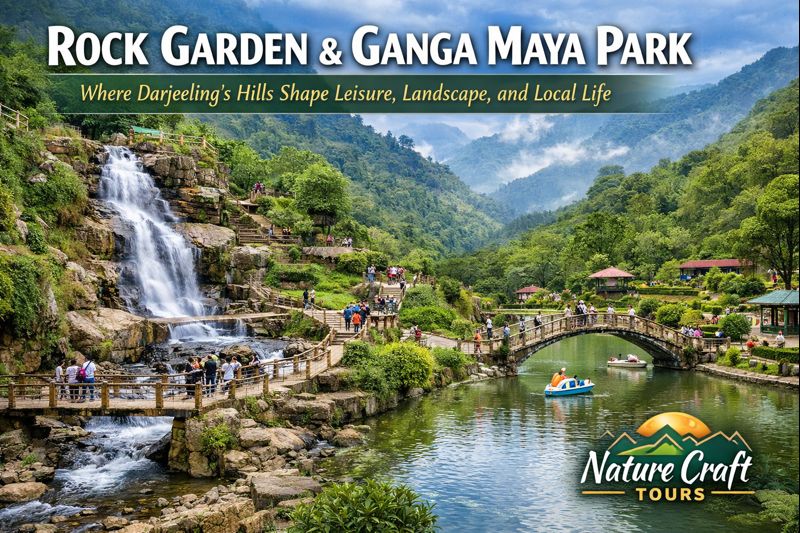
Perched along the winding descent of Hill Cart Road, the Rock Garden & Ganga Maya Park together represent one of Darjeeling’s most thoughtfully developed recreational landscapes. These two destinations are not monuments in the conventional sense; rather, they are examples of how terrain, water, vegetation, and human ingenuity can be harmonised into spaces that celebrate both nature and community. For explorers who value geography as much as aesthetics, this circuit offers layered experiences—valley perspectives, engineered stone terraces, flowing streams, and curated leisure spaces framed by the Eastern Himalayas.
Geographical Setting and Background
The Rock Garden and Ganga Maya Park lie approximately 10–11 kilometres from Darjeeling town, located along the historic Hill Cart Road that connects the hill station with Siliguri. This stretch of road itself is a geographical study, descending through sharp bends and revealing changing vegetation zones—from temperate forest cover near Darjeeling to subtropical growth as the altitude decreases.
The Rock Garden was developed around a natural cascade known locally as Chunnu Summer Falls. Rather than altering the landscape extensively, the garden was sculpted directly from existing rock formations. Ganga Maya Park, situated a little further downhill, occupies a gentler valley section where land contours allowed for broader landscaping, lawns, and water features. Together, they form a complementary pair—one dramatic and vertical, the other open and contemplative.
Rock Garden: A Landscape Carved from Stone
Terraced Rock Architecture
The defining character of the Rock Garden lies in its terraced stone design. Carved directly into the hillside, pathways and staircases wind through natural rock faces, leading visitors across multiple levels. These terraces provide changing viewpoints of the valley below, ensuring that the experience evolves as one descends deeper into the garden.
Chunnu Summer Falls
At the heart of the Rock Garden flows the seasonal Chunnu Summer Falls. During the monsoon and post-monsoon months, the cascade becomes particularly impressive, energising the entire site with sound and movement. In drier seasons, the gentler flow reveals the underlying rock textures, allowing visitors to appreciate the geological formations more clearly.
Viewpoints and Valley Perspectives
Strategically positioned viewpoints offer uninterrupted views of forested slopes and distant ridges. On clear days, the shifting layers of green and blue across the valley demonstrate the region’s depth and scale. These points are ideal for travellers interested in landscape photography or simply in observing the interplay of light and shadow across the hills.
Ganga Maya Park: Leisure in a Natural Valley
Landscape Design and Open Spaces
In contrast to the rugged verticality of the Rock Garden, Ganga Maya Park unfolds horizontally. Landscaped lawns, paved walkways, and gently sloping grounds define the park’s character. The space feels deliberately calmer, offering visitors a chance to pause rather than explore intensively.
Water Bodies and Decorative Elements
Artificial ponds and water channels form focal points within the park, reflecting surrounding greenery and sky. These features enhance the cooling microclimate of the valley, particularly during warmer months. Decorative bridges and seating areas are positioned to encourage longer stays and quiet observation.
Cultural and Recreational Significance
Ganga Maya Park is frequently used by local families and regional travellers, making it an excellent place to observe everyday leisure patterns in the Darjeeling hills. Occasional cultural activities and seasonal gatherings lend the park a community-oriented atmosphere, distinguishing it from purely scenic viewpoints.
Important Points to See Across Both Sites
- Multi-level stone terraces of the Rock Garden
- Seasonal flow of Chunnu Summer Falls
- Valley-facing viewpoints along descending pathways
- Landscaped lawns and seating areas at Ganga Maya Park
- Decorative ponds and bridges within the park
- Panoramic stretches of Hill Cart Road connecting both locations
Major Distances from Key Locations
Understanding distances helps travellers plan visits efficiently, especially when combining these sites with other Darjeeling attractions.
- Darjeeling Mall Road to Rock Garden: approximately 10 km
- Darjeeling Mall Road to Ganga Maya Park: approximately 11 km
- Rock Garden to Ganga Maya Park: approximately 1 km downhill
- Siliguri to Darjeeling (overall approach route): approximately 70 km
How to Reach Rock Garden & Ganga Maya Park
By Road from Darjeeling
Private vehicles and hired taxis are the most practical means of reaching both sites. The drive along Hill Cart Road is scenic but includes sharp bends, making experienced local drivers preferable. Most visitors cover Rock Garden and Ganga Maya Park on the same excursion due to their proximity.
Public Transport Options
Shared jeeps operating along Hill Cart Road can be used by budget travellers. From designated drop-off points, short walks may be required to reach the entrances. While economical, this option offers less flexibility in timing.
Combined Sightseeing Circuits
These locations are often paired with other lower-Darjeeling attractions. Travellers planning a broader itinerary may find it useful to integrate this visit with routes described in a comprehensive Darjeeling travel guide, ensuring efficient use of time.
Staying Options Near the Attractions
Darjeeling Town-Based Stays
Most visitors choose to stay within Darjeeling town, where a wide range of heritage hotels, modern resorts, and boutique properties are available. Staying in town allows easy access to other landmarks such as tea estates, viewpoints, and cultural institutions.
Hill Cart Road and Valley-Side Properties
A limited number of accommodation options exist along Hill Cart Road and nearby valleys. These properties often emphasise quiet surroundings and valley views, making them suitable for travellers seeking isolation and extended stays amid nature.
Offbeat Hamlets Nearby
Explorers interested in slower travel may consider nearby hamlets for overnight stays. These locations provide deeper engagement with local life and can be linked naturally with itineraries focused on offbeat Darjeeling experiences.
Best Time to Visit
Spring and Early Summer (March to May)
This period offers comfortable temperatures and clear skies. Vegetation appears fresh, and walking through the Rock Garden remains pleasant due to moderate humidity.
Monsoon and Post-Monsoon (June to October)
The monsoon transforms the Rock Garden dramatically, with waterfalls at their most vibrant. However, paths may become slippery, requiring caution. Post-monsoon months retain lush greenery with improved visibility.
Autumn and Winter (November to February)
Cooler temperatures and clearer air characterise this season. While water flow may reduce, valley views become more expansive, appealing to travellers interested in landscape clarity and quiet exploration.
Travel Tips for an Enriching Visit
- Wear footwear with good grip, especially during and after monsoon months.
- Allocate sufficient time to explore both sites without rushing.
- Carry light refreshments, as exploration involves significant walking.
- Respect local guidelines and maintain cleanliness within the gardens.
Why Rock Garden & Ganga Maya Park Matter in Darjeeling’s Tourism Landscape
These two destinations illustrate how Darjeeling’s tourism extends beyond viewpoints and colonial landmarks. They represent a model where natural terrain is enhanced rather than replaced, offering recreational value while preserving environmental character. For explorers, the Rock Garden and Ganga Maya Park together provide insight into the region’s geography, local leisure culture, and sustainable landscape development.
When integrated thoughtfully into a broader itinerary—perhaps alongside tea estates, monasteries, or heritage walks highlighted in curated Darjeeling sightseeing itineraries—this circuit enriches understanding of the hills as lived-in spaces rather than mere scenic backdrops.
In essence, Rock Garden & Ganga Maya Park invite visitors to slow down, observe terrain closely, and appreciate how nature and human design can coexist gracefully in the Himalayan foothills.