
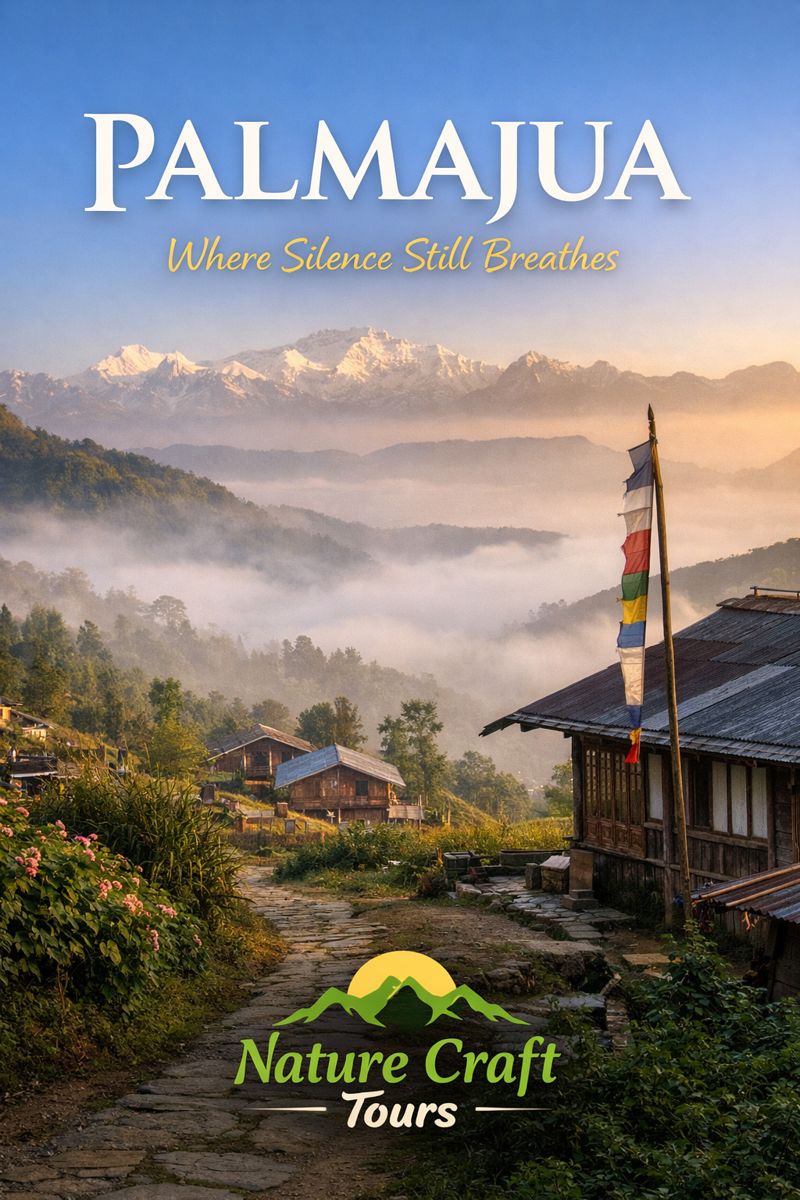
Palmajua
– An Unwritten Chapter of Offbeat Darjeeling Where Silence Still Breathes
Hidden quietly in the lesser-known folds of the Darjeeling hills, Palmajua is not a destination that announces itself loudly. Instead, it reveals its soul slowly—through drifting mist, pine-scented winds, terraced fields, and a rhythm of life that remains untouched by haste. Far removed from crowded viewpoints and commercial promenades, Palmajua stands as a gentle reminder of what the Eastern Himalayas once were: contemplative, grounded, and deeply poetic.
Located within the rural highlands of the Darjeeling district, Palmajua is still absent from mainstream travel brochures. Yet, this very absence makes it profoundly meaningful for travellers seeking authenticity. Here, days unfold with the movement of clouds, evenings glow softly under oil lamps, and mornings begin with birdsong rather than engines. Palmajua is not about ticking attractions—it is about experiencing place, time, and stillness.
Geographical Setting and Natural Character of Palmajua
Palmajua rests on an elevated ridge in the mid-altitude Himalayan belt, surrounded by dense forest patches, cardamom plantations, and seasonal streams that descend toward lower valleys. The village landscape is shaped by undulating slopes, traditional wooden homes, and cultivated terraces that follow the natural contour of the land.
The ecological setting of Palmajua reflects a delicate Himalayan balance. Subtropical broadleaf forests gradually transition into temperate vegetation, supporting a quiet diversity of birds, butterflies, and mountain flora. During monsoon months, the hills turn emerald, while winter brings crystalline air and distant snow views on exceptionally clear days.
Climate and Seasonal Mood
Palmajua experiences a mild mountain climate throughout the year. Summers remain pleasant, with daytime temperatures ideal for long walks and outdoor conversations. Monsoons, while visually enchanting, bring heavy rainfall and drifting fog that cloaks the village in mystery. Winters are cool and calm, marked by golden sunlight and chilly nights.
What Makes Palmajua Truly Special
Unlike destinations curated for instant gratification, Palmajua rewards patience. Its charm lies in subtleties—the sound of prayer flags rustling, smoke rising from kitchen chimneys, elderly villagers recounting folklore, and children walking along narrow forest paths to school. Life here continues in harmony with nature rather than against it.
For travellers familiar with places like Tinchuley, Palmajua offers a quieter, more introspective extension of the offbeat Darjeeling experience, where tourism has not yet rewritten daily life.
Cultural Fabric and Rural Life
The village community is rooted in agrarian traditions. Seasonal farming, livestock rearing, and forest-based livelihoods shape daily routines. Local festivals follow the agricultural calendar, blending Himalayan belief systems with age-old rituals passed through generations.
Visitors often find themselves invited into kitchens rather than hotels, where stories flow as freely as locally brewed tea. This organic hospitality defines Palmajua far more than any formal tourism structure.
Places and Experiences Worth Exploring
Palmajua does not offer a checklist of monuments or crowded viewpoints. Instead, it presents experiences woven into everyday life and natural surroundings.
Forest Trails and Ridge Walks
Gentle trails wind through forests surrounding Palmajua, ideal for unhurried walks. These paths reveal orchids during spring, mushrooms after rain, and birdlife throughout the year. Ridge walks offer layered views of valleys below, changing colour with time and season.
Village Pathways and Traditional Homes
Walking through Palmajua’s narrow pathways is an experience in itself. Traditional homes, often built with timber and stone, reflect sustainable mountain architecture. Observation rather than photography often becomes the natural response here.
Sunrise and Evening Silence
Mornings in Palmajua begin softly. As mist lifts gradually, light filters through trees, illuminating the village with a warm Himalayan glow. Evenings, on the other hand, are meditative—marked by silence, starlight, and distant sounds of nature.
Major Distances from Palmajua
Understanding accessibility helps travellers plan responsibly, especially in offbeat regions.
- Darjeeling to Palmajua: approximately 55–60 km
- Siliguri to Palmajua: approximately 90–95 km
- NJP Railway Station to Palmajua: approximately 92 km
- Bagdogra Airport to Palmajua: approximately 95 km
How to Reach Palmajua
Reaching Palmajua requires a combination of patience and planning, which is often part of the experience itself.
By Air
The nearest airport is Bagdogra. From there, travellers must continue by road through winding mountain routes, passing tea gardens and forested stretches before reaching Palmajua.
By Train
New Jalpaiguri (NJP) serves as the nearest major railway junction. Road journeys from NJP take several hours but reward travellers with ever-changing hill scenery.
By Road
Road access involves mountain roads that are narrow in certain sections. While the drive is scenic, travellers are advised to begin journeys early and avoid night travel during monsoon months.
Staying Options in and Around Palmajua
Accommodation in Palmajua remains intentionally minimal. Instead of conventional hotels, travellers find homestays and eco-friendly rural lodgings that reflect the village ethos.
Stays are typically modest yet comfortable, offering clean rooms, warm meals prepared with local ingredients, and hosts who serve as cultural interpreters rather than service staff. Electricity may be limited at times, and internet connectivity is intermittent—features that many travellers consider blessings rather than inconveniences.
Best Time to Visit Palmajua
The most suitable time to visit Palmajua is from October to May. During these months, weather conditions remain favourable, landscapes are accessible, and travel disruptions are minimal.
Monsoon months from June to September, while visually dramatic, often bring landslides and road blockages. Winter months offer clarity and calm, though nights can be particularly cold.
Responsible Travel and Gentle Footprints
Palmajua thrives on balance. Visitors are encouraged to approach the village with respect—minimising waste, conserving water, and engaging meaningfully with local life. Loud behaviour, plastic use, and intrusive photography can disrupt the fragile rhythm that defines the place.
Travellers exploring Himalayan destinations alongside coastal ecosystems such as the Sundarban Tour or curated experiences through Sundarban Travel often find Palmajua a perfect mountain counterpart—where silence replaces tides and forests replace mangroves.
A Quiet Comparison with Other Offbeat Darjeeling Hamlets
While destinations like Tinchuley have gradually gained recognition, Palmajua remains deeply private. It suits travellers who value introspection over itinerary, stillness over spectacle, and connection over convenience.
Palmajua
Mist learns to rest upon your name,
Palmajua, where mornings arrive unannounced.
Paths remember every barefoot step,
And hills speak softly to those who listen.
Here, silence is not empty—it is complete.
Clouds pause before crossing your sky,
Time loosens its grip on wandering minds.
Even the wind slows its questions,
As dusk folds the village into prayer.
Palmajua remains, untouched and waiting.
Why Palmajua Matters
Palmajua is not a destination for everyone—and that is precisely its strength. It belongs to travellers who seek places not yet polished by tourism, who understand that beauty does not demand explanation, and who believe that journeys can be quiet and still transformative.
In an era of hurried travel and crowded checklists, Palmajua stands quietly apart—a Himalayan pause, patiently reminding us that sometimes the most meaningful journeys happen where roads nearly end, and silence finally begins.