
Rimbik–Lodhama Belt:
A Forgotten Himalayan Corridor Where Silence, Rivers, and History Walk Together
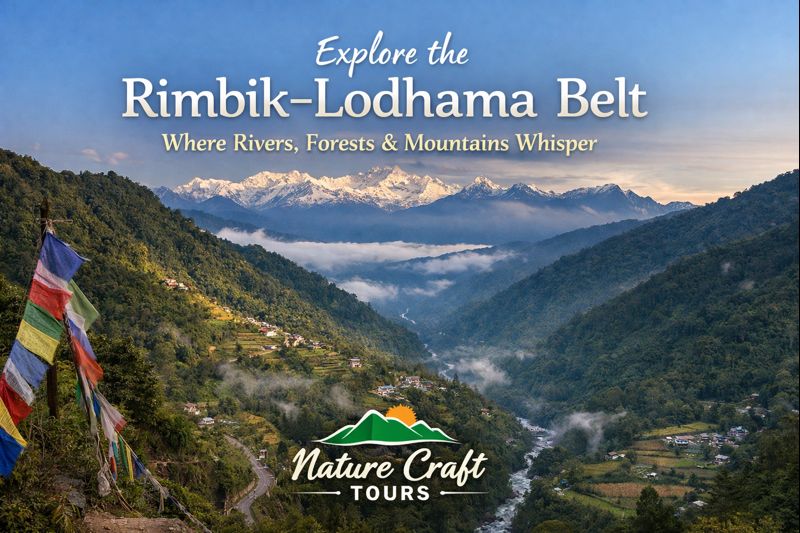
Hidden deep within the western folds of the Darjeeling hills lies the Rimbik–Lodhama belt, a remote yet profoundly evocative travel corridor that quietly links forests, rivers, old trade routes, and mountain hamlets. This region, stretching from the Indo-Nepal border village of Rimbik to the mist-laden forests near Lodhama, remains untouched by mass tourism. It is a landscape where time slows, paths whisper stories of colonial foot trails, and every bend of the road opens into valleys carved by wind, rain, and memory.
For travellers seeking an experience beyond crowded viewpoints and commercial hill stations, the Rimbik–Lodhama belt offers something far rarer—authentic Himalayan stillness. Here, travel is not measured in landmarks alone, but in moments: the sound of prayer flags fluttering near a lone tea hut, the glint of the Rangeet River far below, or the warm nod of a villager passing by on a forest trail.
Understanding the Geography of the Rimbik–Lodhama Belt
The Rimbik–Lodhama belt lies in the western sector of Darjeeling district, bordering Nepal to the west and Sikkim to the north. This region forms part of the Singalila foothills and acts as a transitional landscape between high-altitude ridges and deep river valleys. Elevations range from approximately 2,000 feet near Lodhama to over 7,500 feet around Rimbik, resulting in remarkable ecological diversity.
Dense temperate forests dominated by oak, chestnut, magnolia, and rhododendron gradually give way to open grazing lands and terraced farms. Seasonal streams feed into the Great Rangeet River, which remains a constant presence—sometimes visible, sometimes only heard as a distant echo.
Rimbik: Gateway to Borders, Trails, and Traditions
Rimbik stands as the westernmost motorable village of Darjeeling district. Historically, it functioned as a trading halt and administrative outpost due to its proximity to Nepal. Even today, its weekly markets reflect cross-border cultural exchanges, with Nepali, Tibetan, and Bengali influences blending seamlessly.
Rimbik also serves as the starting point for the famed Singalila Ridge treks, yet the village itself remains understated. Wooden houses with tin roofs, narrow lanes, prayer flags, and small monasteries define its character. Unlike popular hill towns, Rimbik has preserved its slow rhythm of life, making it an ideal base for immersive rural exploration.
Important Places to Explore Around Rimbik
- Traditional village markets reflecting Indo-Nepal trade culture
- Old forest trails once used by British-era surveyors
- Nearby grazing meadows offering views of the Singalila range
- Riverside paths leading towards the Rangeet basin
The Journey from Rimbik to Lodhama: A Road Less Taken
The route connecting Rimbik to Lodhama is less about reaching a destination and more about experiencing a transition. The road descends steadily, passing through dense forests, isolated hamlets, and river-fed valleys. Landslides and monsoon-fed streams often shape the road’s character, reinforcing the sense of raw Himalayan travel.
Unlike mainstream tourist routes, this belt offers uninterrupted natural immersion. There are long stretches without settlements, where birdsong replaces traffic noise and mist drifts freely across the road.
Key Hamlets and Natural Highlights En Route
- Remote forest settlements with traditional Nepali homes
- Hidden waterfalls active during monsoon and post-monsoon seasons
- River confluences offering dramatic valley views
- Dense forests rich in avian and floral diversity
Lodhama: Where Rivers, Forests, and Borders Converge
Lodhama is best known as a junction point where roads diverge towards Kalimpong, Darjeeling town, and the Teesta valley. However, beyond its logistical importance, Lodhama carries a quiet charm shaped by its riverine geography and surrounding forests.
Located close to the Great Rangeet River, Lodhama offers expansive valley views and a warmer climate compared to higher hill settlements. The area is particularly known for its forest rest houses and birdlife, making it attractive to nature enthusiasts and slow travellers.
Cultural Life Along the Rimbik–Lodhama Belt
The cultural fabric of this belt is deeply rooted in Nepali traditions, with influences of Tibetan Buddhism and indigenous Himalayan practices. Life here revolves around agriculture, seasonal festivals, and forest-based livelihoods.
Losar, Dashain, and Tihar are celebrated with quiet dignity, often marked by family gatherings rather than public spectacles. Monasteries and village shrines serve as both spiritual and social centres, reinforcing the region’s sense of community.
Staying Options in the Rimbik–Lodhama Region
Accommodation across the Rimbik–Lodhama belt remains modest and community-driven. Rather than conventional hotels, travellers will find family-run homestays, small lodges, and forest guest houses that prioritize authenticity over luxury.
Types of Accommodation Available
- Village homestays offering local cuisine and cultural interaction
- Basic lodges suitable for trekkers and long-distance travellers
- Forest rest houses near Lodhama (subject to availability)
- Eco-conscious rural properties with limited rooms
These stays emphasize simplicity, seasonal food, and personal hospitality. Electricity and connectivity may be intermittent, which only enhances the sense of retreat from modern excess.
Major Distances and Route Connectivity
- Darjeeling to Rimbik: approximately 56 km
- Rimbik to Lodhama: approximately 45 km
- Lodhama to Siliguri: approximately 70 km
- Rimbik to Manebhanjan: approximately 28 km
How to Reach the Rimbik–Lodhama Belt
The nearest major transport hub is Siliguri, which connects the region to the rest of India via rail, road, and air. From Siliguri, travellers can proceed via Darjeeling or Manebhanjan depending on road conditions and travel preference.
Private vehicles are the most practical option due to limited public transport frequency. The journey rewards patience, offering changing landscapes that reflect the Himalayas’ layered geography.
Best Time to Visit the Rimbik–Lodhama Belt
The ideal travel window spans from October to April. Post-monsoon months offer clear skies and lush landscapes, while winter brings crisp air and dramatic light. Spring introduces blooming rhododendrons and renewed forest life.
Monsoon months (June to September) enhance the region’s beauty but also pose challenges due to landslides and road disruptions. Travel during this period requires careful planning.
Why the Rimbik–Lodhama Belt Appeals to Thoughtful Travellers
This belt is not designed for hurried itineraries. It appeals to travellers who value context over checklists, who prefer conversations over crowds, and who see travel as a dialogue with landscape and culture. It complements journeys to other offbeat Darjeeling destinations such as Tinchuley, offering a deeper understanding of the region’s quieter narratives.
Those exploring multiple offbeat circuits often combine this belt with forested hamlets and tea-country retreats like
Tinchuley village, creating a slow, immersive Himalayan journey.
Travellers interested in extending their eastern India exploration often balance mountain solitude with delta landscapes through curated experiences such as a Sundarban Tour or a well-planned Sundarban Travel itinerary, offering a striking contrast between hills and mangroves.
Rimbik–Lodhama Belt
Between Rimbik’s winds and Lodhama’s streams,
The road unwinds through half-remembered dreams.
Forests breathe where footsteps gently fall,
Rivers hum stories older than us all.
Mist writes prayers on a quiet sky,
While hills watch travellers passing by.
No hurry lives along this trail,
Only time, softened, thin and pale.
Here, the Himalayas speak in tone,
A language learned by walking alone.
The Rimbik–Lodhama belt is not merely a route—it is a living corridor of memory, nature, and understated resilience. For those willing to slow down, listen, and observe, it reveals a Himalayan experience untouched by spectacle, yet rich in meaning. In an age of instant travel, this belt remains a gentle reminder that some journeys still ask us to arrive quietly.