
Takdah
– The Hidden Colonial Gem of Darjeeling’s Eastern Himalayas
Takdah, a serene high-altitude hamlet nestled between emerald tea gardens and ancient pine forests, stands as one of the most atmospheric offbeat destinations in the Darjeeling region. Once a flourishing British cantonment known for its misty bungalows, commanding viewpoints, orchid gardens, and sweeping forested valleys, Takdah retains a delicate balance between natural elegance and historic charm. For travellers seeking tranquillity, heritage, and unspoiled landscapes, Takdah offers an immersive Himalayan escape far from the usual tourist trails.
This extensively researched 2500-word travel guide explores Takdah with a deep, descriptive narrative—covering its major sightseeing points, distances, routes, heritage spaces, nature trails, accommodation types, and the best seasons to explore its pristine beauty. Written in a refined and formal style, this article provides a complete blueprint for travellers, bloggers, and tour planners aiming to present Takdah authentically.
Overview of Takdah
Takdah, located at approximately 4,000 feet above sea level, lies about 28 km from Darjeeling town. The name “Takdah” originates from the Lepcha word ‘Tukdah’, meaning “mist,” an apt description of this hill station where silvery clouds drift through the forested ridges almost throughout the year. Established in the early 1900s as a British cantonment, Takdah grew around its cluster of colonial bungalows, military offices, and pine plantations.
Today, the village still carries that old-world military charm, seen in its restored mansions, paved pathways, fern-filled glades, and towering conifers. Wrapped in the aroma of tea leaves and moss-covered forests, Takdah has become a quiet haven for birdwatchers, heritage lovers, trekkers, and travellers who cherish slow mountain life.
Important Places to See in Takdah
1. Takdah Colonial Bungalows (Rangli Rangliot Cantonment)
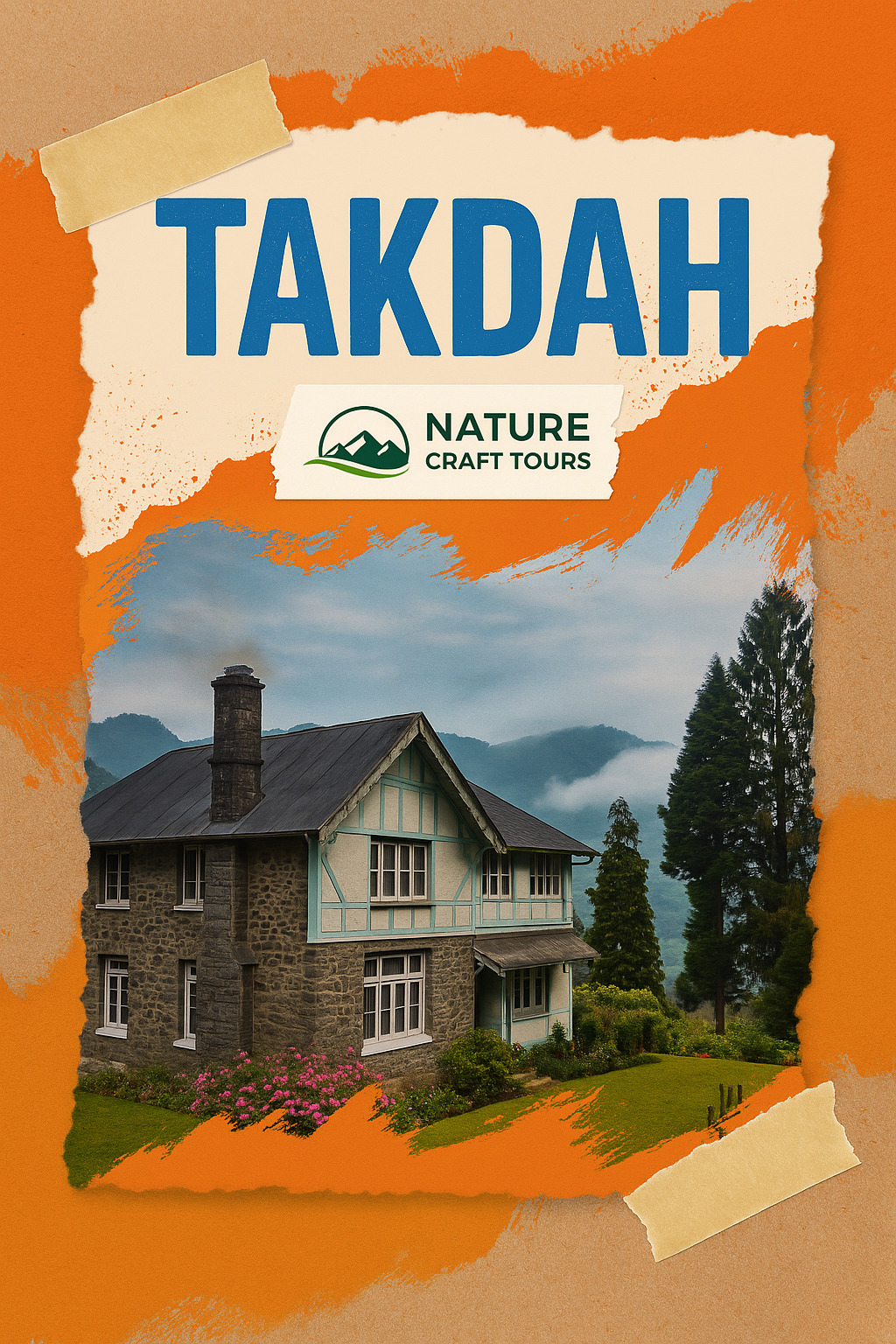
The biggest heritage feature of Takdah is its grand British bungalows built between 1900 and 1915. These structures reflect Edwardian architecture, complete with slanted roofs, brick chimneys, extended verandas, vintage fireplaces, and wide lawns set against dense pine groves. Many of these bungalows have now been restored into homestays and eco-lodges that still preserve their original woodwork and colonial ambience.
Walking through the cantonment roads brings an immersive feeling of stepping back into another era—where officers once strolled these same pathways under tall pines and soft mountain mist.
2. Orchid Centre (Takdah Orchid Shade)
Located only a few minutes from the main settlement, the Takdah Orchid Centre is one of the largest orchid research and cultivation centres in the region. It hosts a diverse collection of rare Himalayan orchids, ferns, and flowering plants. During spring and early summer, the entire greenhouse bursts into vibrant colours—making it a paradise for horticulturists, botanists, and photographers.
3. Pine Forest Walks
The pine forests surrounding Takdah form enchanting walking routes with soft beds of fallen needles, filtered sunlight gently touching the ground, and cool, crisp air. These forest paths are ideal for early morning nature walks, birdwatching, and meditation. The silence is profound, broken only by the rustling of leaves and distant bird calls.
4. Tinchuley Village
A short drive from Takdah brings visitors to Tinchuley—an eco-village famous for its citrus orchards, tea gardens, and panoramic Himalayan viewpoints. Many tourists combine stays in Takdah with day excursions to Tinchuley due to their close proximity and shared natural beauty.
5. Lamahatta Eco Park
Located nearby, Lamahatta presents meticulously landscaped gardens, tall pine forests, colourful prayer flags, and a serene artificial lake reached via a short forest trek. The beautifully arranged flower beds and mountain viewpoints make Lamahatta one of the most graceful spots around Takdah.
6. Peshok Tea Garden & Valley View
One of the region’s oldest and most scenic tea estates, the Peshok Tea Garden invites travellers to witness the charm of rolling green plantations stretching endlessly along the slopes. The Peshok Viewpoint on the main road offers a breathtaking view of the Teesta River flowing far below, carving through the valley.
7. Gumbadara Viewpoint
Located just a short distance away, Gumbadara offers extensive views of the surrounding ridges. Small caves near the viewpoint create a sense of adventure and are frequented by trekkers and nature enthusiasts. During sunrise and sunset, this viewpoint becomes a mesmerising spot as golden light gradually envelops the green ridgelines.
8. Baramangwa & Chota Mangwa
These picturesque farming villages, surrounded by orange orchards and terraced agricultural fields, offer authentic Himalayan rural charm. The viewpoints here provide gorgeous vistas of the Teesta Valley and the far-stretching mountains toward Kalimpong.
Major Distances From Takdah
- Darjeeling to Takdah: approx. 28 km (1.5–2 hours)
- Kalimpong to Takdah: approx. 22 km (1 hour)
- Bagdogra Airport to Takdah: approx. 65 km (3–3.5 hours)
- NJP Railway Station to Takdah: approx. 62 km (3 hours)
- Tinchuley to Takdah: approx. 4 km
- Lamahatta to Takdah: approx. 6 km
- Teesta Bazaar to Takdah: approx. 18 km
These distances vary slightly depending on the chosen route and seasonal road conditions, but the travel experience remains scenic throughout, with tea gardens, forest lines, and mountain vistas accompanying most of the journey.
How to Reach Takdah
By Air
The nearest air gateway is Bagdogra Airport. From Bagdogra, travellers can hire private taxis or pre-arranged vehicles to reach Takdah. The route usually passes through picturesque stretches of forest, river valleys, and tea estates, making it an enjoyable journey.
By Rail
New Jalpaiguri (NJP) serves as the main railway station connecting Takdah with major Indian cities. From NJP, the onward journey continues by road through scenic mountain routes.
By Road
Takdah is accessible via multiple scenic roads:
- Teesta Valley – Peshok Road – Takdah
- Darjeeling – Jorebungalow – 6th Mile – Takdah
- Kalimpong – 6th Mile – Rambi – Takdah
Road conditions vary across seasons, especially during monsoon; however, the routes remain manageable for private vehicles and tourist jeeps.
Staying Options in Takdah
Takdah is famous not for grand luxury hotels but for its atmospheric stays that combine heritage, nature, and tranquillity. The accommodations here reflect the unique character of the region, blending colonial architecture with Himalayan scenery.
1. British Heritage Bungalows
Many of Takdah’s colonial-era bungalows have been restored into boutique stays. These properties typically feature:
- Vintage wooden interiors
- Fireplaces and old-style chimneys
- Large lawns and garden spaces
- High ceilings and expansive verandas
- Panoramic windows overlooking pine forests
These bungalows offer an immersive heritage experience, allowing guests to enjoy the calm elegance of early 20th-century architecture.
2. Eco-Cottages & Homestays
Eco-stays in Takdah are known for their warm hospitality, organic food, and proximity to natural surroundings. These accommodations typically offer:
- Cosy rooms with wooden décor
- Organic meals sourced from local farms
- Village interaction opportunities
- Nature trails beginning directly from the property
For travellers who enjoy authentic Himalayan life, these homestays create a deeply personal connection with the region’s culture and environment.
3. Tea Garden Stays Nearby
Some properties located near the tea estates provide a refreshing experience where mornings begin with the fragrance of fresh tea leaves and open views of terraced plantations. These stays offer:
- Rooms overlooking tea gardens
- Guided plantation walks
- Calm and uncluttered ambience
- Home-cooked meals
They appeal especially to guests seeking peace and scenic beauty.
Best Time to Visit Takdah
Winter (November to February)
Winter is one of the most preferred seasons for visiting Takdah. With its misty mornings, clear skies, and chilly winds, the region becomes a haven for photographers and travellers seeking crisp Himalayan views. The pine forests appear especially enchanting under the winter sun.
Spring (March to April)
Spring is magical in Takdah. The Orchid Centre flourishes with rare species, wildflowers bloom across forest pathways, and the air carries the soft fragrance of fresh growth. This season is perfect for garden visits and nature photography.
Summer (May to June)
With pleasant temperatures and refreshing breezes, summer is ideal for tea garden walks, forest trails, and sightseeing. Mornings and evenings remain especially soothing.
Monsoon (July to September)
Monsoon covers Takdah in romantic mist and deep green hues. Although landslides and slippery roads may pose challenges, this season is rewarding for travellers who love tranquillity and dramatic mountain weather.
Autumn (October)
Autumn brings clear skyscapes, golden sunshine, and vibrant landscapes. It is one of the best periods for valley views and long forest walks.
Nearby Attractions for Day Excursions
Tinchuley Viewpoints
These viewpoints offer sweeping Himalayan panoramas, including views of snow-capped peaks, green ridgelines, and the Teesta Valley.
Mangwa Villages
Chota Mangwa and Bara Mangwa provide an authentic window into rural Himalayan living through orchards, terraced farms, and tranquil village paths.
Barbetey Forest Trails
Ideal for birding and nature study, these trails weave through dense forests rich in flora and fauna.
Travel Tips for Visiting Takdah
- Carry warm clothing throughout the year, as temperatures can drop unexpectedly.
- Walking shoes are essential for nature trails and heritage walks.
- Start early for sightseeing to avoid mountain fog during late afternoons.
- Respect heritage properties by maintaining silence and avoiding litter.
- Pre-book stays during peak seasons such as winter and spring.
Conclusion
Takdah is a destination where time moves slowly, where ancient colonial architecture whispers forgotten stories, and where the mountains embrace every visitor in peaceful silence. Its blend of natural beauty, heritage ambiance, and organic rural charm makes it one of the finest offbeat locations in the Darjeeling region.
From its mist-filled pathways and towering pine forests to its elegant British bungalows and vibrant orchid gardens, Takdah offers an unforgettable Himalayan retreat. Whether you seek slow travel, peaceful stays, nature exploration, or a deeper cultural connection, Takdah opens a doorway to a gentler, quieter world—one where the heart finds rest amidst the mountains.