





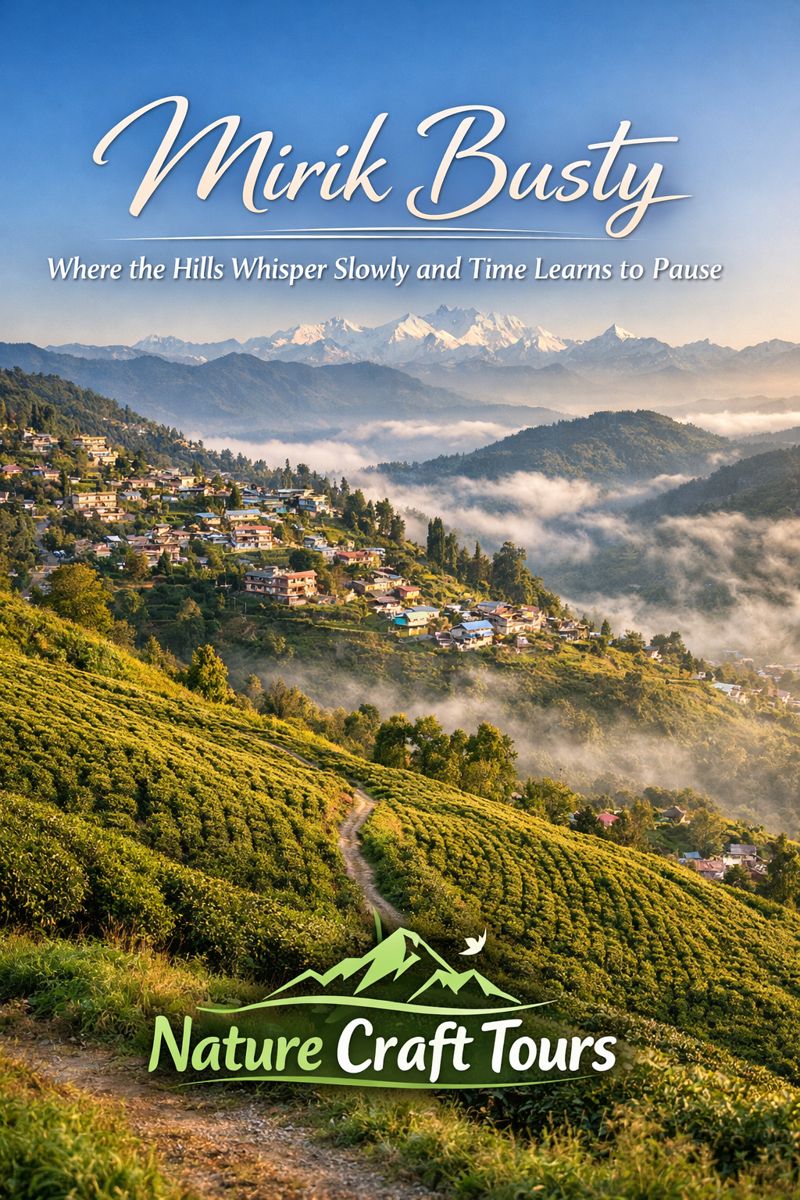
Mirik Busty
– Where the Hills Whisper Slowly and Time Learns to Pause
Hidden quietly above the familiar tourist trail of Mirik town, Mirik Busty is one of those rare Himalayan settlements that still retains the soul of the Eastern Himalayas. It is not a destination that announces itself loudly. Instead, it reveals its character slowly—through mist-laden mornings, the rhythmic life of tea gardens, and the gentle warmth of village hospitality. For travelers seeking silence, authenticity, and landscapes untouched by commercial tourism, Mirik Busty stands as an understated yet deeply rewarding retreat.
Situated in the Darjeeling district of West Bengal, Mirik Busty lies on the upper slopes overlooking the Mirik valley, with views that extend toward rolling tea estates, forested ridges, and distant Himalayan silhouettes on exceptionally clear days. The word “Busty” itself signifies a traditional village settlement, and Mirik Busty lives up to this heritage by preserving a lifestyle closely tied to nature and seasonal rhythms.

Geographical Setting and Natural Surroundings
Mirik Busty is positioned at a moderate elevation, allowing it to enjoy a temperate climate throughout most of the year. Unlike higher-altitude hamlets that experience extreme cold, Mirik Busty maintains a balanced environment, making it suitable for extended stays. The village is surrounded by tea gardens that form a mosaic of green contours, intersected by narrow footpaths, forest patches, and small streams.
The surrounding vegetation includes Himalayan alder, bamboo groves, wild orchids, seasonal rhododendrons, and medicinal plants used traditionally by local communities. Birdlife is particularly rich, with frequent sightings of Himalayan bulbuls, sunbirds, drongos, and occasionally migratory species during winter months. The natural silence of the region is broken only by birdsong, rustling leaves, and distant human activity—never by traffic or crowds.
Cultural Life and Village Character
Life in Mirik Busty flows at an unhurried pace. The residents are largely associated with tea garden work, small-scale farming, and traditional crafts. Houses are simple, often built with wood and corrugated roofs, adorned with flowering plants and kitchen gardens. Daily routines revolve around sunrise, weather patterns, and agricultural cycles.
Visitors are often welcomed into a rhythm of life that feels deeply rooted and genuine. Conversations happen over cups of locally grown tea, evenings are spent watching clouds descend into the valley, and nights bring a clarity of stars rarely seen in urban environments. Cultural festivals are celebrated quietly but meaningfully, reflecting a strong connection to ancestral traditions.
Important Places and Experiences in and Around Mirik Busty
Tea Garden Walks
Walking through the surrounding tea estates is one of the most enriching experiences in Mirik Busty. These walks offer insight into tea cultivation, leaf plucking cycles, and the lives of workers who sustain this heritage industry. Early morning walks are particularly atmospheric, as mist rises slowly from the slopes.
Village Trails and Forest Paths
Several informal trails connect Mirik Busty to neighboring hamlets and forested areas. These paths are ideal for slow exploration, photography, and birdwatching. They also offer vantage points to observe sunrise and sunset over the undulating hills.
Mirik Lake (Sumendu Lake)
Though Mirik Busty itself is secluded, Mirik town and its iconic lake are within easy reach. Visitors can explore the lake area during daytime and return to the quiet of Mirik Busty by evening, enjoying the contrast between gentle tourism and village stillness.
Major Distances from Mirik Busty
- Mirik Town: Approximately 3–4 kilometers
- Kurseong: Around 35 kilometers
- Darjeeling: Approximately 45 kilometers
- Siliguri: Roughly 60–65 kilometers
- Bagdogra Airport: About 70 kilometers
- New Jalpaiguri Railway Station: Around 68 kilometers
These distances make Mirik Busty accessible while still maintaining its offbeat identity.
How to Reach Mirik Busty
By Air
The nearest airport is Bagdogra, which is well connected to major Indian cities. From the airport, travelers can proceed by road toward Mirik town and then take a short uphill drive to Mirik Busty.
By Rail
New Jalpaiguri Railway Station serves as the primary railhead. It is one of the busiest stations in North Bengal and offers excellent connectivity. From NJP, road transport leads directly toward Mirik.
By Road
Mirik is well connected by motorable roads from Siliguri, Kurseong, and Darjeeling. The final stretch to Mirik Busty involves narrow village roads, offering scenic views and gradual immersion into rural landscapes.
Staying Options in Mirik Busty
Accommodation in Mirik Busty focuses on experiential stays rather than luxury. Visitors can choose from village homestays, heritage-style cottages, and eco-conscious lodges operated by local families. These properties emphasize clean living spaces, home-cooked meals, and personalized hospitality.
Staying here offers travelers an opportunity to support local livelihoods while enjoying an immersive cultural experience. Modern amenities are modest, ensuring minimal environmental impact and maximum authenticity.
Travelers interested in broader Eastern India travel circuits may also explore curated itineraries such as a Sundarban Tour, which complements hill destinations with deltaic wilderness experiences.
Best Time to Visit Mirik Busty
Spring (March to May)
This season brings blooming flowers, clear skies, and comfortable temperatures. It is ideal for walking trails and photography.
Monsoon (June to September)
Monsoon transforms the region into a lush green paradise. While rainfall enhances scenic beauty, travelers should be prepared for occasional road delays and mist-covered views.
Autumn (October to November)
Autumn offers the clearest views and stable weather. It is widely regarded as the best season for first-time visitors.
Winter (December to February)
Winters are cool but not severe. The quiet atmosphere during this period is ideal for solitude seekers and long, reflective stays.
Responsible Travel and Local Sensitivity
Mirik Busty thrives on balance—between human presence and nature. Visitors are encouraged to practice responsible tourism by minimizing waste, respecting village customs, and supporting local produce. Silence, cleanliness, and cultural sensitivity ensure that the village retains its charm for generations to come.
Those exploring other offbeat Darjeeling villages may also find inspiration in destinations like Tinchuley, which shares similar philosophies of sustainable hill tourism.
Mirik Busty
In Mirik Busty, mornings arrive on silent feet,
Wrapped in mist where earth and sky gently meet.
Tea leaves whisper stories the wind remembers,
Of seasons passing like fading embers.
Paths bend softly through emerald land,
Guided by time no clock can command.
Evenings dissolve into prayerful light,
As hills hold secrets through the night.
Here, the heart rests where silence is true,
And the mountains quietly remember you.
Why Mirik Busty Deserves a Place on Your Travel Map
Mirik Busty is not designed for hurried itineraries or checklist tourism. It is meant for those who value depth over display, stillness over spectacle, and memory over momentum. Whether as a standalone retreat or as part of a larger Himalayan journey, this offbeat village offers a profound sense of belonging to the land.
For travelers planning diverse travel experiences across India, combining hill destinations with delta ecosystems through options like a Sundarban Travel plan creates a richly layered understanding of nature’s contrasts.
In Mirik Busty, the hills do not perform—they simply exist. And in that quiet existence, travelers often rediscover themselves.