





Jorepokhri
– A Quiet Himalayan Hamlet Where Two Lakes Mirror the Sky
Jorepokhri Travel Guide – Exploring a Forgotten Border Hamlet of Darjeeling Hills
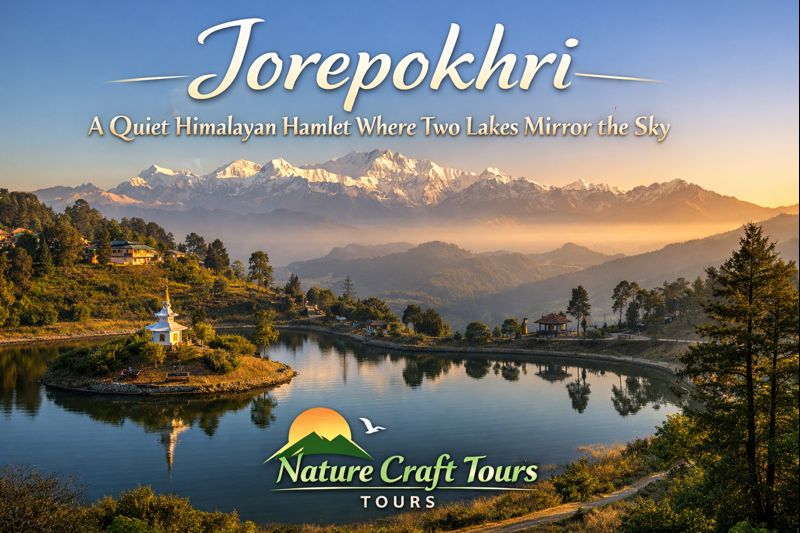
Tucked gently along the undulating ridges near the Indo–Nepal border, Jorepokhri stands as a serene pause in the otherwise hurried rhythm of the Darjeeling hills. Unlike bustling tourist centres, this small settlement invites the traveller to slow down, to listen to the hush of pine forests, and to watch the sky dissolve into still waters. The name “Jorepokhri” literally translates to “two ponds,” a reference that is both geographical and poetic, for here nature often appears in pairs—mist and mountain, silence and wind, reflection and reality.
Situated close to, yet spiritually distant from its crowds, Jorepokhri appeals to those who seek authenticity, borderland culture, and an almost meditative Himalayan atmosphere. This guide presents a comprehensive, research-oriented overview of Jorepokhri, covering its landscapes, travel logistics, cultural layers, and practical considerations for an immersive visit.
Geographical Setting and Natural Character
Jorepokhri lies in the southern fringe of the Darjeeling hill region, not far from the historic route connecting and positioned near the international boundary with Nepal, the village experiences a unique blend of Himalayan ecology and cross-border cultural influences.
The twin lakes that give the village its name sit quietly amidst forested slopes. During early mornings, these water bodies often reflect layers of drifting cloud, while evenings transform them into mirrors of amber light. Surrounding ridges are draped with pine, alder, and occasional rhododendron, creating a landscape that feels untouched and deeply contemplative.
Climate and Altitude
At an approximate altitude of 5,000–5,500 feet above sea level, Jorepokhri enjoys a mild, temperate climate. Summers remain pleasantly cool, while winters are crisp, occasionally marked by frost during the coldest nights. Monsoon months paint the region in deep greens, though mist and rainfall become frequent companions.
Important Places and Experiences in and Around Jorepokhri
The Twin Lakes of Jorepokhri
The twin ponds are not grand in scale, yet they form the emotional heart of the village. Locals often consider them auspicious, and the surroundings remain largely undisturbed. A quiet walk around these lakes offers moments of stillness rarely found in mainstream hill stations.
Borderland Trails and Viewpoints
Jorepokhri’s proximity to the Nepal border allows for gentle walking trails that trace old trade paths and forest edges. These routes offer expansive views of rolling hills and distant settlements, revealing how geography dissolves political lines in daily life.
Village Life and Cultural Texture
Life in Jorepokhri follows an agrarian rhythm. Small cardamom patches, seasonal vegetables, and household livestock shape daily routines. The population primarily comprises Nepali-speaking communities, whose customs, cuisine, and festivals echo both Indian and Nepali traditions.
Major Distances from Jorepokhri
- Darjeeling: approximately 25–28 km
- Mirik: approximately 15 km
- Sukhiapokhri: approximately 12 km
- Bagdogra Airport: approximately 65–70 km
- New Jalpaiguri Railway Station: approximately 68–72 km
These distances make Jorepokhri accessible yet sufficiently secluded, positioning it as an ideal offbeat extension to a broader Darjeeling itinerary.
How to Reach Jorepokhri
By Air
The nearest airport is From Bagdogra, travellers can hire private vehicles toward Mirik and onward to Jorepokhri. The journey gradually transitions from plains to rolling hills, offering scenic views throughout.
By Rail
New Jalpaiguri Railway Station serves as the nearest major railhead. Well-connected to metropolitan cities, NJP allows travellers to continue their journey by road through Mirik or Sukhiapokhri.
By Road
Road access is the most flexible option. From Darjeeling, Mirik, or Sukhiapokhri, shared or private vehicles navigate narrow hill roads bordered by tea gardens and forest patches. The final approach to Jorepokhri is calm and scenic, preparing visitors for the village’s tranquil atmosphere.
Staying Options in and Around Jorepokhri
Accommodation in Jorepokhri remains intentionally modest. Travellers can expect homestays and small countryside lodges that emphasize warmth and authenticity over luxury. Rooms are typically clean, simple, and often offer views of hills or lakes.
For those seeking slightly more developed amenities, nearby Mirik and Sukhiapokhri provide a broader range of properties, from boutique stays to comfortable mid-range hotels. Staying locally, however, allows visitors to experience dawn and dusk in Jorepokhri without interruption.
Best Time to Visit Jorepokhri
Spring (March to May)
Spring brings clear skies, mild temperatures, and blooming vegetation. This period is ideal for walking trails and photography.
Autumn (October to November)
Autumn offers crisp air, long views, and golden light, making it one of the most recommended seasons for visiting Jorepokhri.
Monsoon and Winter Considerations
Monsoon months (June to September) cloak the region in mist and rain, enhancing its mystique but requiring careful travel planning. Winters (December to February) are cold yet serene, best suited for travellers comfortable with low temperatures.
Responsible Travel and Local Sensitivities
As a border-area village, Jorepokhri values quiet tourism. Visitors are encouraged to respect local customs, avoid loud activities, and minimize plastic waste. Supporting local homestays and purchasing local produce directly benefits the community.
For travellers exploring other offbeat villages, destinations such as Tinchuley often complement a Jorepokhri journey with similar rural charm and Himalayan ambience.
Jorepokhri
Between two silent waters, the hills learn to breathe,
Mist settles gently, asking the world to wait.
Pines whisper stories older than roads and maps,
And footsteps soften upon borrowed earth.
Here, borders fade into birdsong and prayer,
Evenings arrive wrapped in amber stillness.
The lakes remember every passing cloud,
The village remembers every traveller’s silence.
Time pauses, as if listening to itself,
And Jorepokhri remains—quiet, complete, and true.
Linking Jorepokhri with Broader Travel Circuits
Many travellers combine Jorepokhri with forest and river-based experiences elsewhere in Eastern India. For those interested in wetland and wildlife journeys, curated options such as Sundarban Tour programs offer a contrasting yet complementary landscape.
Similarly, extended itineraries may include immersive Sundarban Travel experiences, allowing travellers to understand Bengal’s ecological diversity—from Himalayan hills to mangrove deltas.
Another enriching offbeat extension remains Tinchuley village, known for its mountain views and sustainable tourism practices, often paired naturally with Jorepokhri in thoughtful travel planning.
Jorepokhri does not compete for attention; it waits quietly for those willing to notice. In its lakes, forests, and unhurried village life, the traveller finds a rare Himalayan stillness. It is a destination best approached without haste, where the reward lies not in sightseeing alone, but in the gentle art of being present.