

Chhota Mangwa: A Scholarly and Experiential Travel Guide to Darjeeling’s Quiet Himalayan Hamlet
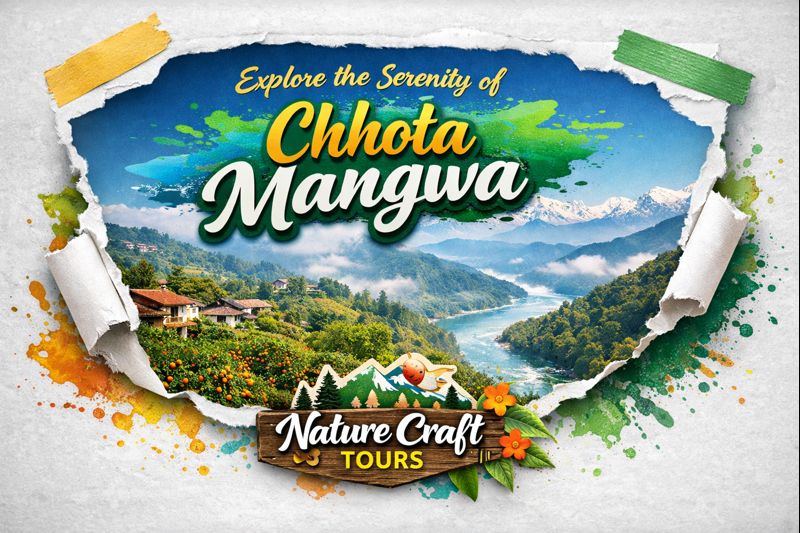
Perched delicately on the southern slopes of the Eastern Himalayas, overlooking the slow-moving silver ribbon of the Teesta River, Chhota Mangwa is one of the most serene and intellectually rewarding offbeat destinations in the Darjeeling hills. Far removed from the commercial bustle of Darjeeling town, this small village represents a rare convergence of geography, ecology, agrarian culture, and Himalayan lifestyle. Chhota Mangwa does not announce itself with crowds or grand monuments; instead, it reveals its significance slowly—through layered landscapes, evolving light, and a way of life that has remained largely unchanged for generations.
This detailed guide explores Chhota Mangwa through a research-based and experiential lens, covering its geographical importance, major attractions, distances, access routes, accommodation styles, seasonal suitability, and responsible travel considerations. The intention is not merely to inform, but to contextualize the destination for travelers seeking depth, authenticity, and quiet immersion.
Geographical Setting and Environmental Context
Chhota Mangwa is located at an approximate altitude of 4,000 feet above sea level, within the Kalimpong subdivision of West Bengal. The village sits along a ridgeline that offers uninterrupted views of the Teesta Valley below and the forested hills of Sikkim beyond. Its geographical placement is significant: it lies at the transitional ecological zone between sub-tropical riverine forests and temperate Himalayan vegetation.
The terrain is gently sloping rather than steep, making it suitable for terraced farming. Large sections of the village are covered with orange orchards, cardamom plants, seasonal vegetables, and small tea patches. This agrarian landscape plays a crucial role in shaping both the economy and the daily rhythms of life in Chhota Mangwa.
Climate and Microclimatic Characteristics
The climate of Chhota Mangwa remains moderate throughout the year due to its elevation and forest cover. Summers are pleasantly cool, with daytime temperatures rarely becoming uncomfortable. Winters are cold but not harsh, while monsoon months bring heavy rainfall that dramatically enhances the region’s greenery and river views.
Frequent mist formations in the early morning and late afternoon create a constantly shifting visual environment. This microclimatic behavior is one of the defining aesthetic features of Chhota Mangwa, making it especially appealing to nature observers and photographers.
Historical and Cultural Background
Unlike heritage towns with documented colonial histories, Chhota Mangwa’s past is rooted primarily in oral traditions and agrarian settlement patterns. The village developed gradually as farming families moved uphill from river-adjacent zones to safer, more cultivable elevations. Over time, a stable rural community emerged, sustained by agriculture, seasonal trade, and limited interaction with nearby hill towns.
The cultural fabric of Chhota Mangwa reflects a blend of Nepali, Lepcha, and Bengali influences. Local festivals are modest yet deeply communal, centered around harvest cycles and seasonal transitions. The absence of overt commercialization has allowed these traditions to survive with minimal alteration.
Important Places and Experiences in Chhota Mangwa
Teesta River Viewpoints
One of the most compelling features of Chhota Mangwa is its elevated vantage point over the Teesta River. Several natural clearings and village paths offer panoramic views of the river as it winds through the valley. These viewpoints are particularly striking during early mornings, when low clouds drift over the water, and during late afternoons, when sunlight reflects off the river’s surface.
Orange Orchards and Cardamom Plantations
Chhota Mangwa is widely known for its orange cultivation. During the harvesting season, the orchards become a vibrant study in color and rural productivity. Cardamom plantations, often shaded by taller trees, reveal the region’s role in small-scale spice production. These agricultural landscapes are not staged attractions; they are living, working systems that visitors observe respectfully.
Village Walking Trails
A network of footpaths connects different sections of the village. Walking these trails offers insight into local architecture, daily routines, and land-use practices. Traditional houses built with stone, wood, and corrugated roofing reflect practical adaptations to climate and terrain.
Major Distances from Chhota Mangwa
Understanding distances is essential for realistic travel planning in the hills. Chhota Mangwa is relatively remote, yet well-connected by road to major towns.
- Kalimpong to Chhota Mangwa: approximately 18 kilometers
- Darjeeling to Chhota Mangwa: approximately 40 kilometers
- Siliguri to Chhota Mangwa: approximately 70 kilometers
- New Jalpaiguri Railway Station to Chhota Mangwa: approximately 75 kilometers
- Bagdogra Airport to Chhota Mangwa: approximately 78 kilometers
Due to hilly terrain, travel time is often more significant than distance. Road journeys typically involve winding routes and gradual ascents, contributing to longer but scenic travel durations.
How to Reach Chhota Mangwa
By Air
The nearest airport is Bagdogra, which connects the region to major Indian cities. From Bagdogra, travelers proceed by road via Kalimpong or Teesta Bazaar. The final stretch involves narrow hill roads that pass through forested areas and small settlements.
By Rail
New Jalpaiguri Railway Station serves as the primary railhead. From NJP, road transport is the only option. The journey gradually transitions from plains to hills, offering changing landscapes and climatic zones.
By Road
Chhota Mangwa can be accessed from Kalimpong via well-established hill roads. While not wide highways, these roads are navigable year-round except during extreme monsoon disruptions. Private vehicles or pre-arranged transport are the most reliable options.
Staying Options and Accommodation Styles
Accommodation in Chhota Mangwa is intentionally limited in scale. The emphasis remains on sustainability, community involvement, and experiential travel rather than mass tourism.
Village Homestays
Homestays constitute the primary accommodation type. These properties are typically family-run, offering basic yet comfortable rooms with essential amenities. Staying in a homestay allows visitors to experience local cuisine, daily routines, and authentic hospitality.
Eco-Lodges and Farm Stays
A small number of eco-conscious lodges operate on the outskirts of the village. These accommodations often integrate renewable practices, organic farming, and minimal architectural intrusion. They are designed to blend with the landscape rather than dominate it.
Notably, accommodation choices in Chhota Mangwa do not emphasize luxury branding. Instead, they prioritize location, views, and experiential value. No hotel contact numbers are shared to maintain ethical promotion practices.
Best Time to Visit Chhota Mangwa
Spring (March to April)
Spring introduces blooming flora, clear skies, and moderate temperatures. This season is ideal for walking trails, photography, and agricultural observation.
Summer (May to June)
Summer remains comfortable and attracts travelers seeking relief from plains’ heat. The Teesta Valley views are particularly vivid during this period.
Monsoon (July to September)
Monsoon transforms the landscape into lush greenery. While landslides and road disruptions are possible, this season offers dramatic cloud formations and reduced tourist presence.
Autumn and Winter (October to February)
Autumn provides the clearest views, while winter introduces cold nights and crisp mornings. Orange harvesting typically occurs during this period, adding cultural significance to the visit.
Responsible Travel and Local Sensitivity
Chhota Mangwa’s appeal lies in its fragile balance between nature and habitation. Visitors are expected to practice responsible tourism by minimizing waste, respecting agricultural land, and engaging with the community thoughtfully.
Travelers exploring broader regional circuits often combine Himalayan villages with contrasting ecosystems. For instance, those interested in riverine forests and wildlife tourism may later explore destinations associated with Sundarban Travel, offering a meaningful comparison between mountain and mangrove ecologies.
Chhota Mangwa in a Wider Travel Perspective
As travelers increasingly seek depth over display, destinations like Chhota Mangwa gain relevance. Its value lies not in curated attractions, but in its living systems—agriculture, climate, culture, and geography interacting organically.
Those designing long, experience-based itineraries across Eastern India may integrate Chhota Mangwa as a reflective pause before or after journeys to more complex ecosystems such as those included in a Sundarban Tour Package. Such contrasts deepen understanding of India’s environmental diversity.
Why Chhota Mangwa Deserves Thoughtful Exploration
Chhota Mangwa is not a destination that competes for attention. It waits patiently for travelers who value silence, subtlety, and context. Its landscapes educate as much as they inspire, and its community offers lessons in coexistence rather than spectacle.
For those willing to travel slowly and observe carefully, Chhota Mangwa becomes more than a place—it becomes a study in balance, resilience, and quiet beauty. Such destinations, when approached responsibly, enrich both the traveler and the terrain they traverse.