
Lamahatta
– A Serene Eco-Village in the Eastern Himalayas Where Silence Becomes a Landscape

Lamahatta, a tranquil Himalayan eco-village located along the Teesta Valley in the Darjeeling district, represents the perfect blend of nature’s serenity and spiritual calmness. Draped in towering pine forests, prayer-flag viewpoints, manicured gardens, and misty trails, Lamahatta has emerged as one of the finest offbeat destinations for travellers seeking peaceful retreats away from the tourist bustle. Situated at an elevation of approximately 5,700 feet, this pristine village derives its name from the words “Lama” and “hatta,” signifying a spiritual monk’s dwelling. True to its name, Lamahatta radiates an aura of meditative tranquillity, slow life, and untouched natural beauty.
In this extensive, research-based guide, we explore Lamahatta in its full depth—highlighting its history, scenic attractions, distances, travel routes, accommodations, and the best times to visit. With its naturally terraced slopes, prayer-flag gardens, serene lakeside trails, and panoramic viewpoints overlooking the Kanchenjunga range, Lamahatta promises one of the most refreshing travel experiences in North Bengal.
Overview of Lamahatta
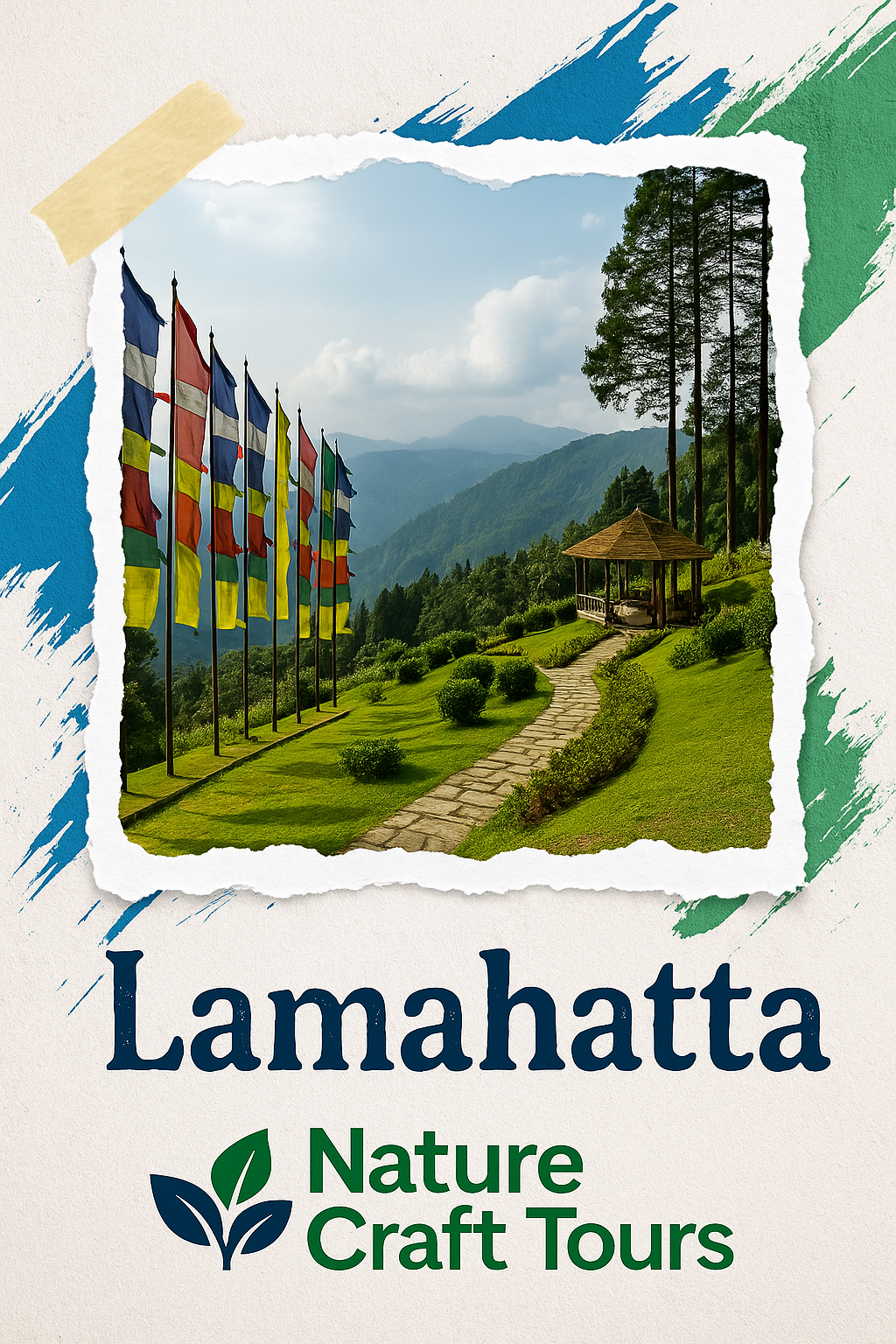
Lamahatta lies about 23 kilometres from Darjeeling and has steadily grown into a model eco-tourism village supported by local communities and the state government. Designed to harmonise tourism with nature, this picturesque hamlet offers a refined balance of scenic viewpoints, forest walks, organic farms, and meditation-friendly environments. Its iconic landscaped garden—decorated with tall pine trees, bamboo gazebos, wooden pathways, and colourful prayer flags—has become the signature landmark of Lamahatta.
The region comes under the administrative purview of the Government of West Bengal, and travellers seeking updated travel guidelines or state tourism initiatives may refer to official government resources such as:
West Bengal Government Portal
The surrounding area is rich in biodiversity and offers sweeping views of the Teesta Valley, Kalimpong hills, and even glimpses of the Kanchenjunga range on clear days. The village is also close to various important historical and ecological attractions in the Darjeeling-Kalimpong belt.
Important Places to See in Lamahatta
Lamahatta Eco Park
At the heart of the village is the meticulously maintained Lamahatta Eco Park, a landscaped garden filled with ornamental plants, pine groves, seasonal flowers, bamboo benches, and a wide viewing gallery. The colourful prayer flags fluttering against the mountain breeze add spiritual charm, symbolising peace, harmony, and good fortune. The garden is an ideal space for photography, meditative walks, and relaxed moments amid nature.
Lamahatta Forest Trail & The Sacred Lake
One of the most enchanting attractions of Lamahatta is the short uphill forest trek that leads to a serene natural lake known locally as the “Sacred Lake.” The path winds through dense forests of towering pines and oak trees, with cool, filtered light dancing across the ground. Upon reaching the lake, travellers find still waters reflecting the surrounding trees, creating a tranquil and meditative environment. This lake is believed by locals to be spiritually significant, and visitors often experience an overwhelming sense of calmness.
Lamahatta Viewpoint
Near the garden lies a well-developed viewpoint offering breathtaking vistas of the Teesta River meandering between lush ridges, the emerald slopes of Kalimpong, and the dramatic depth of the valley below. On exceptionally clear days, the snow-capped Kanchenjunga range glows like a golden crown at sunrise. The viewpoint is a favourite among landscape photographers, nature lovers, and visitors seeking moments of solitude.
Takdah Cantonment
Just a short drive from Lamahatta, the historical Takdah Cantonment houses colonial-era British bungalows, pine-canopied lanes, and orchid nurseries. These early 20th-century structures have been carefully preserved, maintaining their stone architecture, vintage fireplaces, and elegant lawns. Many of these bungalows have now been turned into heritage stays and cultural attractions.
Tinchuley Village
Only a few kilometres from Lamahatta, Tinchuley offers citrus orchards, panoramic walking trails, and deep forest valleys. With sweeping views of the Teesta Valley and an excellent eco-tourism model, Tinchuley pairs beautifully with a visit to Lamahatta. More details on Tinchuley can be found on trusted resources including Wikipedia’s Darjeeling district page.
Peshok Tea Garden
Driving towards Peshok offers travellers mesmerising views of sprawling tea gardens, slender ridges, and the confluence of Teesta and Rangeet rivers visible from Peshok Viewpoint. This iconic bend is a signature highlight of the region and offers unbeatable photo opportunities.
Chota Mangwa & Bara Mangwa
These agricultural villages close to Lamahatta are dotted with organic farms, orange orchards, terraced fields, and serene viewpoints overlooking the winding Teesta River. The slow-paced charm of these hamlets makes them ideal for immersive rural tourism.
Major Distances From Lamahatta
- Darjeeling to Lamahatta: approx. 23 km (1–1.5 hours)
- Kalimpong to Lamahatta: approx. 17 km (45 minutes)
- NJP Railway Station to Lamahatta: approx. 62 km (3 hours)
- Bagdogra Airport to Lamahatta: approx. 65 km (3.5 hours)
- Tinchuley to Lamahatta: approx. 6 km
- Takdah to Lamahatta: approx. 4 km
- Teesta Bazaar to Lamahatta: approx. 20 km
These distances vary slightly based on road conditions, traffic, and weather, particularly during monsoon. However, the journey offers breathtaking scenery with stacked mountain ridges, emerald forests, and tea gardens.
How to Reach Lamahatta
By Air
The nearest airport is Bagdogra. From here, visitors can hire private taxis or reserved vehicles to reach Lamahatta. The route generally passes through Siliguri, Teesta Valley, and the Peshok Road before ascending into the pine-covered slopes of Lamahatta.
By Rail
New Jalpaiguri (NJP) serves as the closest major rail hub connected to India’s major cities. From NJP, travellers can book local cars or pre-arranged vehicles for Lamahatta. Those planning their Sundarban or North Bengal trips together often refer to Sundarban Travel for curated travel support.
By Road
Lamahatta is accessible from Darjeeling, Kalimpong, and Teesta Bazaar via scenic mountain roads. The three commonly used routes are:
- Darjeeling – Ghoom – 6th Mile – Lamahatta
- Kalimpong – 6th Mile – Peshok Road – Lamahatta
- Teesta Bazaar – Peshok Road – Lamahatta
The roads are mostly well-maintained, though caution is advised during monsoon due to occasional landslides.
Staying Options in Lamahatta
Lamahatta does not focus on large commercial hotels; instead, it offers homely and eco-friendly accommodations designed to blend with the natural surroundings. These stays are often surrounded by thick forests, gardens, and rustic Himalayan life.
Homestays & Eco-Village Stays
Most accommodations in Lamahatta are homestays managed by local families, promoting responsible tourism. They provide:
- Warm hospitality in peaceful settings
- Wooden rooms with mountain views
- Home-cooked organic cuisine
- Access to local culture and lifestyle
Many homestays feature garden-front rooms, pine-facing balconies, and easy access to the eco-park and forest trails.
Forest-Edge Retreats
A few eco-retreats located near the forest offer elevated cottages, private sit-out areas, and tranquil surroundings ideal for meditation and nature walks. These stays provide a middle-ground option between village homestays and more upscale properties.
Heritage Stays Near Takdah
Travellers who prefer heritage comforts may choose to stay in the nearby colonial bungalows of Takdah. These properties combine old-world charm with serene landscapes and are just a short drive from Lamahatta.
Best Time to Visit Lamahatta
Winter (November to February)
Winter transforms Lamahatta into a crisp, misty paradise with clear skies, pine-scented mornings, and breathtaking sunrise views. This season is ideal for photography, garden visits, and peaceful forest walks.
Spring (March to April)
Spring brings new blossoms, colourful gardens, and rich biodiversity. The orchid nurseries in nearby Takdah flourish during this period, offering spectacular floral displays.
Summer (May to June)
Summer maintains pleasant temperatures and excellent visibility, making it perfect for long walks, sightseeing, and exploring rural villages.
Monsoon (July to September)
Monsoon envelops Lamahatta in a dreamy world of fog, deep greenery, and gentle rain. While landslides may affect road access, this season is a favourite for travellers seeking solitude, romance, and dramatic landscapes.
Autumn (October)
Autumn provides crystal-clear visibility and golden sunshine. It is one of the best seasons to view the Teesta Valley and the Himalayan skyline from Lamahatta’s viewpoints.
Nearby Attractions Around Lamahatta
Lamahatta Tea Garden Walk
A short stroll from the main village leads to peaceful tea estates where travellers can enjoy plantation trails and panoramic views of green slopes.
Gumbadara Viewpoint
This scenic point near Takdah offers sweeping views of deep valleys and forest ridges. Ancient caves nearby create an adventurous experience.
Kalimpong
Located within an hour’s drive, Kalimpong offers monasteries, markets, nurseries, and rich cultural diversity. Its ridge-top location provides exceptional valley views.
Travel Tips for Lamahatta Visitors
- Carry warm clothing year-round, as evenings can be cold.
- Wear comfortable shoes suitable for trekking and steep paths.
- Start forest trails early to avoid afternoon fog.
- Respect village customs and maintain silence in serene areas.
- Book stays early during winter and spring, the peak tourist seasons.
- Keep power banks, as remote regions may face occasional power cuts.
Conclusion
Lamahatta stands as one of North Bengal’s most pristine and spiritually uplifting destinations. Its peaceful viewpoints, pine forests, sacred lake, organic farms, and meditative environment create an unforgettable Himalayan retreat. Unlike crowded tourist zones, Lamahatta offers a rare luxury—silence, greenery, and a harmonious connection with nature.
Whether you are a nature photographer, a spiritual traveller, a couple seeking tranquillity, or a family exploring the Himalayas, Lamahatta welcomes you with open arms. From its landscaped gardens and forest trails to its soft-green valleys and cultural warmth, this eco-village is not merely a travel destination—it is an experience where the mountains whisper peace into your soul.