

Mungpoo: Where Himalayan Forests Soften into Quiet Tea Valleys Untouched by Mass Tourism
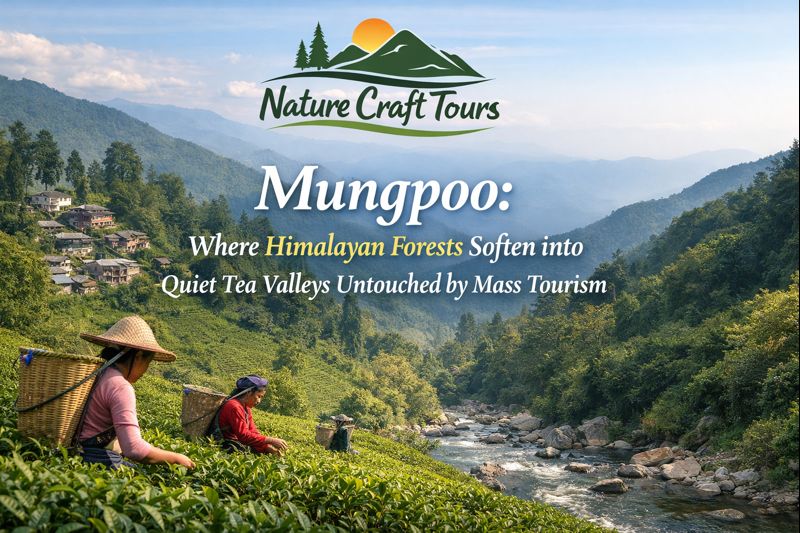
There are places in the Eastern Himalaya that do not announce themselves loudly. They do not rely on iconic viewpoints, crowded promenades, or checklist-style attractions. Instead, they reveal themselves slowly—through morning mist rising from forested ridges, the subdued rhythm of tea pluckers at work, and the steady hush of rivers carving their way through green valleys. Mungpoo is one such place. Tucked between the better-known hill towns of Darjeeling and Kalimpong, Mungpoo exists in a gentle transition zone where dense Himalayan forests gradually give way to cultivated tea slopes, and where tourism remains a quiet afterthought rather than the driving force of local life.
This is a destination for travelers who value atmosphere over spectacle and depth over speed. Mungpoo does not compete with its neighbors; it complements them. It offers an experience rooted in ecology, history, and lived hill culture—an experience that feels increasingly rare in the modern Himalayan travel circuit. To understand Mungpoo is to understand how geography, climate, colonial legacies, and local livelihoods intersect in subtle but enduring ways.
Destination Overview: Understanding Mungpoo’s Geographic and Cultural Context
Mungpoo is a small hillside settlement located in the Darjeeling district of West Bengal, positioned at an altitude of approximately 3,500 feet above sea level. Unlike the higher ridges of Darjeeling town or the dramatic escarpments of Kalimpong, Mungpoo occupies a mid-altitude belt characterized by moderate temperatures, rich forest cover, and fertile slopes ideal for tea cultivation.
Geographically, Mungpoo sits along the historic route connecting Teesta Valley with the Darjeeling hills. This strategic location has shaped its development over more than a century. Forest departments, cinchona plantations, and tea estates established during the colonial period laid the foundations of the settlement, while post-independence forestry and agriculture continue to influence land use patterns today.
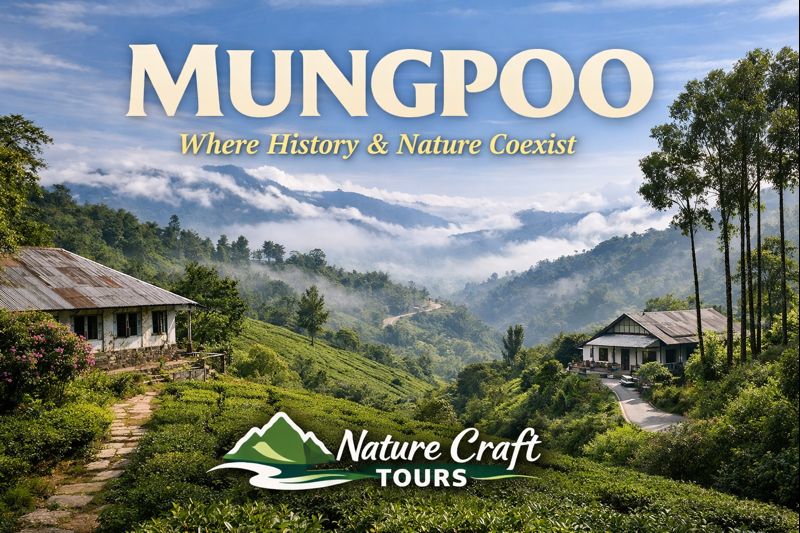
What distinguishes Mungpoo is its layered landscape. On one side, dense sal and mixed broadleaf forests dominate the hills, forming part of a critical ecological corridor in the Eastern Himalaya. On the other, orderly rows of tea bushes stretch across sunlit slopes, creating a visual softness that contrasts sharply with the rugged terrain beyond. This dual identity—forest and plantation—defines both the scenery and the rhythm of daily life.
Historical Significance: From Colonial Experiments to Quiet Continuity
Mungpoo’s history is inseparable from British colonial forestry and plantation policy. In the late nineteenth and early twentieth centuries, the British administration identified the region as suitable for experimental cultivation of cinchona, a plant used to produce quinine, then a vital treatment for malaria. Government cinchona plantations were established, and with them came administrative buildings, worker settlements, and access roads.
Tea cultivation followed, benefiting from the same climatic advantages—ample rainfall, well-drained slopes, and cool but not severe temperatures. Unlike some hill stations that evolved into leisure retreats for colonial elites, Mungpoo remained a working landscape. Its role was productive rather than performative, and that distinction remains visible today.
This historical trajectory explains why Mungpoo lacks the overt colonial architecture or tourist infrastructure seen elsewhere. The legacy here is subtler: forest bungalows, plantation layouts, and a spatial organization that prioritizes function over display. For the observant traveler, these elements offer insight into a lesser-discussed chapter of Himalayan history—one focused on resource management rather than recreation.
Ecological Character: Where Forest Biodiversity Shapes the Experience
Ecologically, Mungpoo occupies a sensitive and significant zone within the Eastern Himalayan biodiversity hotspot. The surrounding forests are composed primarily of sal, oak, chestnut, and mixed subtropical species, interspersed with bamboo groves and undergrowth that supports a wide range of fauna.
Birdlife is particularly notable. Early mornings often bring the calls of barbets, drongos, and hill mynas, while more patient observers may spot sunbirds, flycatchers, and seasonal migratory species. Butterflies and insects flourish in the transitional habitats between forest and tea garden, making the area quietly rewarding for naturalists and slow walkers.
Unlike heavily touristed forest destinations, Mungpoo’s ecological richness remains largely undisturbed by visitor pressure. Trails are informal, foot traffic is minimal, and local communities maintain a close relationship with their environment. This creates an atmosphere where nature feels present rather than curated—a quality increasingly rare in popular hill destinations.
Cultural Landscape: Life Shaped by Tea, Forest, and Hill Traditions
The cultural fabric of Mungpoo reflects its working origins. The majority of residents are connected, directly or indirectly, to tea estates, forest services, or small-scale agriculture. Daily life follows patterns shaped by seasons rather than tourist calendars.
Communities here include Nepali-speaking hill populations, alongside smaller groups whose livelihoods have been tied to plantation and forestry work for generations. Cultural expression is understated but deeply rooted—seen in festivals aligned with agricultural cycles, local cuisine prepared from seasonal produce, and a strong sense of place-based identity.
For travelers, this means that cultural encounters in Mungpoo are observational rather than performative. There are no staged shows or commercialized experiences. Instead, understanding comes through quiet presence: watching tea leaves being sorted, observing daily routines, or sharing simple conversations with residents whose relationship to the land remains intact.
Key Attractions and Highlights of Mungpoo
Tea Estates and Plantation Walks
The tea gardens around Mungpoo are central to its visual and cultural identity. Unlike heavily branded estates elsewhere, these plantations operate with minimal tourist intrusion. Walking along estate paths offers insight into tea cultivation as a lived practice rather than a curated experience. The gentle slopes, punctuated by shade trees and distant forest lines, create an environment that invites unhurried exploration.
Forest Trails and Riverside Spaces
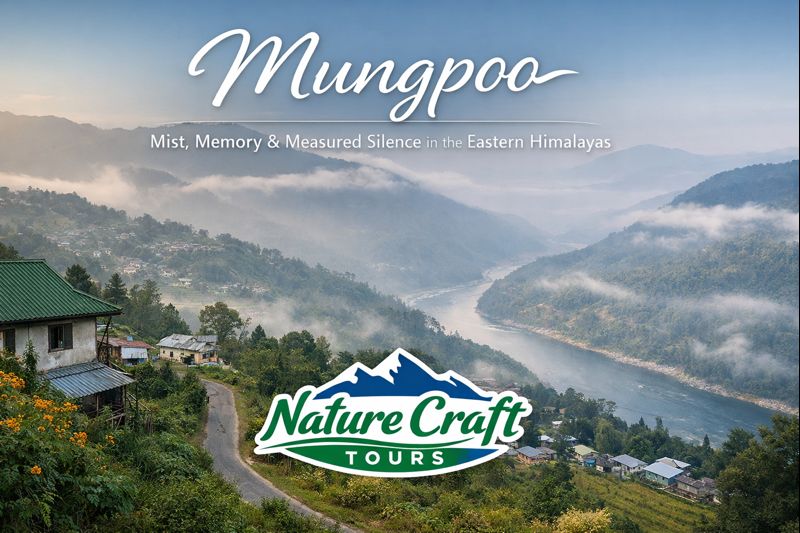
Beyond the tea gardens, forest paths lead toward quieter spaces—streams, shaded clearings, and elevated viewpoints that offer glimpses of the Teesta Valley below. These trails are not marked or commercialized, reinforcing the importance of mindful exploration and local guidance when needed.
Literary and Intellectual Legacy
Mungpoo holds a special place in Bengali literary history as the final residence of Rabindranath Tagore, who spent his last days here. The calm, contemplative environment of the region is often cited as a source of solace during his declining years. For readers and scholars, this association adds an intellectual depth to the landscape, connecting natural quietude with creative reflection.
Complete Tour Planning Guide for Mungpoo
Best Time and Season to Visit
The most favorable time to visit Mungpoo is between October and April. Post-monsoon months bring clear skies, lush greenery, and comfortable temperatures, while winter remains mild compared to higher hill stations. Spring introduces flowering trees and increased bird activity, enhancing the ecological appeal.
The monsoon season, from June to September, transforms the region into a deeply verdant landscape but comes with heavy rainfall and occasional road disruptions. While appealing to seasoned travelers seeking solitude, this period requires careful planning.
Ideal Travel Duration
A stay of two to three nights is ideal for experiencing Mungpoo at an appropriate pace. This allows time for plantation walks, forest exploration, and unstructured observation—key elements of the destination’s appeal. Mungpoo is not suited to hurried itineraries; its value lies in lingering.
Route and Accessibility
Mungpoo is accessible by road from Siliguri, Darjeeling, and Kalimpong. The nearest major railhead is New Jalpaiguri, while Bagdogra Airport serves as the closest air connection. From these points, travelers follow winding hill roads that descend into mid-altitude valleys, gradually transitioning from urban bustle to rural calm.
The approach to Mungpoo itself is part of the experience, revealing shifting vegetation zones and panoramic views that underscore the region’s transitional geography.
Positioning Mungpoo within a Broader Travel Context
For travelers familiar with West Bengal’s diverse landscapes, Mungpoo offers a complementary contrast to both high-altitude hill stations and lowland wilderness destinations. Just as the mangrove labyrinths of the Sundarbans—often explored through journeys such as https://sundarbantravel.com/sundarban-tour/—represent a unique ecological system shaped by water and tide, Mungpoo represents a quieter Himalayan ecology shaped by forest and cultivation.
Those planning extended regional travel may find thematic continuity in pairing a contemplative hill stay with a deltaic exploration, whether through curated Sundarban Tour Packages or independent itineraries that emphasize ecological diversity.
Responsible Travel and Practical Insights
Travelers to Mungpoo should approach the destination with a mindset of respect and restraint. Infrastructure is limited by design rather than neglect, and this simplicity is central to the area’s character. Overconsumption, noise, and intrusive behavior disrupt not only the environment but also the social equilibrium of the settlement.
Engaging local guides for forest walks, minimizing waste, and adhering to existing paths are practical ways to ensure minimal impact. Accommodation choices should prioritize sustainability and community integration rather than luxury.
Weather can change rapidly in the hills, so layered clothing and flexible scheduling are advisable. Mobile connectivity is inconsistent, reinforcing the value of preparation and the opportunity for digital disengagement.
Why Mungpoo Appeals to the Thoughtful Traveler
Mungpoo does not offer spectacle in the conventional sense. It offers continuity—of landscape, of livelihood, of quiet purpose. For travelers seeking destinations that still belong primarily to their residents, Mungpoo provides a rare opportunity to observe without intruding and to experience without consuming.
Detailed insights into local planning and responsible exploration can be found through specialized resources focused on the region, such as in-depth guides to Mungpoo and carefully structured itineraries like the Mungpoo Tour Package, which emphasize pacing and context rather than volume.
A Landscape That Teaches Stillness
In an era when many Himalayan destinations struggle under the weight of visibility, Mungpoo remains quietly assured. Its forests continue their slow cycles, tea gardens follow seasonal rhythms, and daily life unfolds without performance. To visit Mungpoo is to accept an invitation to slow down—to observe transitions rather than landmarks, and to value subtlety over scale.
For the experienced traveler, this may be Mungpoo’s greatest offering: a reminder that the most meaningful journeys often occur in places that do not demand attention, but reward patience.