





Experience Darjeeling Through Villages
Where Time Moves at the Pace of Mountain Clouds
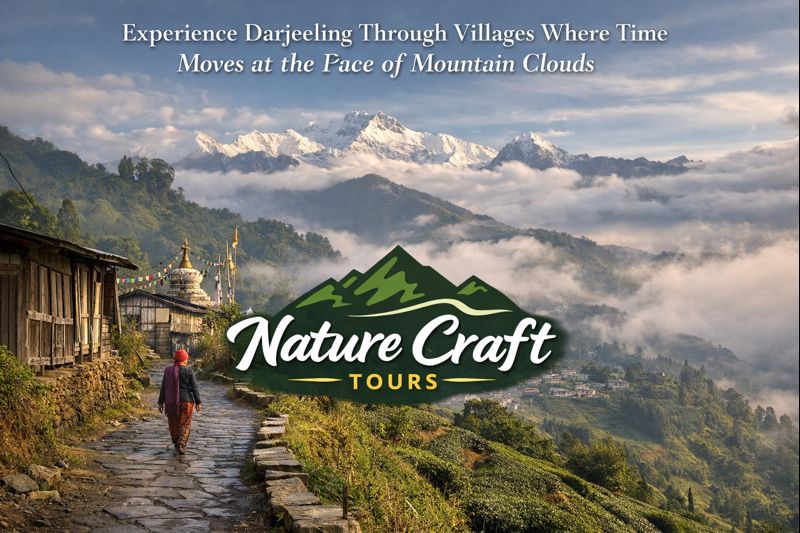
There are places in the Eastern Himalayas where clocks appear irrelevant, where days are measured not by hours but by drifting clouds, grazing cattle, and the slow rhythm of village life. Away from Darjeeling’s crowded promenades and postcard viewpoints, a quieter geography unfolds—one shaped by subsistence farming, prayer flags, forest paths, and generational memory. To experience Darjeeling through its villages is to encounter the region as it has existed for centuries: patient, self-contained, and deeply rooted in the mountains.
This journey is not about checking landmarks off a list. It is about understanding how altitude influences culture, how isolation preserves traditions, and how the Himalayas dictate a pace of life that modern tourism rarely acknowledges. In these villages, time moves at the speed of mountain clouds—unhurried, fluid, and quietly profound.
Understanding Village Darjeeling: Beyond the Hill Station
Darjeeling district extends far beyond the familiar urban hill town established during the British colonial era. Scattered across ridges, forest clearings, and terraced slopes are dozens of villages—many inhabited by Lepcha, Limboo, Tamang, Sherpa, Bhutia, and Nepali communities. These settlements evolved organically, shaped by geography rather than planning, and remain largely untouched by mass tourism.
Village Darjeeling is defined by self-sufficiency. Homes are constructed using locally available materials—wood, stone, and corrugated sheets. Agriculture remains small-scale and seasonal, with maize, millet, potatoes, ginger, and cardamom forming the backbone of rural livelihoods. Daily routines follow daylight, weather, and agricultural cycles rather than external schedules.
Unlike the commercial centers of Darjeeling town, these villages maintain a lived-in authenticity. Conversations unfold slowly, meals are shared communally, and hospitality is offered without performance. For travelers seeking a deeper understanding of the Eastern Himalayas, these villages provide context that no viewpoint or café ever could.
Geography and Environment: Why Time Slows Here
The physical geography of Darjeeling’s villages plays a decisive role in shaping daily life. Situated between 4,000 and 7,500 feet, most villages are accessible only via narrow mountain roads or forest trails. Landslides during monsoon months and mist-induced visibility issues reinforce isolation, especially in higher settlements.
This relative remoteness has limited industrial development and preserved ecological balance. Dense forests of oak, pine, magnolia, and rhododendron surround many villages, acting as natural buffers against urban expansion. Streams fed by mountain springs supply drinking water, while forest produce supplements agricultural income.
Here, weather is not an inconvenience but a governing force. Clouds arrive without warning, blanketing entire valleys in silence. Rain dictates movement. Winter frost determines planting cycles. In such conditions, speed becomes impractical, and patience becomes a survival skill.
Cultural Landscape of Darjeeling’s Villages
Community Life and Social Structure
Village communities in Darjeeling function through shared responsibility. Festivals, harvests, and even construction activities are collective efforts. Social bonds are reinforced through oral traditions, seasonal rituals, and shared labor. Unlike urban environments, anonymity is rare; everyone belongs to a visible, interdependent network.
Monasteries, village temples, and community halls serve as cultural anchors. Buddhist prayer flags flutter across ridgelines, while animist practices coexist seamlessly with Hindu and Buddhist traditions. This layered belief system reflects centuries of cultural convergence rather than conflict.
Language, Food, and Daily Rituals
Multiple languages coexist within a few kilometers—Nepali, Lepcha, Tibetan dialects, and Hindi—often spoken interchangeably. Food is simple yet nourishing: rice, lentils, fermented vegetables, seasonal greens, and locally brewed beverages. Meals are dictated by availability rather than menu planning, reinforcing a deep connection to land and season.
Morning rituals involve tending livestock, offering prayers, and preparing for the day’s labor. Evenings bring shared meals and quiet conversation, often illuminated by kerosene lamps rather than electric light in more remote settlements.
Villages That Define Slow Darjeeling
Several village clusters exemplify this unhurried Himalayan existence. Places like Lamahatta, Takdah’s surrounding hamlets, Tinchuley’s outskirts, Chatakpur, and the forest villages near Lepchajagat remain rooted in traditional lifestyles. Each village possesses a distinct identity shaped by altitude, ethnic composition, and historical role.
Some villages developed as forest settlements during British forestry operations, while others predate colonial influence altogether. Walking through these settlements reveals layers of history etched into pathways, prayer stones, and aging wooden homes.
Travelers exploring these regions often extend their Himalayan understanding beyond Darjeeling, discovering similar cultural rhythms in destinations such as the Sundarbans, where nature similarly dictates human life. Such contrasts are explored thoughtfully through resources like Sundarban Tourism, offering valuable perspective on India’s diverse ecological cultures.
Planning a Village-Centric Darjeeling Journey
Best Time to Travel
The most suitable months for exploring Darjeeling’s villages are March to May and October to early December. Spring offers clear skies, flowering forests, and accessible trails. Autumn provides crisp air, unobstructed mountain views, and stable road conditions.
The monsoon season, from June to September, transforms villages into mist-covered sanctuaries but poses significant accessibility challenges due to landslides. Winter months can be rewarding for seasoned travelers comfortable with cold temperatures and limited daylight.
Ideal Travel Duration
A minimum of six to eight days is recommended for a meaningful village-focused experience. This allows sufficient time to acclimatize, walk between settlements, engage with local communities, and absorb the environment without haste.
Unlike conventional sightseeing itineraries, village travel benefits from flexibility. Days are best left unstructured, allowing weather, conversations, and spontaneous discoveries to guide the journey.
Route and Accessibility
Most village routes branch off from the main Darjeeling–Kalimpong corridor. Access typically involves a combination of road travel and short hikes. Public transport is limited and irregular, reinforcing the importance of advance logistical planning.
Travelers often combine Darjeeling village exploration with other slow-travel ecosystems across India, such as curated forest and delta journeys offered through platforms like Sundarban Tour Package, highlighting a growing interest in immersive, nature-led travel.
Ecological Significance of Village Darjeeling
Darjeeling’s villages exist within one of the Eastern Himalayas’ most sensitive ecological zones. These forests act as critical corridors for Himalayan bird species, small mammals, and rare plant life. Traditional agricultural practices—largely organic and rotational—have helped preserve soil fertility and biodiversity.
Village communities play an active role in forest conservation, often through customary regulations rather than formal governance. Sacred groves, seasonal grazing restrictions, and water source protection reflect indigenous ecological knowledge passed down through generations.
This model of coexistence stands in contrast to extractive tourism, offering valuable lessons in sustainability and restraint.
Practical Insights for Travelers
Travelers must approach village Darjeeling with humility and preparedness. Infrastructure is limited, connectivity may be inconsistent, and amenities are basic. Respecting local customs, dressing modestly, and minimizing environmental impact are essential.
Photography should be conducted sensitively, with permission sought before capturing people or private spaces. Waste management is a collective challenge; carrying reusable items and minimizing plastic use is strongly advised.
Those seeking structured guidance and ethically curated routes often explore region-specific resources such as Offbeat Darjeeling Tour Package, which emphasizes lesser-known village circuits while maintaining cultural integrity.
Why Village Darjeeling Matters Today
In an era dominated by speed and spectacle, Darjeeling’s villages offer something increasingly rare: a living reminder that progress need not erase patience, and that development can coexist with tradition. These settlements are not relics of the past but active, adaptive communities negotiating modernity on their own terms.
Experiencing Darjeeling through its villages reframes travel itself. It shifts focus from consumption to participation, from observation to understanding. For those willing to slow down, listen, and walk gently, the rewards are enduring.
As interest grows in thoughtful, experience-driven journeys—whether in the Himalayan villages of Darjeeling or the tidal landscapes explored through Offbeat Darjeeling—travel finds its way back to its original purpose: connection.
Moving at the Speed of Clouds
To travel through Darjeeling’s villages is to surrender control over time. Days stretch and contract with the weather, conversations replace schedules, and movement aligns with terrain rather than convenience. In these spaces, the mountains reclaim authority over human activity.
Such journeys do not announce themselves loudly. They unfold quietly, like clouds drifting across a ridgeline. Long after the traveler leaves, it is this pace—unrecorded, unhurried, and deeply human—that lingers most vividly.