



Sundarban Tour through India’s Last Great Delta:
Where Forests Breathe and Rivers Decide Destinies

The Sundarbans is not merely a destination on the eastern edge of India; it is a living geography where land, water, and life negotiate their existence every single day. To undertake a Sundarban Tour is to enter a delta that has been shaping human history, wildlife behavior, and ecological balance for centuries. This is a landscape where the river is never a passive element. It advances, retreats, erodes, and rebuilds, quietly dictating the destinies of forests and people alike. The mangrove roots breathe where soil refuses to stay firm, and survival is written not in permanence but in adaptation.
Unlike conventional travel experiences that offer predictable itineraries, the Sundarbans demands attentiveness. It is India’s last great delta in the truest sense—a region where fresh water meets the sea, tides rule daily life, and forests exist not as static backdrops but as active, responsive systems. The experience is immersive rather than observational. Boats do not merely transport visitors; they become moving classrooms where ecology, anthropology, and natural history unfold simultaneously.
The Sundarbans delta stretches across southern West Bengal into Bangladesh, forming the largest contiguous mangrove forest on Earth. Within India, it occupies a complex network of rivers such as the Matla, Bidya, Raimangal, and Gosaba, creating an environment that resists simplification. For centuries, communities have learned to read the language of tides, while flora and fauna have evolved remarkable strategies to survive saline water, shifting islands, and seasonal cyclones.
This article explores the Sundarbans as more than a touristic landscape. It examines the delta as a breathing system, a cultural frontier, and an ecological archive. From historical navigation routes and colonial encounters to modern conservation challenges and lived village realities, every section reflects the core philosophy of the hook—this is a place where rivers do not just flow; they decide.
The Delta as a Living System, Not a Fixed Map
The Sundarbans cannot be understood through maps alone. Its geography changes subtly yet continuously, shaped by monsoon rains from the Himalayas and tidal surges from the Bay of Bengal. Unlike riverine landscapes with stable banks, the delta here is fluid. Islands emerge, shrink, and sometimes disappear within a human lifetime. This instability is not a flaw; it is the defining characteristic of the region.
The mangrove forests act as biological engineers. Their intricate root systems trap sediments, reduce erosion, and buffer inland areas from storm surges. Species such as Sundari, Gewa, and Keora have adapted to thrive in brackish conditions, developing specialized breathing roots that rise above oxygen-poor soil. These forests quite literally breathe, exchanging gases through pneumatophores while anchoring life in an otherwise hostile environment.
For travelers, this means that every Sundarban Tour is shaped by real-time environmental conditions. River routes vary depending on tides. Wildlife sightings are influenced by salinity levels and seasonal prey movements. Even village life adjusts daily to the rhythms of water. This dynamic nature distinguishes the Sundarbans from terrestrial forests, where paths and patterns remain relatively constant.
Tidal Rhythms and Ecological Intelligence
Twice each day, tides redraw the boundaries between land and water. Fish migrate inland with high tides, followed by birds and predators. At low tide, mudflats emerge, exposing crabs, mollusks, and nutrient-rich sediments. This cyclical process sustains one of the most productive ecosystems on the planet.
Understanding these rhythms is essential for appreciating the Sundarbans beyond surface-level beauty. It explains why traditional fishing methods differ from inland practices, why boats are designed for shallow, shifting channels, and why local knowledge remains indispensable even in the age of satellite navigation.
Historical Layers: From Ancient Trade Routes to Colonial Frontiers
The Sundarbans has long stood at the intersection of commerce and isolation. Archaeological evidence suggests that ancient traders navigated these waterways to access Bengal’s fertile hinterland. Later, during the medieval period, riverine trade connected the delta to ports across the Indian Ocean.
Colonial intervention transformed the region in profound ways. British administrators attempted to “reclaim” land by clearing mangroves for agriculture, underestimating the ecological role of the forest. While some areas were converted into settlements, others resisted cultivation, reverting to mangrove cover after repeated flooding.
This historical tension between control and coexistence continues to define the Sundarbans. Modern conservation efforts recognize what earlier interventions ignored—that the forest is not an obstacle to development but a protective system essential for long-term survival.
Human Settlements on the Edge of Uncertainty
Villages in the Sundarbans are not static entities. Embankments are rebuilt after storms, homes are elevated, and livelihoods diversify in response to environmental risks. Agriculture depends on monsoon timing and soil salinity, while fishing and honey collection remain vital but regulated activities.
Travelers who approach the region with sensitivity gain insight into a way of life shaped by negotiation rather than dominance. The delta teaches resilience through flexibility, a lesson increasingly relevant in an era of climate uncertainty.
Wildlife Adaptation in a Shifting Landscape
The Sundarbans is globally renowned for its wildlife, particularly the Bengal tiger, which has adapted to swim long distances and navigate tidal creeks. Yet focusing solely on charismatic species risks overlooking the broader ecological narrative.
Estuarine crocodiles, spotted deer, fishing cats, and numerous bird species form an interconnected web of life. Each species exhibits behavioral and physiological adaptations to saline water, fluctuating prey availability, and limited freshwater sources.
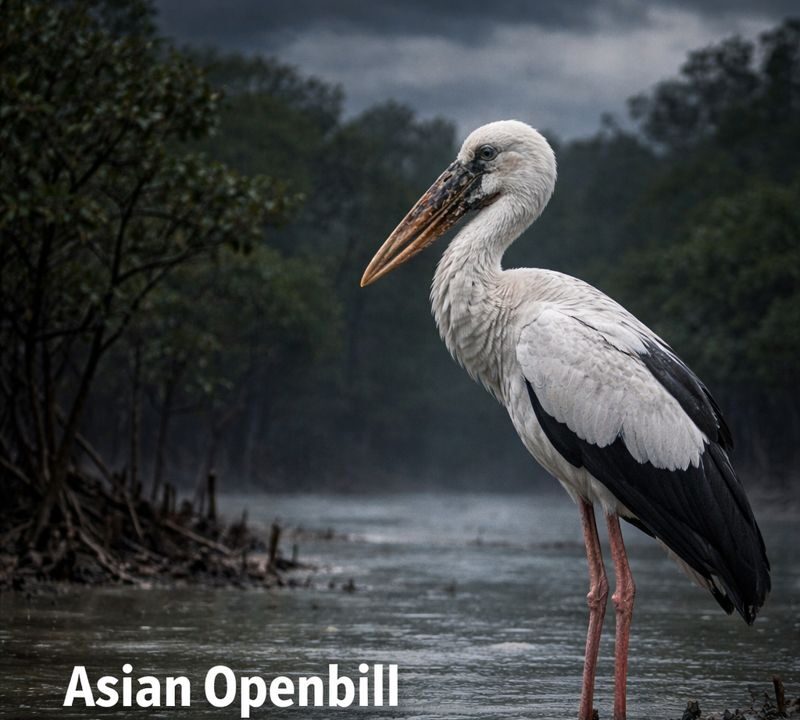
Birdlife varies seasonally, with migratory species joining resident populations during winter months. Raptors, waders, and kingfishers exploit different ecological niches, making the region a living laboratory for ornithological study.
Coexistence and Conservation Ethics
Conservation in the Sundarbans cannot rely on exclusion alone. Human-wildlife interactions are inevitable in such a densely inhabited delta. Contemporary strategies emphasize coexistence, compensation mechanisms, and community-based monitoring.
For visitors, this underscores the importance of responsible travel. Observing wildlife from regulated routes, respecting forest rules, and understanding the rationale behind restrictions enrich the experience while supporting long-term conservation goals.
The River Journey: Movement as Meaning
A defining element of any Sundarbans experience is the journey by water. Boats serve as the primary means of access, offering perspectives unavailable on land. Riverbanks reveal layers of sediment, mangrove roots, and human habitation in a single frame.
As the boat glides through narrow creeks, silence becomes a form of communication. The absence of urban noise heightens awareness of natural sounds—bird calls, water lapping against hulls, and the distant rustle of leaves.
This slow movement contrasts sharply with fast-paced tourism models. It invites reflection, aligning the traveler’s rhythm with that of the delta itself.
Planning Context: Reaching the Delta from Kolkata
The gateway to the Indian Sundarbans is Kolkata, from where road and river routes converge toward the delta’s entry points. A Sundarbab Tour Package from Kolkata typically integrates urban departure with gradual immersion into rural and riverine environments.
This transition is not merely logistical; it is experiential. As cityscapes give way to agricultural fields and waterways, travelers witness the gradual thinning of infrastructure and the strengthening of ecological presence.
For those seeking structured insights into the region’s geography and culture, curated resources such as this detailed Sundarbans overview provide contextual grounding before arrival, while comprehensive tour structures illustrate how journeys are shaped around tides, seasons, and forest regulations.
Cultural Memory and Spiritual Geography
Beyond ecology, the Sundarbans holds a rich cultural and spiritual dimension. Folk beliefs, local deities, and oral traditions reflect a deep respect for natural forces. Forests and rivers are not abstract entities; they are moral landscapes that demand humility.
Bonbibi, revered as a protector of those who enter the forest, symbolizes the ethical code governing human interaction with nature. Such narratives are not relics of the past; they continue to influence daily practices and communal decision-making.
Rituals, Songs, and Seasonal Cycles
Music and storytelling in the Sundarbans often mirror environmental cycles. Songs reference tides, storms, and survival, preserving ecological knowledge across generations. Seasonal festivals align with agricultural milestones and fishing patterns, reinforcing communal resilience.
Climate Realities and the Future of the Delta
The Sundarbans stands at the frontline of climate change. Rising sea levels, increased cyclone intensity, and salinity intrusion pose significant challenges. Scientific studies highlight the mangroves’ role in carbon sequestration and coastal protection, underscoring their global importance.
Adaptation strategies include mangrove restoration, improved embankment design, and livelihood diversification. These efforts reflect a shift from resistance to accommodation, acknowledging that the delta’s future depends on working with natural processes rather than against them.
Experiential Value: Learning through Presence
What distinguishes the Sundarbans from other destinations is the depth of learning it offers. Observation gives way to understanding as travelers witness ecological principles in action. The delta teaches patience, attentiveness, and respect for uncertainty.
This experiential richness extends beyond wildlife sightings. It encompasses conversations with local communities, awareness of conservation challenges, and an appreciation of landscapes that resist simplification.
Where Rivers Continue to Decide
The Sundarbans is not a place that yields its meaning easily. It requires time, openness, and a willingness to listen—to water, to forests, and to people whose lives are intertwined with both. A Sundarban Tour through India’s last great delta is ultimately an encounter with a living system that defies control yet offers profound insight.
Here, forests breathe not as poetic abstraction but as biological necessity. Rivers decide destinies not through dramatic gestures but through subtle, persistent influence. The delta reminds us that survival is not about dominance but adaptation, not about permanence but responsiveness.
For those who engage deeply, the Sundarbans leaves an enduring impression. It reframes how we understand nature, history, and human presence within fragile environments. Long after the journey ends, the memory of moving water, breathing roots, and shifting horizons continues to inform how we see the world—and our place within it.
Further contextual understanding of this unique region can be explored through broader regional perspectives available at dedicated Sundarbans resources, which document the delta’s evolving narrative as both a natural wonder and a lived landscape.