





Discover a Quieter Darjeeling:
Where Forest Hamlets and Misty Trails Replace Crowded Viewpoints
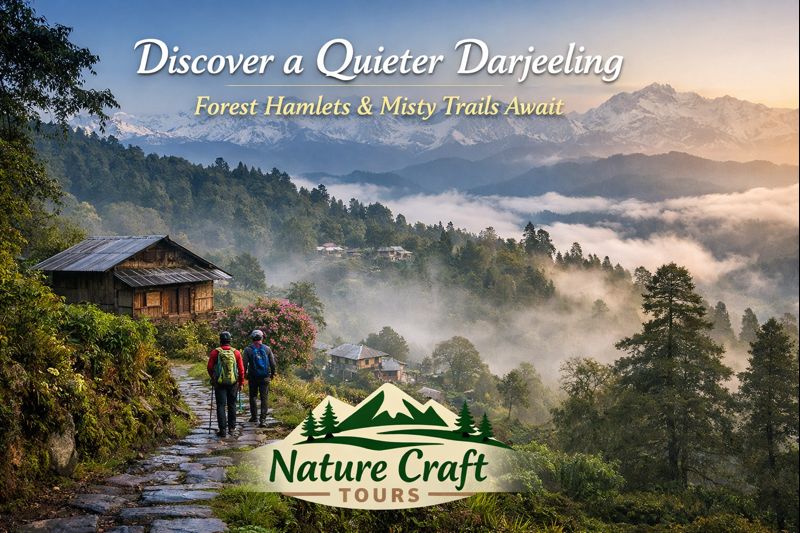
Darjeeling is often introduced through familiar images—sunrise crowds at famous viewpoints, bustling pedestrian squares, and long queues for photographs framed by Himalayan peaks. Yet beyond these well-trodden circuits lies another Darjeeling, quieter and more introspective, shaped by forest hamlets, mist-laced trails, and communities that still live in close rhythm with the mountains. This article explores that lesser-known landscape, where travel is defined not by checklists but by immersion, silence, and a deeper understanding of the Eastern Himalayas.
To discover this quieter Darjeeling is to step away from congested roads and curated viewpoints and enter a world where pine forests soften the air, village paths curve gently through terraced slopes, and everyday mountain life unfolds without performance. It is an experience designed for travelers who seek authenticity, ecological awareness, and cultural depth rather than hurried sightseeing.
Understanding the Lesser-Known Side of Darjeeling
Geographically positioned along the Singalila ridge of the Eastern Himalayas, Darjeeling is far more than its colonial-era town center. The wider district stretches across elevations ranging from subtropical foothills to temperate forest zones, creating a mosaic of landscapes that remain largely unexplored by mainstream tourism.
Forest hamlets scattered across these hills are home to Lepcha, Limboo, Tamang, Sherpa, and Nepali communities, many of whom have lived here for generations. Their settlements are often small, self-sustaining, and deeply connected to surrounding forests and streams. Travel through these regions reveals a Darjeeling shaped by subsistence agriculture, traditional forest use, and seasonal rhythms rather than commercial tourism cycles.
Why Offbeat Darjeeling Matters Today
The rise of overtourism has placed visible strain on Darjeeling’s urban infrastructure and fragile ecosystems. In contrast, offbeat travel disperses visitor pressure while offering a more meaningful experience. Quiet villages, low-impact homestays, and guided forest walks encourage responsible tourism practices that benefit local communities directly.
This approach mirrors global trends in sustainable travel, where travelers increasingly seek destinations that prioritize ecological balance and cultural respect. Much like the slow exploration of mangrove landscapes during a Sundarban Trip, offbeat Darjeeling travel rewards patience and attentiveness.
Destination Overview: Forest Hamlets and Misty Trails
The quieter regions of Darjeeling are characterized by dense pine, oak, and rhododendron forests interspersed with small villages perched on ridges or tucked into valleys. Morning mist often drifts through these landscapes, softening outlines and creating an atmosphere that feels almost timeless.
Unlike central Darjeeling, these areas rarely experience traffic congestion or commercial noise. Footpaths, forest trails, and narrow village roads become primary modes of exploration, allowing travelers to engage closely with the terrain.
Landscape and Ecology
The Eastern Himalayan ecosystem supports remarkable biodiversity. Birdlife is especially rich, with frequent sightings of sunbirds, flycatchers, and laughingthrushes. Forest floors are layered with ferns and mosses, while seasonal wildflowers add bursts of color during spring and monsoon months.
These ecological features make offbeat Darjeeling particularly appealing to nature-focused travelers, photographers, and researchers interested in Himalayan flora and fauna.
Complete Tour Plan for a Quieter Darjeeling Experience
Best Time and Season to Travel
The most suitable period for exploring forest hamlets and misty trails is between late October and early May. Post-monsoon months offer clear skies and crisp air, while spring brings blooming rhododendrons and vibrant forest growth.
Monsoon travel, from June to September, is best approached with caution due to landslide risks, although it offers lush scenery for experienced travelers accustomed to mountain conditions.
Ideal Travel Duration
A minimum of five to seven days is recommended to truly experience offbeat Darjeeling. This allows sufficient time for slow exploration, acclimatization, and meaningful engagement with local communities.
Shorter itineraries often reduce travel to surface-level sightseeing, whereas longer stays enable deeper understanding of landscape and culture.
Route and Accessibility
Darjeeling is accessible via road from Siliguri, which serves as the primary gateway to the hills. From there, travelers move along mountain roads branching into lesser-known regions. While some areas are accessible by standard vehicles, others require short walks or local transport.
These routes are comparable in spirit to journeys undertaken during a carefully planned Sundarban Tour Package, where access is part of the experience rather than a mere transfer.
Key Attractions and Special Highlights
Offbeat Darjeeling is defined not by iconic monuments but by subtle, immersive experiences. Forest walks at dawn, conversations with village elders, and evenings spent listening to mountain winds form the core highlights.
Village Life and Cultural Encounters
Daily routines in forest hamlets revolve around agriculture, livestock care, and communal activities. Visitors often gain insight into traditional food preparation, seasonal festivals, and oral histories passed down through generations.
These encounters foster genuine cultural exchange rather than staged performances.
Misty Trails and Nature Walks
Walking trails connect villages through forest corridors and ridgelines, offering panoramic views during clear weather and ethereal landscapes when mist descends. These paths are often centuries old, originally used for trade and communication.
Guided walks provide ecological interpretation, highlighting medicinal plants, bird habitats, and conservation challenges.
Cultural, Ecological, and Historical Significance
The offbeat regions of Darjeeling preserve layers of history that predate colonial influence. Indigenous knowledge systems continue to shape land use, forest management, and social organization.
Ecologically, these areas serve as crucial buffers protecting forest cover and watershed health. Responsible travel contributes to conservation efforts by supporting local livelihoods tied to sustainable practices.
Practical Insights for Thoughtful Travelers
Accommodation and Local Engagement
Stays in forest hamlets typically involve small homestays or eco-lodges that prioritize simplicity and local sourcing. Travelers should approach these experiences with flexibility and respect for community norms.
Responsible Travel Practices
Visitors are encouraged to minimize waste, avoid plastic use, and respect wildlife habitats. Supporting local guides and artisans ensures that tourism benefits remain within the community.
Such practices echo responsible travel principles found in destinations like the Sundarbans, where Sundarban Tourism increasingly emphasizes conservation-led experiences.
Why Choose an Offbeat Darjeeling Tour
An offbeat journey through Darjeeling offers a rare opportunity to experience the Himalayas beyond spectacle. It is an invitation to slow down, listen, and observe landscapes shaped by time rather than tourism demand.
Travelers interested in curated, low-impact experiences may explore specialized options such as an Offbeat Darjeeling Tour Package, designed to balance exploration with ecological sensitivity.
Ultimately, to discover a quieter Darjeeling is to rediscover the essence of mountain travel itself—where forest hamlets and misty trails replace crowded viewpoints, and the journey becomes as meaningful as the destination. For those seeking deeper Himalayan narratives, Offbeat Darjeeling offers a path into landscapes that remain profoundly alive, unhurried, and authentic.