





Takdah: Where Mist, Silence, and Forgotten Colonial Trails Meet
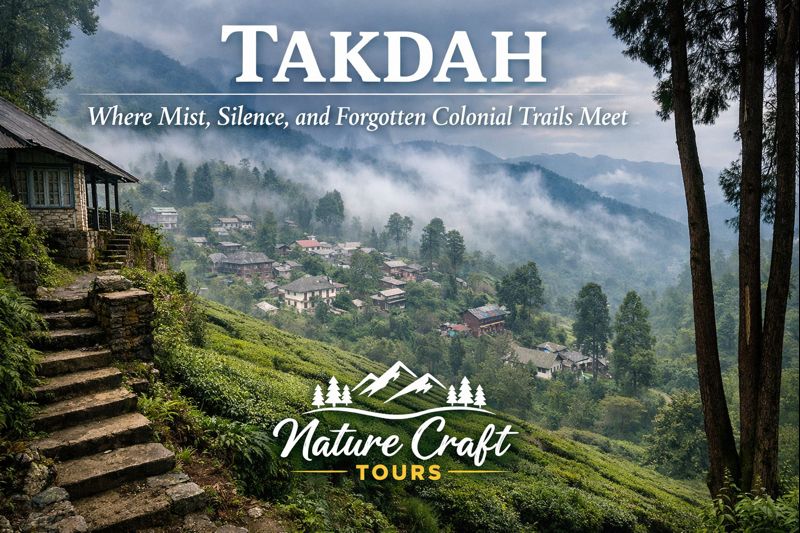
Takdah is where mist, silence, and forgotten colonial trails meet—not dramatically, not with spectacle, but with a quiet assurance that this Himalayan settlement has never needed to announce itself. Tucked away in the folds of the eastern Himalayas, Takdah exists at a measured distance from the hurried rhythms of modern hill tourism. Here, the mountains do not compete for attention; they wait patiently to be noticed. The air is heavy with moisture, pine resin, and memory, while narrow roads curve gently through tea gardens, forests, and old cantonment remnants that hint at a layered past.
For the seasoned traveler, Takdah is not an alternative to Darjeeling but a counterpoint—a place where the legacy of colonial infrastructure, forest ecology, and rural hill life coexist without interruption. This is not a destination defined by landmarks alone, but by atmosphere, continuity, and the slow revelation of detail. To travel to Takdah is to step into a quieter geography, where time stretches, conversations soften, and the landscape asserts itself without insistence.
Understanding Takdah: Geography and Setting
Takdah is located approximately 28 kilometers southeast of Darjeeling, at an altitude ranging between 4,000 and 5,500 feet above sea level. Positioned between the Rangli Rangliot Tea Estate region and the forests leading toward Kalimpong, Takdah occupies a transitional ecological zone. This geography allows it to host both dense temperate forests and cultivated tea slopes, creating a varied and balanced landscape.
The name “Takdah” is widely believed to derive from a Lepcha term meaning “mist” or “fog,” an apt description of the area’s prevailing climate. Moist air from the Teesta river basin rises into these hills, ensuring frequent cloud cover, high humidity, and a cool, steady temperature throughout much of the year. Unlike higher-altitude hill stations, Takdah does not experience extreme cold, nor does it suffer from the summer congestion typical of more popular destinations.
A Colonial Cantonment in the Clouds
Takdah’s modern identity was shaped during the British colonial period, when it was developed as a military cantonment. Strategically positioned between Darjeeling and the eastern frontier, Takdah offered a temperate climate, dense forest cover, and logistical access to surrounding regions. British officers established barracks, bungalows, and bridle paths, many of which still exist today, softened by moss, creepers, and decades of monsoon rain.
Unlike Darjeeling, which evolved into a commercial and administrative center, Takdah retained a restrained, functional layout. Roads were built to curve with the terrain rather than cut through it, and buildings were spaced generously to maintain privacy and security. This planning philosophy remains visible today, giving Takdah its characteristic openness and low-density settlement pattern.
The Living Landscape: Forests, Tea, and Ecology
Takdah is enveloped by a rich ecological framework. Pine, oak, chestnut, and cryptomeria trees dominate the forests, interspersed with bamboo groves and seasonal wildflowers. Birdlife is abundant, with frequent sightings of flycatchers, drongos, sunbirds, and hill partridges. The absence of urban noise allows natural soundscapes—wind through needles, distant bird calls, and rainfall—to define the daily rhythm.
Tea cultivation plays a central role in shaping the land. The surrounding tea estates are not merely economic units but ecological buffers, maintaining soil stability and regulating water flow. Walking through these plantations offers insight into the working landscape of the eastern Himalayas, where agriculture, ecology, and heritage intersect. Travelers familiar with riverine wilderness may recognize similar patterns of human-nature coexistence when exploring destinations such as the Sundarban Trip, though expressed through a very different terrain.
Reaching Takdah: Route and Accessibility
Takdah is most commonly accessed via Darjeeling or Kalimpong. The nearest major railhead is New Jalpaiguri, while Bagdogra serves as the closest airport. From these points, travelers proceed by road through a sequence of hill towns and forested stretches. The approach to Takdah is gradual, with roads narrowing and traffic thinning as one moves away from the main tourist corridors.
The final stretch is particularly telling: tea gardens replace commercial signage, and colonial-era structures appear intermittently through the trees. Travel times vary depending on weather and road conditions, but the journey itself serves as a transition—both physical and psychological—from the plains to the hills.
Best Time to Visit Takdah
Spring (March to May)
Spring is among the most rewarding seasons to experience Takdah. Rhododendrons and wildflowers bloom across forest edges, and the climate remains cool without excessive rainfall. Visibility is generally good, allowing for extended walks and exploration of surrounding trails.
Monsoon (June to September)
Monsoon transforms Takdah into a landscape of saturated greens and persistent mist. While landslides and travel delays are possible, this season reveals the region at its most atmospheric. For travelers accustomed to rain-dominated ecosystems, such as those encountered in Sundarban Tour Package routes, the monsoon hills offer a contrasting yet equally immersive experience.
Autumn (October to November)
Autumn brings clarity. Skies open, temperatures stabilize, and distant mountain ridges become visible. This is an excellent period for photography, long walks, and heritage exploration.
Winter (December to February)
Winters in Takdah are cold but rarely harsh. Morning frost is common, and mist often lingers until late morning. This season suits travelers seeking solitude and contemplative stillness.
Ideal Duration of Stay
A minimum of two nights allows for surface-level exploration, but an ideal stay ranges from three to five nights. Takdah is not designed for hurried sightseeing; its value lies in repetition—walking the same trail at different hours, observing changing light, and settling into the pace of local life. Extended stays reveal nuances often missed during brief visits.
Key Attractions and Points of Interest
Takdah Cantonment Area
The cantonment zone remains one of Takdah’s defining features. Old barracks, officers’ quarters, and stone-lined paths offer tangible connections to the area’s military past. These structures are best explored on foot, allowing time to notice architectural details and spatial planning.
Tea Garden Walks
Walking through nearby tea estates provides insight into the daily rhythms of plantation life. Early mornings are particularly evocative, as mist hangs low and workers begin their routines. The experience emphasizes Takdah’s role as a working landscape rather than a curated attraction.
Forest Trails and Viewpoints
Several informal trails branch out from the main road, leading into forests and toward quiet clearings. These paths are remnants of older movement networks, once used by soldiers and forest workers. They now serve as contemplative routes for travelers seeking immersion rather than destination-driven travel.
Cultural and Social Fabric
Takdah’s population comprises Lepcha, Nepali, and Bengali communities, each contributing to the cultural mosaic. Daily life revolves around agriculture, tea work, and small-scale commerce. Social interactions are understated but warm, reflecting a hill culture shaped by environment rather than tourism.
Festivals are observed quietly, often within family or community spaces. Visitors are more likely to encounter cultural continuity than performance, making respectful observation essential. This understated authenticity mirrors other regions where life continues independently of visitor presence, such as interior zones of Sundarban Tourism.
Practical Insights for Travelers
Takdah requires a degree of self-sufficiency. Shops are limited, medical facilities are basic, and mobile connectivity can be inconsistent. Travelers should carry essentials and approach the destination with flexibility. Walking is the primary mode of exploration, making comfortable footwear and weather-appropriate clothing essential.
Weather can change rapidly, and mist may reduce visibility without warning. Engaging local guidance for longer walks is advisable, particularly during monsoon months. Respect for private property, especially within tea estates and forest zones, is crucial.
Takdah in the Context of Offbeat Himalayan Travel
Takdah occupies a unique position within the eastern Himalayan travel landscape. It is neither undeveloped nor overexposed, offering a model of low-impact visitation that preserves both ecological balance and cultural integrity. For travelers seeking structured exploration, curated routes such as the TakdahTour Package provide contextual access without disrupting the area’s essential character.
Yet Takdah also rewards independent exploration. Its roads, forests, and silences are accessible to those willing to slow down, observe, and adapt. In this sense, Takdah stands as a quiet argument for mindful travel—an approach increasingly relevant in fragile landscapes worldwide.
The Enduring Appeal of Takdah
Takdah does not compete for attention; it waits. Its mist-covered trails, colonial remnants, and living forests form a landscape that reveals itself gradually, often to those who arrive without expectations. In an era of accelerated travel and curated experiences, Takdah remains grounded in continuity and restraint.
To walk its roads is to trace layers of history, ecology, and daily life woven together without spectacle. Takdah is not a destination to be consumed, but a place to be inhabited—if only briefly. For travelers willing to listen, it offers something increasingly rare: the luxury of silence, the depth of time, and the quiet satisfaction of having arrived somewhere that did not ask to be found. For further contextual understanding of the region, detailed narratives on Takdah itself help situate this village within the broader offbeat Darjeeling circuit.